

Data Sovereignty: The Hidden Superpower of Dedicated Server Hosting
When I first started consulting for SaaS founders, the phrase “dedicated server” sounded like a relic—something you’d only need if you were running a legacy ERP or a gaming lobby. Fast forward a few years, and I’m hearing the same term whispered in boardrooms across finance, health, and even government tech projects. The catalyst? Data sovereignty. In an era where where your data lives is as important as what it contains, dedicated servers have quietly become the strategic linchpin for compliance‑first companies.
Why “Where” Beats “How” in Today’s Regulatory Landscape
Regulators worldwide are tightening the screws on cross‑border data flows. The EU’s GDPR, Brazil’s LGPD, and the United States’ emerging state‑level privacy statutes all mandate that certain categories of data stay within specific geographic boundaries. Cloud giants offer “regions” and “availability zones,” but the reality is messier: data can still be replicated, cached, or processed in neighboring jurisdictions without your explicit consent.
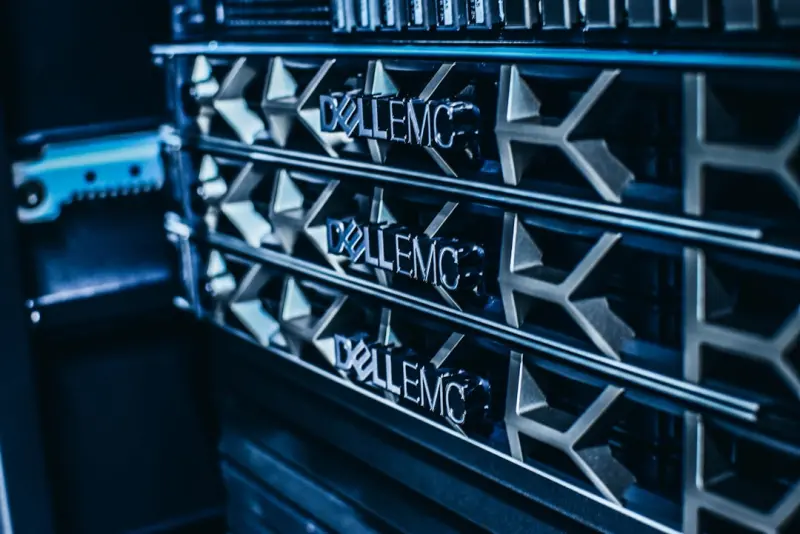
Dedicated servers, by contrast, give you physical control. When you lease a rack in a data center located in Frankfurt, you can be confident that every byte of your customer’s data stays inside German borders—unless you decide otherwise. This hard line of separation satisfies auditors, eases legal counsel’s nerves, and, importantly, builds trust with end users who are increasingly privacy‑savvy.
From Compliance to Competitive Advantage
Data residency isn’t just a checkbox; it can be a market differentiator. Consider a European fintech startup that promises “European‑only data storage.” That promise alone can shave months off a sales cycle with institutional investors who must prove compliance with local regulators. The same logic applies to:
- Healthcare SaaS—HIPAA‑compliant environments demand precise control over PHI storage locations.
- FinTech—PCI‑DSS requirements often dictate that cardholder data never leave a specific jurisdiction.
- EdTech—FERPA and local education laws can restrict student data to state‑level facilities.
All of these verticals benefit from the certainty that dedicated servers provide, turning a regulatory burden into a compelling sales pitch.
Architectural Flexibility Without the Cloud’s “One‑Size‑Fits‑All”
Hybrid cloud strategies have gained traction for good reason: they let you blend the elasticity of public clouds with the predictability of on‑prem or dedicated infrastructure. Yet many enterprises get stuck in the “cloud‑first” mindset, assuming that any workload can be shoved into a public bucket. The truth is, Hybrid Cloud Hosting works best when you deliberately segment workloads based on latency, sovereignty, and security requirements.
With dedicated servers, you can:
- Co‑locate latency‑sensitive services—think real‑time fraud detection engines that must respond within milliseconds.
- Isolate regulatory workloads—run a separate environment for GDPR‑covered data while still leveraging the public cloud for non‑sensitive analytics.
- Customize network topology—implement private peering, dedicated fiber, or even SD‑WAN overlays that aren’t feasible on multi‑tenant cloud platforms.
This granularity gives your engineering teams the freedom to design for performance and compliance, rather than retrofitting constraints after the fact.
Zero Trust Meets Dedicated Hardware
Security is a moving target, and the buzzword “Zero Trust” has become a mantra across the industry. While Zero Trust is fundamentally a philosophy—never trust, always verify—its practical implementation hinges on the ability to enforce strict identity, device, and network policies. Dedicated servers excel here because you control the entire stack:
- Network segmentation at the hypervisor or even physical switch level.
- Hardware‑based root of trust via TPM modules, secure boot, and immutable firmware.
- Custom firewall rules that are not shared with other tenants, reducing attack surface.
Pairing this hardware control with a modern Internal Developer Platform (IDP) allows your dev teams to consume security policies as code, automating compliance checks directly into the CI/CD pipeline. The result? A seamless, auditable flow from code commit to production on a server you physically own—or lease—with a guarantee that no rogue network traffic can slip through a shared cloud provider’s perimeter.
Cost Predictability: The Hidden ROI of Dedicated Hosting
One of the biggest criticisms of dedicated servers is cost. At first glance, a high‑performance bare‑metal box can appear pricier than an equivalent cloud instance. However, when you factor in data egress fees, cross‑region replication charges, and the operational overhead of compliance audits, the scales tip quickly.
Let’s break down the hidden savings:
- Eliminate egress fees. Cloud providers charge per gigabyte when data leaves their network—costs that explode for analytics pipelines streaming terabytes of logs to a third‑party BI tool.
- Reduce over‑provisioning. Dedicated servers give you a static, known capacity. With careful monitoring, you can right‑size hardware at the start and avoid the “always‑on‑the‑edge” pricing model of on‑demand cloud instances.
- Minimize audit labor. When your data never leaves a certified facility, auditors spend less time tracing data lineage across multiple clouds, lowering consulting fees.
When you add these savings together, the total cost of ownership (TCO) for a well‑architected dedicated environment often rivals—or beats—the cloud’s advertised price tags, especially for workloads that are data‑intensive and jurisdiction‑bound.
Future‑Proofing with Modular Hardware
Dedicated servers are no longer the monolithic, “set‑and‑forget” boxes of the past. Vendors now offer modular designs where you can swap CPUs, GPUs, or even add custom FPGA cards without a full server replacement. This flexibility is a game‑changer for SaaS companies that anticipate spikes in compute demand, such as:
- AI model inference at the edge, requiring dedicated GPUs.
- Real‑time video transcoding for live‑stream platforms.
- High‑performance encryption accelerators for financial transactions.
By selecting a modular chassis, you future‑proof your infrastructure while preserving the data sovereignty benefits you already enjoy.
Operational Best Practices: Making Dedicated Servers Work for You
To reap the full advantages of dedicated hosting, treat it as a strategic asset rather than a “set‑and‑forget” expense. Here are my top recommendations:
- Implement automated provisioning. Use tools like Ansible or Terraform to spin up OS images, apply security baselines, and configure networking in minutes. Treat your bare‑metal server as code.
- Monitor at the hardware level. Leverage IPMI, Redfish, or vendor‑specific APIs to watch temperature, power draw, and fan speeds. Early hardware warnings can prevent costly downtime.
- Adopt immutable infrastructure. Build your production images once, store them in a private registry, and redeploy rather than patching live systems. This aligns with the Zero Trust mindset and reduces drift.
- Segment workloads by compliance tier. Create distinct VLANs or physical racks for GDPR, HIPAA, and PCI workloads. Document each segment’s data flow diagram to simplify audits.
- Plan for disaster recovery. Even with a dedicated box, you need a failover strategy. Replicate critical databases to a secondary data center in the same jurisdiction and test recovery drills quarterly.
Case Study: A European Health‑Tech Platform’s Journey
One of my recent engagements involved a health‑tech startup that needed to process patient data in strict accordance with GDPR and German BDSG. Their initial architecture was a multi‑region cloud deployment, which caused headaches during the first data‑protection audit—AWS had silently replicated logs to a US region for analytics.
We migrated their core data store to a dedicated server farm in Frankfurt, leveraging a modular chassis that allowed us to add encrypted SSDs on demand. The network was locked down with a dedicated fiber link to their on‑premise clinic systems, and an IDP was built on top to enforce role‑based access controls.
Result?
- Audit findings dropped from “non‑compliant” to “fully compliant” within weeks.
- Monthly egress costs fell by 45%.
- Customer churn decreased as users cited “enhanced data privacy” in feedback surveys.
This transformation underscores how dedicated servers can be more than a hosting choice—they’re a catalyst for business growth.
Conclusion: Dedicated Servers Are Not a Relic, They’re a Strategic Lever
If you’re still treating dedicated hosting as a fallback option for “legacy apps,” you’re missing a pivotal lever for data sovereignty, cost predictability, and performance excellence. By marrying modern automation, Zero Trust security, and modular hardware, you can turn a traditional bare‑metal server into a future‑ready platform that meets the most stringent regulatory demands while delivering a competitive edge.
In the end, the question isn’t “Do I need a dedicated server?” but rather “How can I leverage dedicated infrastructure to unlock new markets, reduce risk, and accelerate growth?” The answer, for many forward‑thinking SaaS leaders, is a resounding yes.

Alex Moss is a digital marketing professional and SEO consultant, focusing on technical and structural SEO along with product development. With more than six years of experience in various facets of digital marketing, he has assisted brands of all sizes in establishing and enhancing their online presence, as well as fostering increased product loyalty.
Related Posts
Compliance‑First Dedicated Server Strategy: Turning Regulation into Advantage
Discover a step‑by‑step guide to building a compliance‑first dedicated server environment that... Read More

Dedicated Servers: The Unsung Backbone of Real‑Time SaaS Performance
Dedicated servers offer predictable performance, full hardware control, and superior security—maki... Read More

Dedicated Server Hosting: The Untapped Engine for Real‑Time SaaS Performance
Dedicated servers deliver low‑latency, high‑throughput power for real‑time SaaS workloads, pro... Read More
Top Posts

Server‑Driven UI: A New Playbook for Lightning‑Fast Mobile Web Apps
Server‑driven UI shifts UI composition to the backend, delivering lightweight, fast‑loading mobile web experiences. Learn the architecture, benefits, edgeâ€...Read More

Unlocking the Untapped Power of VPS for DevOps, Edge & GPU Workloads
The VPS is more than a cheap hosting option; it's a flexible sandbox for GitOps, a gateway to GPU‑accelerated AI, and a strategic edge node—all without the ...Read More

Drupal’s Config‑Driven Release Engine: Accelerating SaaS Feature Delivery
Learn how treating Drupal configuration as code turns the platform into a powerful release engine, enabling SaaS teams to ship features faster, maintain complia...Read More
Bootstrap as the Backbone of a Scalable SaaS Design System
Bootstrap isn’t just a UI kit; it’s a strategic foundation for building scalable, accessible, and fast SaaS design systems that grow with your product....Read More
0 Comments
Post Comment
You will need to Login or Register to comment on this post!