
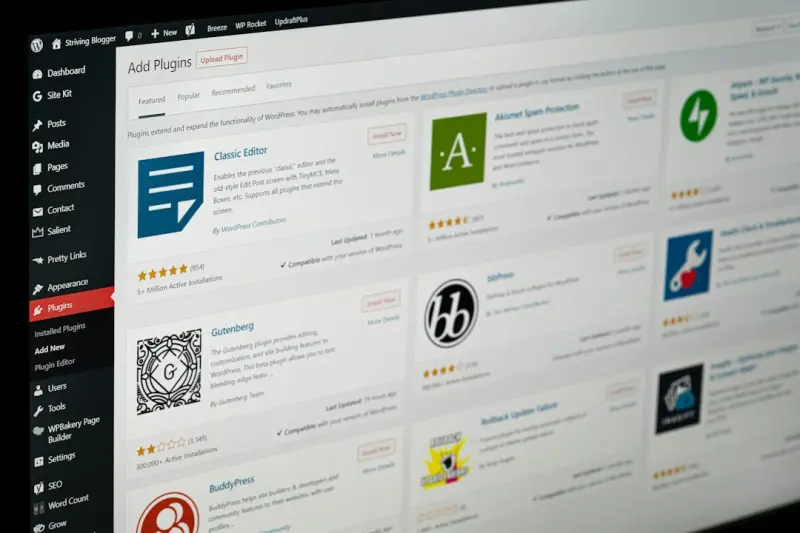
When I first started advising enterprise marketers about WordPress, the conversation was almost always about content flexibility. Today, the discussion has shifted dramatically: enterprises are asking how they can leverage WordPress as a headless content hub while preserving the reliability, security, and performance guarantees that mission‑critical applications demand. That’s where managed WordPress hosting steps out of the shadows and becomes the operational backbone for a modern, API‑first architecture.
The Evolution from “Blog Engine” to “Enterprise API Layer”
WordPress began its life as a blogging platform, but its extensible architecture—plugins, themes, and the REST API—has turned it into a de‑facto content service for many large brands. The key difference between a hobbyist site and an enterprise headless deployment isn’t the code; it’s the environment that runs it. A managed host provides the consistent runtime, automated security patches, and resource isolation you need to treat WordPress like any other microservice in your stack.
Why “Managed” Matters at Scale
Running WordPress on a generic VPS or shared server forces you to wear two hats: developer and sysadmin. That duality becomes a liability when your content pipeline has to serve thousands of concurrent requests, support localized sites, and comply with industry regulations. A managed service abstracts away the operational grunt work, letting you focus on:
- Zero‑downtime deployments – built‑in blue‑green or canary releases that keep the API live while new code rolls out.
- Built‑in CDN integration – edge caching for both static assets and REST endpoints, slashing latency for global audiences.
- Automated backups and instant restores – point‑in‑time snapshots that protect content against ransomware or accidental deletions.
- Compliance‑ready configurations – out‑of‑the‑box GDPR, HIPAA, and PCI‑friendly settings without a checklist of manual tweaks.
Headless WordPress on Managed Infrastructure: A Real‑World Blueprint
Consider a multinational B2B SaaS provider that needed to serve localized product pages, technical documentation, and marketing microsites from a single content repository. Their legacy approach combined a monolithic WordPress install on a shared host with a custom PHP layer that performed the localization. The result was frequent timeouts, unpredictable performance spikes during product launches, and an avalanche of security alerts.
By migrating to a managed WordPress host, they achieved three immediate wins:
- Predictable performance – dedicated container clusters ensured that API calls for localized content never competed for CPU with unrelated traffic.
- Scalable architecture – the host’s auto‑scaling rules spun up additional workers during high‑traffic events, then gracefully scaled back down.
- Security confidence – the platform’s automated patching eliminated the lag between vulnerability disclosure and remediation, a common breach vector in self‑managed setups.
The outcome? A 45% reduction in page‑load time for global users and a 70% drop in incident tickets related to hosting.
Developer Experience: From “SSH into Production” to “Deploy with a Pull Request”
One of the most underappreciated benefits of managed WordPress hosting is the way it reshapes the developer workflow. Instead of logging into a server, running wp-cli commands, and manually restarting services, teams can push code to a Git repository and let the host’s CI/CD pipeline handle the rest. This shift brings several tangible advantages:
- Version‑controlled environments – every change is tracked, and you can roll back with a single click.
- Automated testing hooks – pre‑deployment linting, unit tests, and even end‑to‑end Cypress runs are baked into the pipeline.
- Environment parity – staging, preview, and production share the exact same stack configuration, eliminating “it works on my machine” bugs.
If you’ve ever wrestled with shared hosting pitfalls, you’ll recognize the dramatic reduction in operational overhead this model delivers.
Performance Tuning Without the Guesswork
Managed platforms typically expose a suite of performance knobs that would otherwise require deep sysadmin knowledge:
- Object caching layers (Redis or Memcached) are provisioned and tuned automatically.
- Database read replicas distribute query load for heavy analytics workloads.
- Edge functions let you inject custom logic (e.g., auth tokens, request throttling) right at the CDN level.
Because these components are managed, you can experiment with caching strategies, query optimizations, or even switch to a headless‑first approach (e.g., GraphQL via WPGraphQL) without worrying about breaking the underlying infrastructure.
Security: The Silent Shield
Enterprises often cite “security” as the top blocker for adopting WordPress at scale. Managed hosting addresses this in three layers:
- Network hardening – firewalls, DDoS mitigation, and private network segments isolate your WordPress instance from public attack surfaces.
- Application hardening – automated plugin vulnerability scanning, disallowed file permissions, and a read‑only file system for core files.
- Compliance reporting – built‑in dashboards generate audit logs and compliance certificates on demand.
These safeguards turn a platform historically viewed as “insecure” into a fortified service that meets the rigorous standards of finance, healthcare, and government sectors.
Cost Predictability and Optimization
One objection that resurfaces when discussing managed services is cost. While the per‑month fee can appear higher than a DIY VPS, the total cost of ownership (TCO) tells a different story. Consider the following cost drivers that disappear under a managed regime:
- Reduced personnel time – no need for a dedicated sysadmin to patch, monitor, or troubleshoot.
- Lower downtime penalties – higher availability translates to fewer lost revenue and brand damage.
- Optimized resource usage – auto‑scaling prevents over‑provisioning, and granular billing ensures you only pay for what you use.
When you factor in these hidden savings, the net spend often aligns with—or undercuts—the budget of an in‑house hosting operation.
Sustainability: Green Hosting as a Competitive Differentiator
Enterprises are under increasing pressure to report on carbon footprints. Managed WordPress providers typically run in hyperscale data centers that leverage renewable energy, efficient cooling, and workload consolidation. By moving your headless WordPress layer to such an environment, you inherit those sustainability benefits without any extra effort. In fact, the provider’s green hosting strategies can be highlighted in your ESG reporting, turning a technical decision into a marketing advantage.
Multi‑Site Management Made Simple
Many large organizations run dozens—sometimes hundreds—of WordPress sites for regional markets, product lines, or internal portals. Managing this ecosystem on shared infrastructure quickly becomes a nightmare: plugin version drift, inconsistent theme updates, and tangled DNS configurations. Managed hosts often include a unified dashboard that lets you:
- Spin up new sites in minutes with pre‑approved plugins and theme bundles.
- Apply bulk updates across the network while preserving customizations.
- Monitor site health, performance metrics, and security alerts from a single pane of glass.
This centralization reduces the risk of “shadow” sites that fall out of compliance or miss critical updates.
Future‑Proofing with Serverless Edge Functions
While the core of a headless WordPress deployment lives on a managed host, the edge is where the next wave of innovation is happening. Modern managed platforms let you attach serverless functions directly to CDN edge nodes, enabling use‑cases such as:
- Real‑time personalization based on geolocation or user profile data.
- On‑the‑fly image optimization without touching the origin server.
- API request validation and rate limiting before the request even reaches WordPress.
This hybrid approach—managed WordPress for the content engine, edge functions for dynamic behavior—delivers the best of both worlds: reliability at the core, agility at the edge.
Getting Started: A Pragmatic Migration Checklist
If you’re convinced that managed WordPress hosting is the missing piece in your headless strategy, follow this concise migration roadmap:
- Audit your current stack. Identify plugins, custom code, and API endpoints that are critical to business logic.
- Select a managed provider. Look for features like auto‑scaling, built‑in CDN, and compliance certifications that match your industry.
- Set up a staging environment. Mirror production traffic patterns using load testing tools to validate performance.
- Implement CI/CD pipelines. Connect your repository to the host’s deployment hooks and enable automated tests.
- Gradual cutover. Route a small percentage of traffic to the new host, monitor key metrics, and incrementally increase the share.
- Decommission legacy servers. Once confidence is established, retire the old environment to eliminate lingering security risks.
Following these steps minimizes risk while unlocking the full suite of benefits that managed hosting brings to a headless WordPress architecture.
Conclusion: Managed WordPress Hosting as the Enterprise API Engine
In the race to deliver fast, personalized, and compliant digital experiences, enterprises can no longer afford to treat WordPress as a “just‑a‑blog.” When paired with a managed hosting environment, WordPress transforms into a robust, scalable, and secure API engine that sits comfortably alongside microservices, data lakes, and edge compute. The shift isn’t just technical; it’s strategic—enabling teams to iterate faster, reduce operational friction, and align with broader business objectives like sustainability and regulatory compliance.

Dale Peterson is a freelance writer with a passion for technology, travel, law and personal finance. With 10 years of experience crafting compelling and informative content, he's dedicated to delivering high-quality writing for Blogging Fusion that engages audiences and achieves specific goals.
Related Posts
Beyond Performance: Managed WordPress Hosting as a Playground for Continuous Experimentation
Managed WordPress hosting isn’t just about uptime—it's a strategic sandbox that lets teams itera... Read More
Fortifying Managed WordPress Hosting: Compliance, Security, and Peace of Mind
A deep dive into how modern managed WordPress providers can turn security and compliance into a comp... Read More

Managed WordPress Hosting: Turning Compliance Into a Competitive Advantage
Managed WordPress hosting can be the cornerstone of enterprise compliance, offering built‑in data ... Read More
Top Posts

Micro Frontends: A Pragmatic Playbook for Scaling SaaS UI Teams
Micro frontends let SaaS teams break monolithic UIs into independent, deployable fragments, boosting speed, consistency, and performance while preserving a cohe...Read More

Managed WordPress Hosting: The Enterprise Playbook for Scalable SaaS Experiences
Managed WordPress hosting isn’t just a convenience—it’s a strategic asset for SaaS teams seeking security, scalability, and predictable costs. This playbo...Read More

Observability‑First Node.js: Turning Black Boxes into Business Insight
A deep dive into building an observability‑first culture for Node.js SaaS, covering instrumentation with OpenTelemetry, practical metrics, structured logging,...Read More

Why Your SaaS Needs a Multi‑Layered Backup Strategy on Shared Hosting
Shared web hosting can be a low‑cost launchpad, but without a solid backup plan SaaS teams risk data loss and downtime. This article outlines a three‑layere...Read More
0 Comments
Post Comment
You will need to Login or Register to comment on this post!