
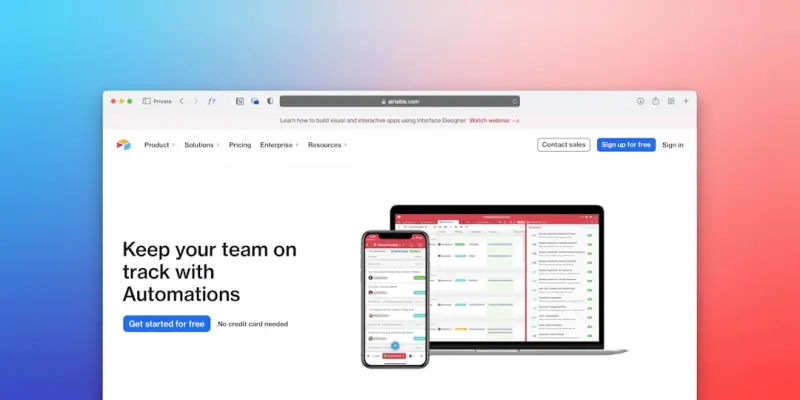
Why No‑Code Integration Platforms Are the Next Growth Engine for SaaS
In the crowded SaaS landscape, speed and flexibility have become as valuable as raw compute power. While many teams obsess over micro‑services architectures, serverless runtimes, or the latest edge‑ready runtimes, there’s a quieter revolution brewing in the background: the rise of no‑code integration platforms. These tools let product managers, marketers, and support engineers stitch together APIs, data sources, and third‑party services without writing a single line of code. The result? Faster feature roll‑outs, shorter onboarding cycles for enterprise customers, and a new avenue for revenue through ecosystem partnerships. If you’re still building integrations the old way—hiring developers to hand‑craft connectors or relying on brittle point‑to‑point scripts—you’re already falling behind.
The Business Case: From Bottleneck to Competitive Advantage
Traditional integration projects are notorious for overruns. A simple webhook can balloon into weeks of development, testing, and maintenance. When you factor in compliance reviews, versioning, and support, the hidden cost multiplies. No‑code platforms compress this timeline dramatically. By offering drag‑and‑drop workflow designers, pre‑built connector libraries, and instant sandbox environments, they shift the integration burden from engineering to the broader product team. This democratization unlocks two powerful benefits. First, it frees engineers to focus on core product differentiation rather than repetitive glue code. Second, it empowers business stakeholders to experiment with partner integrations on the fly—creating a virtuous cycle of rapid innovation and customer‑centric feature delivery.
Key Technical Pillars That Make No‑Code Viable at Scale
Behind the glossy UI lies a sophisticated stack that addresses the very concerns that have historically held back no‑code solutions: reliability, security, and performance. Modern platforms leverage resilient pipelines to automatically test, version, and roll back integration flows, applying GitOps principles without demanding Git fluency from the end‑user. They also embed granular access controls, ensuring that only authorized roles can expose or consume sensitive APIs—a crucial feature for enterprises bound by strict data governance policies. Finally, many platforms are built on top of edge‑ready Node.js runtimes, delivering sub‑millisecond latency for event‑driven workflows that need to scale globally. Together, these pillars turn a once‑niche capability into an enterprise‑grade service.
Strategic Use Cases That Accelerate Revenue
When you think about the SaaS value chain, integration points are where you can either lose a prospect or win a lifelong customer. No‑code platforms enable three high‑impact use cases. Marketplace Expansion: Quickly publish your product into partner marketplaces (e.g., Salesforce AppExchange, Shopify) with pre‑built connectors that handle authentication and data mapping out of the box. Customer‑Specific Customizations: Offer large accounts the ability to tailor data flows—such as syncing CRM records to a custom analytics dashboard—without a bespoke engineering project. Embedded Ecosystem Services: Integrate third‑party AI, payment, or analytics services directly into your UI, turning your SaaS into a one‑stop shop. Each of these scenarios shortens the sales cycle, reduces churn, and opens up cross‑sell opportunities.
Choosing the Right Platform: Criteria That Matter
Not all no‑code solutions are created equal. Start by evaluating the connector ecosystem: does the platform support the APIs you rely on (OAuth2, GraphQL, SOAP, etc.)? Next, assess governance features—are there audit logs, role‑based access, and data residency controls? Performance is another critical dimension; look for platforms that run on edge‑distributed runtimes to keep latency low for real‑time syncs. Finally, consider the extensibility model. The best solutions allow you to drop in custom code snippets (JavaScript, Python) when you hit a functional ceiling, ensuring you won’t outgrow the tool as your product matures. A thoughtful selection process pays dividends in both short‑term agility and long‑term scalability.
Integrating No‑Code with Existing DevOps Practices
One common misconception is that no‑code tools exist in a vacuum, separate from your CI/CD pipelines. In reality, the most successful deployments treat them as first‑class citizens in the DevOps workflow. For example, you can version integration definitions in a Git repository, run automated tests against sandbox environments, and promote changes through the same approval gates used for code releases. By doing so, you retain the auditability and traceability that compliance teams demand while still benefitting from the rapid iteration that no‑code promises. This hybrid approach also enables you to leverage existing observability stacks to monitor integration health, alert on failures, and even trigger automated remediation actions.
Real‑World Success Stories: From Startup to Scale‑Up
Consider a mid‑stage SaaS startup that provides project management software. Their biggest churn factor was the inability to sync with the myriad of third‑party tools their customers used—think time‑tracking, invoicing, and HR systems. By adopting a no‑code integration platform, they built a library of 30+ connectors in under two months, allowing customers to activate integrations with a toggle switch. The result was a 25% reduction in churn and a 15% increase in average contract value, as customers added premium integration bundles. Another example is a mature enterprise SaaS provider that leveraged the same technology to launch a partner marketplace, enabling third‑party developers to publish extensions directly within the product. Within six months, the marketplace contributed 12% of total revenue—a clear illustration of how no‑code can unlock new monetization streams.
Future Outlook: AI‑Augmented No‑Code and the Rise of Self‑Healing Integrations
The next frontier for no‑code integration platforms is the infusion of generative AI. Imagine a system that can automatically suggest connector configurations based on your data schema, or rewrite a failing workflow on the fly using AI‑driven anomaly detection. Early adopters are already experimenting with AI‑assisted mapping, where the platform learns from historical data transformations to auto‑populate field mappings, reducing manual effort to near zero. Coupled with self‑healing capabilities—where the platform detects and resolves broken connections without human intervention—these advances will push the boundaries of what “no‑code” truly means, turning it into a strategic, intelligent layer of the SaaS stack.
Getting Started: A Pragmatic Playbook
1. Identify high‑impact integration gaps: Survey your sales and support teams for the most requested third‑party connections.
2. Run a pilot: Choose a low‑risk, high‑visibility integration and build it using a no‑code platform. Measure time‑to‑value against a traditional development approach.
3. Integrate with governance: Hook the platform into your existing CI/CD and compliance workflows.
4.
5. Iterate and expand: Use the data from the pilot to prioritize additional connectors and refine your internal processes.
By following this incremental approach, you can validate the ROI of no‑code integration without disrupting existing operations.
Conclusion: Democratizing Integration as a Growth Lever
In a world where SaaS companies compete on speed, personalization, and ecosystem richness, the ability to integrate quickly and securely is no longer a luxury—it’s a necessity. No‑code integration platforms give you the tools to turn integration from a development bottleneck into a strategic advantage. By embracing these platforms, you empower cross‑functional teams, accelerate time‑to‑market, and open new revenue channels through partner ecosystems. The future of SaaS isn’t just about building better products; it’s about building smarter, more connected experiences— and no‑code is the bridge that gets you there.

Shawn DesRochers is a certified Microsoft technician and Programmer with 30+ year's experience. He has written many reviews on computer related products, software, and SEO related topics. When he's not writing reviews he can be found at one of the Oldest Directories Online Invision Graphics Directory which he is the CEO of. Shawn is a FULL Stack Web Developer. So if you have a project and need assistance dont hesitate to reach out.
Related Posts

Zero Trust Architecture: The New Security Blueprint for SaaS
Zero trust flips the old security model on its head, assuming no user or service is trusted until ve... Read More

Feature Flags: The Safer Path to Continuous SaaS Innovation
Feature flags let SaaS teams ship code continuously while keeping control over what users see, turni... Read More

Feature Flagging: The SaaS Team’s Accelerator for Safe, Rapid Delivery
Feature flags let SaaS teams separate deployment from release, enabling rapid, low‑risk rollouts, ... Read More
Top Posts

Platform Engineering: The Next Evolution of DevOps for Scalable SaaS
Platform engineering transforms DevOps by providing a unified internal developer platform that automates provisioning, enforces security, and delivers observabi...Read More

Beyond the Basics: Mastering VPS Cost & Performance for High‑Growth SaaS
A practical guide to optimizing virtual private servers for SaaS: reduce waste, improve latency, and build a resilient, future‑ready infrastructure using cost...Read More

Serverless Cloud Hosting: Balancing Flexibility, Performance, and Cost
Serverless cloud hosting abstracts infrastructure, offering pay‑as‑you‑go pricing and automatic scaling. This post details ideal use cases, hybrid archite...Read More

Seeing the Future: How Augmented Reality Is Transforming Product Discovery in Online Retail
Augmented reality is more than a novelty—it’s a game‑changing tool that lets shoppers visualize, customize, and confidently purchase products online, driv...Read More
0 Comments
Post Comment
You will need to Login or Register to comment on this post!