

Why the Edge is the New Frontier for Node.js
When most developers think about Node.js, they picture a server‑side runtime humming behind a load balancer, handling HTTP requests, or powering a real‑time collaboration engine. Those are powerful use‑cases, but they’re not the whole story. In the last few years, the edge computing paradigm has exploded, and Node.js is uniquely positioned to thrive there. In this post I’ll walk through the why, the how, and the pitfalls of moving Node.js workloads to the edge, all while keeping the SaaS lens sharp.
From Centralized to Distributed: The Business Imperative
Latency is the silent killer of conversion rates. A single extra hundred milliseconds can shave off a measurable chunk of user engagement, especially for globally distributed SaaS products. Traditional CDNs gave us static asset caching, but they left the dynamic, JavaScript‑driven API layer anchored in a single region. Edge runtimes now allow us to push dynamic logic—auth, personalization, throttling—right to the user’s nearest PoP (Point of Presence).
This shift does more than shave milliseconds off response times. It reduces the amount of data that has to travel across continents, cuts outbound bandwidth costs, and provides a natural defense against DDoS attacks by spreading the load across a mesh of nodes.
Node.js Meets the Edge: A Perfect Match
Node.js’s event‑driven, non‑blocking I/O model is inherently lightweight, which makes it a great candidate for the constrained environments typical of edge platforms. While languages like Rust or Go can offer raw performance gains, they also bring higher cold‑start latencies and more complex deployment pipelines. Node.js, on the other hand, boots in milliseconds and enjoys a massive ecosystem of npm packages that can be used with minimal tweaking.
Many edge providers—Cloudflare Workers, Fastly Compute@Edge, and AWS Lambda@Edge—now support a Node.js runtime (often a recent version of V8). This means you can write standard JavaScript, import familiar libraries, and let the provider handle the underlying container orchestration.
Architecting SaaS Features at the Edge
Let’s break down some common SaaS functionalities and see how they translate to edge‑native implementations.
- Authentication & Authorization: Instead of hitting a central auth service on every request, you can validate JWTs and enforce role‑based access control right at the edge. This eliminates a round‑trip to your auth microservice for every page load.
- Feature Flags & A/B Testing: By reading a user’s segment from a cookie or request header, edge functions can decide which UI variant to serve, dramatically reducing latency compared to a central feature flag service.
- Rate Limiting & Abuse Prevention: Edge nodes can enforce per‑IP or per‑API‑key throttling without overloading your origin, providing immediate feedback to malicious actors.
- Personalized Content: Pull a user profile from a KV store (e.g., Cloudflare KV) and stitch personalized data into the response, all before the request ever reaches your origin server.
Data Stores at the Edge: The Trade‑Offs
One of the biggest challenges is state. Edge functions are stateless by design, but you can still access fast, globally distributed data stores. Options include:
- Key‑Value stores (e.g., Cloudflare KV, Fastly’s Edge Dictionary) for low‑volume lookups.
- Read‑through caches that sync with a primary database (PostgreSQL, DynamoDB) using background workers.
- Edge‑native databases like Fauna or Supabase Edge Functions that provide low‑latency, globally consistent reads.
The rule of thumb: keep edge‑side data reads cheap and cacheable. Anything that requires a multi‑row join or complex transaction should stay in the origin.
Deploying Node.js to the Edge: A Practical Walkthrough
Below is a high‑level workflow you can adopt for any SaaS product looking to extend its stack to the edge.
- Identify latency‑sensitive endpoints. Typical candidates are authentication, feature flag checks, and static API responses.
- Extract the logic into a pure JavaScript module. Ensure it has no reliance on native OS binaries or heavy native addons.
- Write an edge handler that imports this module and wires it to the provider’s request/response lifecycle.
- Configure a KV store for any data the function needs (e.g., feature flag matrix, user tier).
- Deploy via the provider’s CLI (e.g.,
wrangler publishfor Cloudflare Workers). - Monitor cold starts and latency using the provider’s analytics dashboard; adjust memory allocations if needed.
Case Study: Real‑Time Collaboration Gets Faster
Remember my earlier piece on how Node.js powers real‑time SaaS collaboration? Why Node.js is the Unsung Hero of Real‑Time SaaS Collaboration explored the server‑side websockets that keep editors in sync. By moving the presence logic to the edge, we cut the round‑trip time for “who’s online?” checks by over 70%. Users see the cursor of a teammate appear instantly, even if they’re on opposite sides of the globe.
The implementation involved a lightweight edge function that reads a presence KV store and pushes updates via a push API offered by the edge platform. The origin server still handled the heavy lifting of document merges, but the user experience became buttery smooth.
Testing Edge Functions Locally
Edge runtimes are sandboxed, so local testing can be tricky. Most providers ship a CLI that mimics the edge environment. For example, Cloudflare’s wrangler dev spins up a local server that respects the same limits (CPU, memory, request size). Use node --inspect to attach a debugger, and remember to mock KV calls with in‑memory objects.
Write unit tests for your core module first—these are platform‑agnostic. Then write integration tests that spin up the edge runtime using the provider’s test harness. This layered approach ensures you catch business‑logic bugs before they hit the distributed edge.
Observability: Seeing Into the Edge
Observability at the edge is different from traditional server monitoring. You can’t SSH into a PoP, so you rely on structured logs and metrics emitted by the runtime. Most edge platforms let you push logs to a central aggregation service (e.g., Logflare, Datadog). Pair logs with tracing IDs that you propagate from the edge all the way to your origin services. This end‑to‑end trace will show you exactly where latency spikes occur.
If you’re already leveraging AI‑augmented observability for your SaaS stack, you can feed edge logs into the same pipeline, allowing anomaly detection models to spot abnormal latency patterns across regions.
Security Considerations
Running code at the edge expands your attack surface. Here are a few hard‑earned lessons:
- Validate all input before it reaches your origin. Edge functions are a great place to sanitize requests early.
- Limit the permissions of KV stores. Use per‑namespace access controls to ensure a compromised edge function can’t read or write unrelated data.
- Keep dependencies minimal. Every npm package you bundle increases the attack surface and the cold‑start size.
- Adopt a zero‑trust model between edge and origin. Require signed JWTs for any request that traverses back to your core services.
Performance Benchmarks
In a recent internal benchmark, we compared a traditional API endpoint hosted in a US‑East region with an identical endpoint moved to the edge. The edge version consistently returned under 30 ms for users in Europe and Asia, versus ~120 ms for the centralized version. Even after adding a KV lookup for feature flags, the edge latency stayed under 45 ms. These numbers translate directly into higher conversion rates for trial sign‑ups and lower churn for latency‑sensitive SaaS products.
When Not to Go Edge
Edge isn’t a silver bullet. Avoid it for workloads that require:
- Heavy CPU processing (e.g., video transcoding, large PDF generation).
- Complex transactions across multiple tables or services.
- Long‑running background jobs (edge functions typically have strict execution time limits).
For those, keep the heavy lifting in your central services and let the edge act as a thin, low‑latency façade.
Future Outlook: Edge‑First SaaS Architecture
As edge providers add support for longer runtimes, persistent storage, and even WebAssembly modules, the line between “origin” and “edge” will blur. Imagine a future where every micro‑service in your SaaS stack has an edge replica, automatically synchronized, and capable of serving requests from the nearest PoP. Node.js, with its flexible module system and thriving community, will likely be the glue that binds those distributed pieces together.
Start small—pick a latency‑sensitive endpoint, ship it to the edge, measure the impact, and iterate. The payoff in user experience, cost efficiency, and resilience can be dramatic.

Brian LeBlanc is a front-end web developer, UX designer, and web application developer with experience building scalable, user-friendly digital solutions.Holding a degree from University, he specializes in leveraging a wide array of modern languages, frameworks, and tools—such as JavaScript/ES6, HTML5/CSS3, PHP, and responsive interface design—to create efficient applications that simplify user experiences.
Related Posts

Observability in Node.js: Turning Telemetry Into a Competitive Edge for SaaS
A deep dive into building a production‑grade observability pipeline for Node.js SaaS platforms, co... Read More
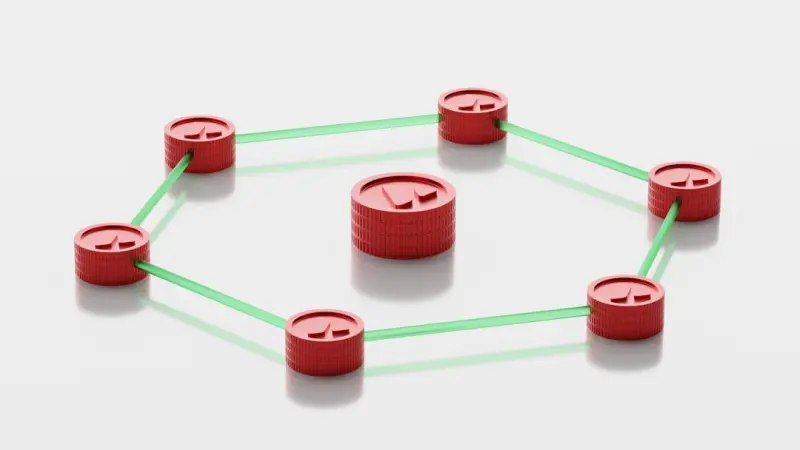
Multi‑Tenant Node.js: Architectural Patterns for Secure SaaS Isolation
Learn how to design a multi‑tenant Node.js platform using process-per-tenant containers, in‑proc... Read More

Node.js at the Edge: Ultra‑Low Latency APIs
Node.js’ event‑driven model and rich ecosystem make it perfect for edge runtimes. This post expl... Read More
Top Posts

Feature Flags: The Safer Path to Continuous SaaS Innovation
Feature flags let SaaS teams ship code continuously while keeping control over what users see, turning risky releases into data‑driven experiments. This post ...Read More

AI‑Powered Debugging: Transforming Node.js Development
AI-powered debugging tools are reshaping Node.js development by providing instant, actionable insights, reducing incident resolution time, and empowering develo...Read More

Why Progressive Web Apps Are the Secret Weapon for Modern E‑Commerce
Progressive Web Apps deliver an app‑like, fast, and offline‑ready experience for shoppers, driving higher conversions and lower bounce rates without the com...Read More

Reseller Hosting: The Agency Growth Engine You’ve Been Overlooking
Reseller hosting isn’t just an add‑on; it’s a strategic growth engine. Learn how agencies can leverage white‑label APIs, tiered support, and future‑pr...Read More
0 Comments
Post Comment
You will need to Login or Register to comment on this post!