
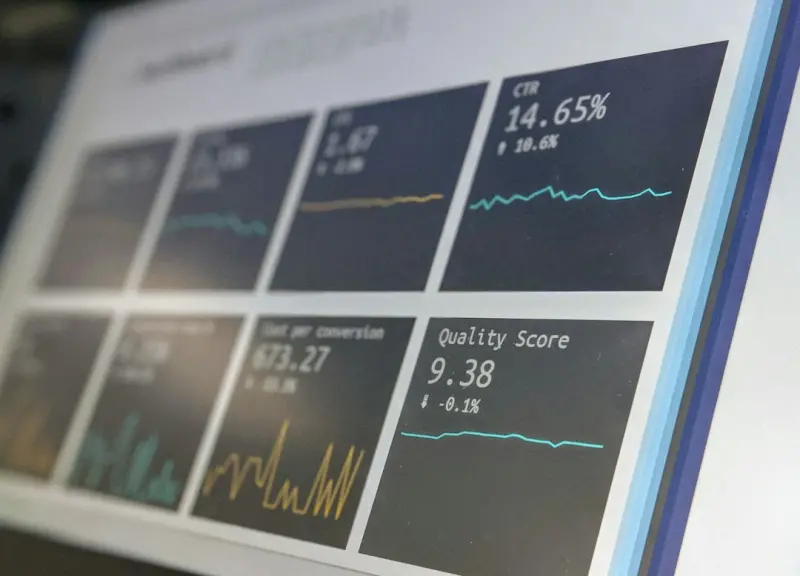
When I first got my hands on a CI/CD pipeline that actually felt like a living organism, I realized DevOps was less about tools and more about the subtle art of orchestrating trust. Today, that insight has evolved into something I call Observability‑First Incident Management. It’s a mindset that treats every metric, log, and trace not as a passive data point, but as a conversational partner that tells you when the system is about to whisper, shout, or explode.
Why Observability Should Lead, Not Follow
Most organizations still treat observability as a “nice‑to‑have” layer slapped on after the fact. They build dashboards after an outage, hoping the graphs will somehow explain the chaos they just endured. That approach is backwards. If you let observability drive your deployment decisions, you gain three powerful benefits:
- Proactive alerts: Instead of waiting for a 500 error, you catch a spike in latency that historically precedes a failure.
- Root‑cause acceleration: Correlating traces with logs reduces MTTR (Mean Time to Recovery) from hours to minutes.
- Team empowerment: Developers own the health of the services they write, fostering a culture where “break‑fast” is a shared responsibility.
From Reactive to Predictive: The Role of Feature Flags
Feature flags have long been a safety net for rolling out new code, but they’re also a perfect conduit for feeding observability data back into your release strategy. Imagine this workflow:
- Deploy a new feature behind a flag.
- Observe key performance indicators (KPIs) in real time.
- If the KPIs dip, automatically roll the flag back without a human touch.
This closed‑loop system turns every deployment into an experiment that self‑corrects, aligning perfectly with the fail fast, learn faster mantra.
GitOps: The Declarative Backbone
GitOps isn’t just a buzzword; it’s the declarative glue that binds observability, feature flags, and infrastructure together. By storing your entire system state—Kubernetes manifests, Helm charts, even flag configurations—in Git, you gain an immutable source of truth. Any drift between the desired state and the live state becomes an observable event, instantly visible in your monitoring suite.
When a drift occurs, a Git‑backed alert fires, opening a pull request that proposes the corrective change. The entire remediation becomes a code review, complete with automated tests and peer approvals. This process eliminates “fire‑fighting” as an ad‑hoc activity and replaces it with a systematic, auditable workflow.
Chaos Engineering as a Trust‑Builder
Injecting controlled failures into your production environment might sound reckless, but it’s one of the most honest ways to validate the observability‑first approach. By simulating network latency, pod crashes, or database timeouts, you can verify that:
- Alerts trigger at the right threshold.
- Feature flags roll back faulty code automatically.
- GitOps pipelines reconcile drift without manual intervention.
When the chaos stops, the confidence you gain is priceless. Teams stop fearing change and start embracing it as a natural part of growth.
Case Study: A SaaS Platform’s Journey
Let me walk you through a real‑world scenario I coached last quarter. The company ran a multi‑tenant SaaS application on a hybrid cloud stack, juggling both on‑premises servers and public cloud VMs. Their incident response relied on a scattered set of Slack alerts and a handful of static Grafana dashboards.
We introduced three pillars:
- Unified observability platform: Consolidated metrics, logs, and traces across environments.
- Feature flag framework: All new endpoints were behind toggles.
- GitOps deployment model: All infrastructure as code stored in a monorepo.
Within six weeks, MTTR dropped from 2.5 hours to under 15 minutes. The team’s confidence surged, and they could now push updates to any microservice without a “release night” ceremony. For those still on a hybrid model, the Hybrid Cloud Hosting: A Pragmatic Playbook for SaaS Leaders offers a solid foundation to start unifying observability across clouds.
Bridging the Gap with Self‑Healing APIs
While feature flags and GitOps handle the application layer, the service layer can benefit from autonomous recovery. The concept of self‑healing APIs—where an endpoint can detect anomalous responses and invoke a fallback—mirrors the philosophy of observability‑first design. A recent deep dive into this topic can be found in Self‑Healing APIs with JavaScript Proxies: A New Paradigm. Integrating such mechanisms means that even if a downstream service fails, your system degrades gracefully, and observability tools capture the deviation for future analysis.
AI‑Assisted Anomaly Detection: A Complement, Not a Replacement
Artificial intelligence has become a hot topic in scaling infrastructure, but it’s important to position AI as a collaborator rather than a ruler. Machine‑learning models can sift through billions of data points to surface subtle anomalies that human eyes would miss. When paired with a robust observability framework, AI can automatically suggest flag toggles, propose GitOps rollbacks, or even spin up additional resources.
For a pragmatic look at AI‑driven scaling, see AI‑Powered Predictive Scaling: The Next Evolution in Managed WordPress Hosting. While the example focuses on WordPress, the underlying principles translate directly to any microservice architecture.
Building a Culture of Observability
Technology alone won’t win the battle; culture will. Here are three actionable steps to embed observability into your team’s DNA:
- Shared ownership: Every engineer owns the health of the services they touch. Rotate on‑call duties and pair debugging sessions.
- Blameless postmortems: Treat incidents as learning opportunities. Document the observability signals that led to detection and the actions taken.
- Continuous learning: Host monthly “Observability Labs” where teams experiment with new dashboards, alert thresholds, or chaos scenarios.
Future‑Proofing Your DevOps Strategy
As we move toward increasingly distributed architectures—edge computing, serverless functions, and IoT—the surface area for failure expands. An observability‑first strategy equips you to handle that complexity, ensuring you can:
- Detect issues before they impact users.
- Automate safe rollbacks via feature flags and GitOps.
- Leverage AI to anticipate scaling needs.
- Maintain trust across hybrid and multi‑cloud environments.
In short, make observability the central nervous system of your DevOps practice, and you’ll find that the once‑daunting task of managing modern, distributed systems becomes a series of manageable, data‑driven decisions.
Conclusion: Trust the Data, Trust the Process
When you let observability lead, you give your teams the confidence to ship faster, recover quicker, and innovate without fear. It’s not a silver bullet, but it’s the most reliable compass we have in the chaotic seas of modern software delivery. Start small—instrument a single service, enable a feature flag, store its configuration in Git, and watch the transformation unfold.

Alex Moss is a digital marketing professional and SEO consultant, focusing on technical and structural SEO along with product development. With more than six years of experience in various facets of digital marketing, he has assisted brands of all sizes in establishing and enhancing their online presence, as well as fostering increased product loyalty.
Related Posts

Why Developer Experience is Your SaaS Secret Weapon
A high‑quality developer experience—self‑service infrastructure, real‑time observability, li... Read More

Shift‑Left Security in CI/CD: Turning Compliance into Velocity
Shift‑left security embeds compliance checks directly into CI/CD pipelines, turning security from ... Read More

DevX‑Driven DevOps: Why Engineer Happiness Is Your Next KPI
A DevX‑first approach transforms DevOps from a set of tools into a people‑focused strategy, link... Read More
Top Posts

Full-Stack Observability: Turning Data Into Seamless User Experiences
A deep dive into building full-stack observability pipelines that connect server logs, API traces, and UI metrics, giving developers the insight needed to deliv...Read More

Navigating GDPR on Shared Web Hosting: Practical Steps for SMBs
A step‑by‑step guide shows small‑to‑mid‑size businesses how to achieve GDPR compliance on shared hosting, covering provider selection, encryption, acc...Read More

Future‑Proofing Shared Hosting: Performance, Security, and DevOps on a Budget
Discover a strategic approach to shared hosting that boosts performance, hardens security, and integrates CI/CD pipelines, turning an affordable plan into a res...Read More

Social Commerce in Action: Turning Conversations into Checkout
A deep dive into the rise of social commerce, covering design, data, technical integration, and a real‑world case study that shows how conversation‑first st...Read More
0 Comments
Post Comment
You will need to Login or Register to comment on this post!