
When I first stumbled on the term “GitOps” a few years ago, it felt like another buzz‑word promising to solve the perennial DevOps headaches of drift, manual hand‑offs, and opaque change histories. Fast‑forward to today, and GitOps has moved from niche experiment to a de‑facto strategy for many enterprise SaaS teams seeking repeatable, auditable, and rapid deployments at scale. In this post I’ll unpack why GitOps is no longer a nice‑to‑have add‑on, but a foundational pillar for modern DevOps, and I’ll share the concrete steps you can take to embed it into your organization without tearing down existing processes.
Why GitOps Resonates with Enterprise Teams
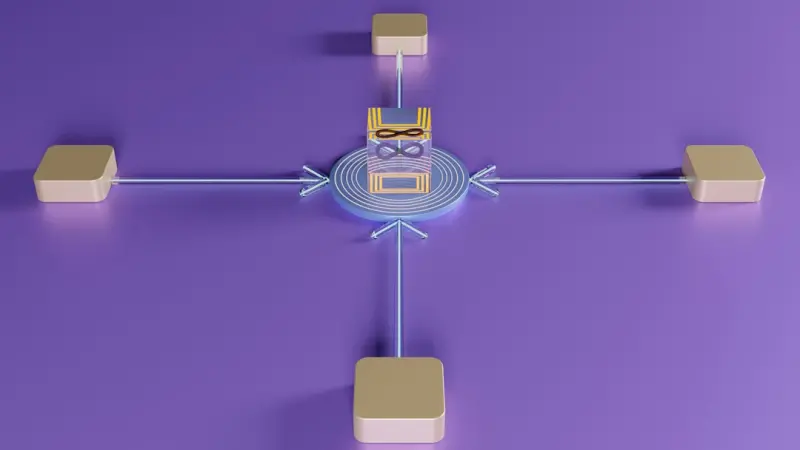
At its core, GitOps is simple: the entire desired state of your infrastructure lives in Git, and an automated agent reconciles the live environment with that source of truth. This concept sounds straightforward, but its implications for large, distributed engineering orgs are profound:
- Single source of truth – Every change, from a Kubernetes manifest to a Terraform module, is versioned, peer‑reviewed, and traceable. No more “who changed the config on prod?” emails.
- Self‑service pipelines – Developers can trigger deployments by merging a pull request, reducing reliance on a siloed release team and cutting lead time dramatically.
- Built‑in auditability – Git’s commit history becomes a compliance log, satisfying auditors who demand proof of who changed what and when.
- Consistent environments – By declaratively describing infrastructure, you eliminate configuration drift between staging, canary, and production clusters.
All of these benefits line up directly with the goals that most senior engineers and CTOs chase: speed, reliability, and governance. Yet the journey to a mature GitOps practice is rarely a clean “flip‑the‑switch.” Below I walk through the stages most enterprises experience, the pitfalls that trip them up, and the tactics that keep the momentum going.
Stage 1: Laying the Groundwork – Treating Git as the Control Plane
The first step is to convince the team that Git isn’t just a code repository; it’s the control plane for your entire stack. This requires:
- Explicit naming conventions for directories, environment folders, and secret handling. A predictable layout makes it easy for new engineers to locate the manifest they need to edit.
- Adopt a “pull request first” culture. Even infrastructure tweaks must go through code review. This enforces peer accountability and surfaces potential issues before they hit a cluster.
- Tooling alignment. Choose a declarative IaC tool that integrates cleanly with Git. For Kubernetes‑centric shops,
kubectl+kustomizeorHelmcan be wrapped in a GitOps controller like full‑stack observability pipelines that surface drift alerts directly in Slack or Teams.
In my experience, the biggest roadblock here is “secret management.” Storing credentials in plain text is a non‑starter, yet many teams initially push YAML files with embedded keys. The answer is to externalize secrets to a vault (e.g., HashiCorp Vault, AWS Secrets Manager) and reference them via SealedSecrets or ExternalSecrets operators. This keeps the Git repo clean while preserving the declarative nature of GitOps.
Stage 2: Automating Reconciliation – The GitOps Controller
With the repo ready, you need a controller that watches for changes and applies them to the cluster. The most popular options are:
- Argo CD – Native to Kubernetes, supports health checks, and provides a UI that visualizes the diff between desired and live state.
- Flux CD – Offers a Git‑centric approach with a smaller footprint and tighter integration with Helm.
- Kepler – An emerging open‑source project focused on multi‑cloud reconciliation.
Whichever you pick, enforce drift detection as a first‑class citizen. The controller should surface any divergence as a failing health check, which in turn triggers alerts and, optionally, automated rollbacks. This tight feedback loop is where GitOps truly shines: you get immediate visibility into configuration anomalies before they affect users.
Stage 3: Scaling GitOps Across Multiple Clusters and Teams
Enterprises rarely have a single Kubernetes cluster. You may be running dozens of clusters across regions, cloud providers, and on‑prem data centers. Scaling GitOps in this context raises two questions:
- How do you keep a single repo coherent across many environments?
- How do you prevent “merge storms” where multiple teams clash over the same manifests?
The answer lies in a layered repository strategy:
- Base repo – Holds common infrastructure (e.g., networking, RBAC policies) that applies globally.
- Environment repos – Fork or overlay the base repo for dev, staging, prod, each with environment‑specific values.
- Team repos – Individual squads own the manifests for the services they build, referencing the shared environment layers via
kustomize basesor Helmdependencies.
Git branching models also help. Adopt a main branch for production, a release branch for staging, and feature branches for dev work. Automation can promote manifests from one branch to the next once tests pass, mirroring the classic CI/CD flow but driven by Git itself.
Stage 4: Integrating Observability and Resilience Practices
GitOps alone doesn’t guarantee stability; you still need to observe and validate that the reconciled state behaves as expected. This is where chaos engineering and robust telemetry become indispensable.
Here’s a practical pattern:
- After a Git push triggers a deployment, automatically spin up a canary instance.
- Run a predefined set of health checks—latency, error rates, resource consumption—using tools like Prometheus, Grafana, or New Relic.
- If the canary passes, promote the change to the full fleet; if not, roll back via the GitOps controller.
- Periodically inject fault scenarios (CPU spikes, network partitions) using a chaos engine such as Litmus or Gremlin. Because the desired state lives in Git, you can safely revert any unintended side‑effects.
This loop closes the feedback gap: every change is validated in production‑like conditions before it becomes the norm, and any regression is automatically detected and corrected.
Stage 5: Embedding Security – Shift‑Left and Shift‑Right
Security teams often view GitOps skeptically, fearing that a compromised repo could become a supply‑chain attack vector. The reality is the opposite: by shifting security checks into the Git pipeline, you catch vulnerabilities earlier.
- Static analysis – Run tools like
Checkov,tfsec, orkube‑scoreon every PR to flag insecure configurations. - Signature verification – Sign container images with Notary or Cosign and enforce verification in the GitOps controller.
- Policy as code – Encode OPA (Open Policy Agent) rules that prevent privileged containers or disallowed ports from being merged.
- Runtime scanning – Complement the “shift‑left” approach with “shift‑right” runtime scanners that continuously validate the live environment against the declared policies.
When security gates are part of the pull‑request workflow, compliance becomes a by‑product of everyday development rather than a separate, disruptive audit step.
Stage 6: Measuring Success – Metrics That Matter
To convince leadership that GitOps is delivering ROI, surface clear metrics:
- Mean Time to Recovery (MTTR) – Compare pre‑ and post‑GitOps MTTR; the automated rollback often cuts recovery time in half.
- Deployment Frequency – Track how many releases per day each team can push. A healthy GitOps pipeline typically sees a 2‑3× increase.
- Change Lead Time – Measure the elapsed time from code commit to production availability.
- Drift Incidents – Count how many times manual changes caused drift before GitOps; the goal is zero.
Visualize these in a dashboard that updates in real time, and tie them to engineering OKRs. The data will speak louder than any marketing slide.
Common Pitfalls and How to Avoid Them
Even with a solid plan, teams stumble. Below are the most frequent mistakes and quick remedies:
- Over‑centralizing the repo – A monolithic repo can become a bottleneck. Split responsibilities by service or domain to keep PRs small and review cycles fast.
- Neglecting roll‑back testing – Just because a controller can revert doesn’t mean it works under load. Include rollback scenarios in your CI pipeline.
- Skipping secret rotation – Automate secret rotation via the vault’s API and commit the rotation plan (not the secret) to Git.
- Ignoring human factors – Provide comprehensive training, clear documentation, and a “GitOps champion” in each squad to shepherd adoption.
Future Trends: GitOps Beyond Kubernetes
While Kubernetes is the poster child for GitOps, the paradigm is spreading:
- Serverless platforms – Tools like
samandterraformcan be driven by Git changes, allowing serverless functions to be versioned and reconciled. - Edge computing – As edge nodes proliferate, a Git‑centric model helps maintain consistency across geographically distributed devices.
- Multi‑cloud governance – By declaring cloud‑specific resources in Git, you gain a single pane of glass for cost, compliance, and capacity across providers.
The common denominator is the same: treat the desired state as code, automate reconciliation, and let the version control system be the ultimate source of truth.
Getting Started: A 30‑Day Playbook
- Week 1 – Audit your current state: Catalog all infrastructure as code tools, identify drift, and map existing CI pipelines.
- Week 2 – Choose a controller: Deploy a pilot Argo CD instance in a non‑critical environment, and migrate one microservice’s manifests to Git.
- Week 3 – Harden the pipeline: Add static analysis, OPA policies, and secret management hooks to the PR workflow.
- Week 4 – Scale and measure: Expand to additional services, enable drift alerts, and start tracking the metrics outlined earlier.
If you follow this roadmap, you’ll have a functioning GitOps pipeline that can be iteratively refined. The key is to start small, prove value, and let the momentum carry you forward.
In the end, GitOps isn’t a magic bullet; it’s a disciplined framework that aligns developers, operators, and security teams around a single, immutable source of truth. When implemented thoughtfully, it reduces toil, accelerates delivery, and creates a resilient foundation for the next generation of SaaS products.

Brian LeBlanc is a front-end web developer, UX designer, and web application developer with experience building scalable, user-friendly digital solutions.Holding a degree from University, he specializes in leveraging a wide array of modern languages, frameworks, and tools—such as JavaScript/ES6, HTML5/CSS3, PHP, and responsive interface design—to create efficient applications that simplify user experiences.
Related Posts
GitOps: Turning Declarative Pipelines into a Competitive Edge
GitOps reimagines the DevOps pipeline by making every infrastructure change a version‑controlled c... Read More

GitOps at Enterprise Scale: Declarative Pipelines for Predictable Releases
A deep dive into how declarative pipelines, self‑service platforms, and integrated observability t... Read More

When AI Joins the War Room: Smarter Incident Response for DevOps Teams
Explore how integrating AI into incident management can cut MTTR, reduce cognitive load, and shift D... Read More
Top Posts

Reinventing Mobile Web Development with Edge‑Driven Micro‑Interactions
Discover a fresh approach to mobile web development that leverages edge computing for instant micro‑interactions, delivering native‑app speed without sacrif...Read More

Beyond the Basics: Mastering VPS Cost & Performance for High‑Growth SaaS
A practical guide to optimizing virtual private servers for SaaS: reduce waste, improve latency, and build a resilient, future‑ready infrastructure using cost...Read More

WebAssembly on Mobile: Native‑Level Speed Without Leaving the Browser
WebAssembly brings compiled‑code speed to mobile browsers, letting SaaS products deliver native‑level performance for data crunching, AI, and secure offline...Read More
WordPress as a Multi‑Tenant Integration Hub for Enterprise SaaS
WordPress can serve as a powerful, secure, and scalable integration hub for enterprise SaaS, offering multi‑tenant isolation, API flexibility, and performance...Read More
0 Comments
Post Comment
You will need to Login or Register to comment on this post!