

Why WebAssembly Is the Secret Weapon for Mobile‑First SaaS Experiences
When I first started building SaaS products on the mobile web, my toolbox was a mix of responsive CSS frameworks, a handful of JavaScript libraries, and a lot of “just make it work” optimism. Fast forward a few releases and I’ve learned that raw JavaScript can only take you so far—especially when you need native‑like performance on a device that’s constantly juggling network latency, battery constraints, and a crowded UI.
Enter WebAssembly (Wasm). It’s not a buzzword; it’s a low‑level binary format that lets you run code written in languages like Rust, C++, or Go directly in the browser, at near‑native speed. For mobile‑first SaaS teams, Wasm opens a new frontier: you can offload heavy computations, render complex visualizations, and even run parts of your business logic on the client without sacrificing security or maintainability.
In this post I’ll walk you through three practical ways to weave WebAssembly into your mobile web strategy, the pitfalls to avoid, and how to future‑proof your CI/CD pipeline so your Wasm modules stay secure and performant.
1. Off‑load Crunchy Calculations to the Edge (and the Device)
Data‑heavy SaaS apps—think real‑time analytics dashboards, AI‑powered recommendation engines, or financial modeling tools—often hit a wall when every calculation forces a round‑trip to the server. The latency spike on mobile networks can be brutal, and users quickly lose patience.
With WebAssembly, you can ship a compiled module that performs those calculations right in the browser. Because Wasm runs in a sandboxed environment, it’s safe, and because it’s compiled to a binary format, it executes dramatically faster than interpreted JavaScript.
- Example: A SaaS offering a live inventory optimizer can ship a Rust‑compiled Wasm module that recalculates optimal stock levels on the client every time a user tweaks a filter. The UI updates instantly, without waiting for a server response.
- Performance tip: Keep the module lean. Only bundle the core algorithm; let the surrounding JavaScript handle I/O, API calls, and UI glue.
When you combine this approach with a CDN that serves the Wasm binary from edge locations, you get a double win: reduced latency from both the network edge and the client side.
2. Elevate UI Fidelity Without Bulking Up JavaScript
Mobile users crave buttery‑smooth interactions. Animations, drag‑and‑drop canvases, and complex data visualizations can feel sluggish if you rely solely on the DOM and CSS. WebAssembly lets you tap into the power of WebGL, Canvas, and even the emerging container queries to build UI components that feel native.
Imagine a SaaS product that lets users design custom reports with a drag‑and‑drop interface. By compiling a C++ graphics engine to Wasm, you can render the canvas at 60fps on a mid‑range smartphone, while keeping the JavaScript layer thin for state management.
Key considerations:
- Progressive enhancement: Serve a lightweight HTML/CSS fallback for browsers that don’t support Wasm (yes, there are a few niche cases). The core experience should still be usable.
- Memory budgeting: Mobile browsers enforce strict memory limits. Profile your Wasm module with Chrome DevTools and keep the heap footprint under control.
3. Secure the Supply Chain with Shift‑Left Practices
Deploying compiled binaries into the browser introduces a new attack surface. You don’t want a rogue Wasm module slipping into production and exposing a zero‑day. That’s where Shift‑Left Security in CI/CD becomes essential.
Here’s my playbook for hardening the Wasm supply chain:
- Static analysis at build time: Use tools like
wasm-objdumpandcargo-audit(for Rust) to scan for unsafe code patterns and known vulnerabilities. - Binary signing: Sign your Wasm artifacts with a private key and verify signatures in the browser before instantiation. This prevents tampering on the CDN.
- Automated fuzz testing: Integrate fuzzers into your CI pipeline to hammer the module with random inputs, catching edge‑case crashes before they hit users.
- Runtime sandboxing: Leverage the browser’s built‑in sandbox, but also enforce additional constraints via
WebAssembly.Memorylimits andWebAssembly.Tablesize caps.
By embedding these checks early—hence “shift‑left”—you turn security from a bottleneck into a velocity booster. Your teams can ship new Wasm features with confidence, knowing that compliance checks are baked into every pull request.
4. Integrate Wasm Into Your Existing Front‑End Stack
Most SaaS teams already have a JavaScript‑centric front‑end stack: React, Vue, or Angular for the UI, and a suite of npm packages for utilities. Introducing Wasm doesn’t mean rewriting everything. Instead, treat Wasm as a first‑class module you can import with the same import syntax you use for JS.
Example using ES6 modules:
import initWasm from './analytics.wasm';

async function loadAnalytics() {
  const wasm = await initWasm();
  const result = wasm.computeMetrics(inputData);
  renderMetrics(result);
}
Because the import is async, you can lazy‑load the module only when the user navigates to the analytics section, preserving the initial page load budget.
5. Future‑Proof With Progressive Web App (PWA) Patterns
WebAssembly and PWAs are a match made in heaven. By caching your Wasm binaries in the service worker cache, you ensure they’re available offline—perfect for SaaS tools used in the field with spotty connectivity.
Here’s a quick service worker snippet:
self.addEventListener('install', event => {
  event.waitUntil(
    caches.open('wasm-cache').then(cache => {
      return cache.addAll([
        '/static/analytics.wasm',
        '/static/ui.wasm'
      ]);
    })
  );
});

self.addEventListener('fetch', event => {
  if (event.request.url.endsWith('.wasm')) {
    event.respondWith(
      caches.match(event.request).then(response => {
        return response || fetch(event.request);
      })
    );
  }
});
Now, even if the user drops their connection, the heavy‑lifting Wasm modules are already on the device, and the UI remains responsive.
6. Real‑World Success Stories (And What They Teach Us)
Several forward‑thinking SaaS products have already taken the Wasm plunge:
- Figma’s design engine: While not a pure Wasm story, they moved core rendering to WebGL via a compiled module, drastically reducing latency on mobile browsers.
- AutoCAD Web App: Uses Rust‑compiled Wasm to power 3D modeling on the web, delivering a near‑desktop experience on tablets.
- Financial SaaS dashboards: Companies have swapped heavy JavaScript charting libraries for a compiled
wasm-bindgensolution, shaving 40% off CPU usage on Android Chrome.
Across these cases, the common denominator is a disciplined CI/CD pipeline (thanks to shift‑left security), a focus on progressive enhancement, and an edge‑centric deployment strategy.
7. Getting Started: A Minimal Roadmap
If you’re convinced but unsure where to begin, follow this three‑step roadmap:
- Identify a candidate workload: Look for CPU‑intensive tasks (e.g., data crunching, image processing) or UI components that struggle with JavaScript performance.
- Prototype in Rust (or Go): Write a small module that mirrors the core algorithm, compile to Wasm using
wasm-packorwasm-bindgen, and drop it into a sandbox page. - Integrate with CI/CD: Add static analysis, binary signing, and fuzz testing to your pipeline. Deploy the module to a CDN, update your service worker cache, and monitor performance with Shift‑Left Security metrics.
Iterate quickly—once you see a 20‑30% latency reduction on mobile, the business case becomes crystal clear.
8. Common Pitfalls and How to Dodge Them
Even seasoned developers can stumble. Here are the top three traps and my quick fixes:
- Pitfall: Over‑complicating the module.Solution: Keep the public API small. Export only what the JS layer needs; hide internal helpers.
- Pitfall: Ignoring memory limits.Solution: Profile with
Performance.memoryand set explicitinitialandmaximummemory pages when instantiating the module. - Pitfall: Neglecting fallback for non‑Wasm browsers.Solution: Detect support early (`WebAssembly.instantiateStreaming`) and gracefully degrade to JS implementations.
Conclusion: A Mobile‑First Future Powered by Wasm
Mobile web development for SaaS is evolving from “make it work on a phone” to “make it feel as fast as a native app while staying secure and maintainable.” WebAssembly is the linchpin that lets us bridge that gap. By off‑loading heavy work to the client, enriching UI fidelity, and tightening security with shift‑left practices, you can deliver a mobile experience that delights users and scales with your product roadmap.
If you’ve been wrestling with laggy dashboards, choppy graphics, or a brittle front‑end codebase, give Wasm a try. The ecosystem is maturing—tooling, documentation, and community support are all on the rise. Pair that with a robust CI/CD pipeline, and you’ve got a recipe for a mobile web product that not only meets today’s performance expectations but also future‑proofs your SaaS for the next wave of web innovation.

Shawn DesRochers is a certified Microsoft technician and Programmer with 30+ year's experience. He has written many reviews on computer related products, software, and SEO related topics. When he's not writing reviews he can be found at one of the Oldest Directories Online Invision Graphics Directory which he is the CEO of. Shawn is a FULL Stack Web Developer. So if you have a project and need assistance dont hesitate to reach out.
Related Posts

Reimagining Mobile Web Development for the Edge‑First Era
A performance‑first, edge‑centric guide that shows how to modernize mobile web development with ... Read More

Adaptive Mobile Web: From Context‑Aware Assets to Edge‑Driven Personalization
Explore a practical framework for adaptive mobile web development that combines context‑aware asse... Read More

Reinventing Mobile Web Development with Edge‑Driven Micro‑Interactions
Discover a fresh approach to mobile web development that leverages edge computing for instant microâ... Read More
Top Posts

Why Conversational Commerce Is the Missing Link in Your Online Store
A deep dive into conversational commerce, showing how unified messaging, AI assistants, and seamless transaction engines turn casual browsers into engaged buyer...Read More

Design Tokens: The Secret Sauce Behind Scalable SaaS Web Design
Design tokens provide a single source of truth for colors, spacing, and typography, enabling SaaS companies to maintain visual consistency, speed up releases, a...Read More
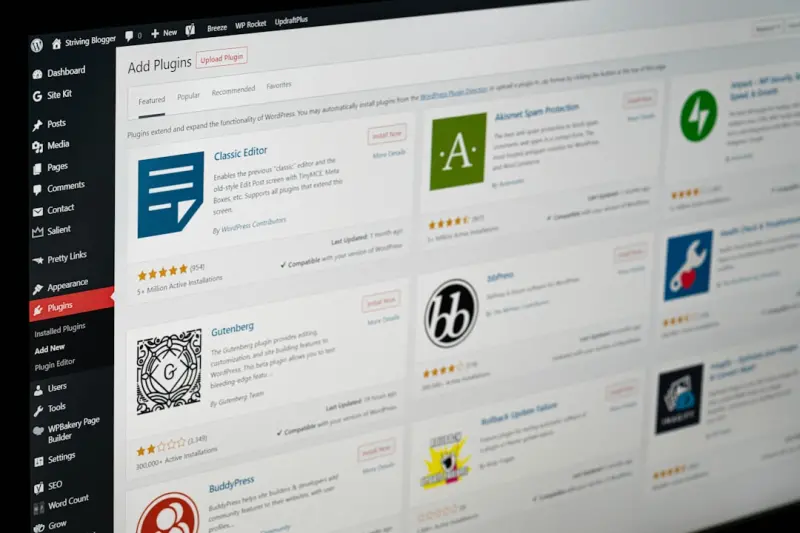
Managed WordPress Hosting: The SaaS Edge You’ve Been Overlooking
A deep dive into why managed WordPress hosting is a strategic advantage for SaaS companies, covering multi‑tenant setups, CI/CD integration, performance tunin...Read More

Why Your SaaS Needs a JavaScript Observability Strategy (And How to Build One)
A deep dive into building a JavaScript observability stack for SaaS, covering browser RUM, Node.js tracing, edge metrics, data pipelines, alerting, and the cult...Read More
0 Comments
Post Comment
You will need to Login or Register to comment on this post!