
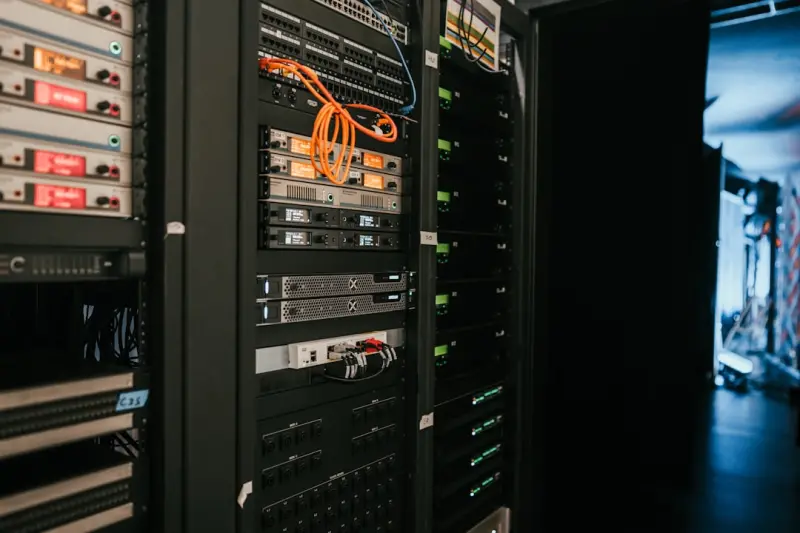
Why Bare‑Metal Dedicated Servers Are the Hidden Engine for AI‑Driven SaaS
When I first started building AI‑enhanced services, the temptation was to spin up the latest cloud‑native stack, chase the hype around serverless functions, and rely on shared compute pools. The reality hit me fast: latency spikes, noisy‑neighbor contention, and opaque cost structures made it difficult to guarantee the performance SLAs my customers demanded. That’s when I turned my attention to the old‑school, but surprisingly modern, world of dedicated, bare‑metal servers. In this piece I’ll walk you through the strategic advantages of dedicated hosting for AI‑centric SaaS, how to align it with your product roadmap, and why it can become a competitive moat you didn’t know you needed.
Performance Isolation – The Quiet Power of Exclusivity
Every AI model you train or infer runs on GPUs, TPUs, or specialized accelerators that demand predictable bandwidth and consistent cycle availability. In a multi‑tenant cloud environment, those resources are shared, and the “noisy neighbor” problem becomes more than a buzzword—it translates directly into jittery response times and failed batch jobs. Dedicated servers give you physical isolation: the CPU cores, memory banks, and PCIe lanes are yours alone. This translates to deterministic performance, a critical factor when you’re serving real‑time recommendations or fraud‑detection scores that must be delivered under strict millisecond budgets.
Cost Predictability at Scale
One of the most under‑appreciated benefits of a bare‑metal commitment is the ability to forecast expenses with confidence. Cloud providers charge by the second, but the hidden fees—data egress, API calls, and storage tier migrations—can balloon unexpectedly. With a dedicated server you pay a fixed monthly or annual rate for the hardware, networking, and power, while still retaining the flexibility to upgrade or swap out components at your own pace. This model aligns perfectly with AI workloads that have relatively stable compute demands once you’ve reached production scale.
Hardware Customization for AI Workloads
AI isn’t a one‑size‑fits‑all job. Some models thrive on high‑core‑count CPUs, others need massive GPU memory, and a few require low‑latency NVMe arrays. Bare‑metal providers let you specify exactly what you need: dual‑socket Intel Xeon or AMD EPYC processors, multiple Nvidia A100 GPUs, or even emerging ASICs. You can also tailor the networking stack—10 GbE, 25 GbE, or even RDMA‑enabled fabrics—so that intra‑node data movement never becomes a bottleneck. This granular control is impossible with most managed cloud offerings where you’re limited to predefined instance families.
Security and Compliance—A Physical Barrier
Compliance regimes such as HIPAA, PCI‑DSS, and GDPR often require explicit physical segregation of data. While cloud providers claim “virtual isolation,” auditors sometimes demand proof of a dedicated hardware footprint. By housing your AI models and data on a dedicated rack, you eliminate the debate about hypervisor vulnerabilities and gain a clear chain‑of‑custody for every byte processed. Add to that the ability to enforce custom firmware policies, BIOS hardening, and even air‑gapped networking when required, and you have a security posture that’s hard to match with shared infrastructure.
Hybrid Cloud Flexibility Without the Vendor Lock‑In
Many SaaS teams think dedicated servers are an all‑or‑nothing proposition, but that’s a myth. You can run a hybrid architecture where the bulk of your inference pipelines live on bare‑metal for speed, while ancillary services—webhooks, analytics dashboards, and user‑facing APIs—continue on a public cloud. This approach lets you leverage the best of both worlds: the elasticity of the cloud for burst traffic and the raw horsepower of dedicated hardware for core AI processing. The key is a robust orchestration layer that can route traffic intelligently, something you can build using open‑source tools like Kubernetes on‑premise.
Real‑World Example: Scaling an NLP SaaS Platform
Let me share a quick case study from a recent client. Their natural‑language‑understanding API was hitting latency ceilings at 150 ms per request when run on a generic cloud instance. By migrating the transformer inference engine to a dedicated server equipped with four A100 GPUs and 1 TB of NVMe storage, they sliced latency down to 35 ms—more than a four‑fold improvement. The cost per request dropped by 30 % after accounting for the predictable hardware lease, and the client could finally meet the SLA required by their enterprise customers. Explore how AI can be integrated with modern JavaScript frameworks for more context on building smarter SaaS features.
Operational Considerations—What You Need to Plan For
Switching to bare‑metal isn’t a “set‑and‑forget” move. You’ll need to think about:
- Provisioning and lifecycle management: Automated installation scripts, configuration management (Ansible, Chef, or SaltStack), and monitoring are essential to keep dozens of servers in sync.
- Network topology: Design a private VLAN for intra‑node communication, and consider a dedicated DDoS mitigation service to protect your public endpoints.
- Backup and disaster recovery: Even with physical isolation, you still need off‑site snapshots and a clear RPO/RTO strategy.
- Team expertise: Your ops team will need a deeper understanding of hardware troubleshooting, firmware updates, and thermal management.
Future‑Proofing Your Investment
AI research moves at a breakneck pace. What’s cutting‑edge today may be obsolete in six months. Dedicated hosting gives you the agility to refresh hardware without re‑architecting your entire stack. Many providers offer “upgrade‑as‑you‑grow” programs where you can swap out GPUs or add new PCIe cards on a quarterly basis. This modularity ensures that your AI SaaS stays competitive without the massive capital expenditures associated with owning a private data center.
When to Say “No” to Bare‑Metal
It’s not a silver bullet. If your SaaS is still in the prototype phase, the overhead of managing physical servers can outweigh the benefits. Likewise, if your workloads are primarily CPU‑bound and don’t require the low‑latency guarantees that AI models demand, a well‑tuned cloud instance may be more cost‑effective. The decision matrix should weigh performance needs, compliance requirements, and long‑term financial planning.
Final Thoughts
Dedicated, bare‑metal servers have been labeled “legacy” for far too long. In the AI‑driven SaaS landscape they are, in fact, the quiet workhorse that delivers the performance, security, and cost certainty that modern enterprises expect. By treating your hardware as a strategic asset rather than a utility, you gain a tangible competitive advantage—one that’s hard for rivals to replicate without a similar commitment. If you’re ready to move beyond the constraints of shared cloud compute, it’s time to explore the dedicated route.
For developers looking to integrate AI capabilities with modern web stacks, check out our guide on leveraging serverless patterns alongside AI workloads. It provides a pragmatic blend of cloud functions and on‑premise compute that can bridge the gap during your migration.

Brian LeBlanc is a front-end web developer, UX designer, and web application developer with experience building scalable, user-friendly digital solutions.Holding a degree from University, he specializes in leveraging a wide array of modern languages, frameworks, and tools—such as JavaScript/ES6, HTML5/CSS3, PHP, and responsive interface design—to create efficient applications that simplify user experiences.
Related Posts
Dedicated Servers: The Unsung Hero of Real‑Time Data Pipelines
Real‑time analytics demand sub‑millisecond latency, predictable resources, and tight security. T... Read More
Why Dedicated Servers Still Matter in a Cloud‑First World
Dedicated servers deliver consistent performance, hardware isolation, and predictable costs that clo... Read More
Edge Dedicated Servers for Low‑Latency SaaS Experiences
Edge‑optimized dedicated servers bring compute closer to users, delivering sub‑millisecond respo... Read More
Top Posts
The Untapped Power of WebAssembly for Mobile Web Apps
A deep dive into why WebAssembly is a game‑changer for mobile web development, covering myths, real‑world use cases, performance budgeting, security, and ed...Read More
Gracefully Sunsetting jQuery in Modern SaaS: A Pragmatic Playbook
A step‑by‑step guide to auditing, testing, and incrementally replacing jQuery in legacy SaaS applications, balancing risk with performance gains and futureâ...Read More

CSS Is Getting Smarter: Container Queries, Cascade Layers, and Subgrid Are Changing the Game
Discover how new CSS features like container queries, cascade layers, and subgrid empower developers to build truly modular, context‑aware designs, streamline...Read More

When jQuery Still Makes Sense for SaaS Teams
A practical look at why jQuery remains useful in certain SaaS scenarios, best practices for its safe integration, and guidance on when to transition to modern f...Read More
0 Comments
Post Comment
You will need to Login or Register to comment on this post!