

Why the Traditional “Keyword‑Stuff” Playbook Is Crumbling
For most eCommerce teams, SEO still feels like a game of keyword bingo: you find a high‑search‑volume term, sprinkle it across titles, meta tags, and product descriptions, and hope Google rewards you with a top‑rank. That approach worked when search engines were primarily text‑centric and catalogs were modest. Today, the reality is starkly different. Search engines have become intent‑driven, visual, and conversational, and the average catalog now runs into tens or hundreds of thousands of SKUs. In this environment, a surface‑level focus on keywords is not just insufficient—it can actively hinder growth.
What you need is a data‑first, architecture‑aware blueprint that aligns every layer of your eCommerce stack—product data, content delivery, site performance, and analytics—around the search engine’s evolving signals. In this post, I’ll walk you through a fresh perspective that goes beyond the usual checklist, showing you how to future‑proof your SEO strategy for the scale and complexity of modern eCommerce.
1. Treat Product Data as the Core SEO Asset
Search engines now treat structured data as a primary source of relevance. When you publish a product page, you’re not just delivering a description for a human reader; you’re providing a rich, machine‑readable signal that can surface your item in rich snippets, shopping ads, and even visual search results. Here’s how to elevate your product data:
- Adopt a unified product information model (PIM) that feeds directly into your CMS. A single source of truth eliminates inconsistencies that would otherwise cause duplicate content warnings.
- Implement comprehensive schema markup. Go beyond the basic
Producttype—includeOffer,AggregateRating,Brand,ItemList, and, when relevant,VideoObjectfor product demos. Google’s guidelines emphasize that richer markup improves the odds of being featured in the “Product” carousel. - Normalize attribute vocabularies. Use controlled vocabularies for color, size, and material. This not only aids internal search but also helps Google match your values against user queries.
When your PIM and CMS are tightly coupled, you can automate schema generation at scale, ensuring that every new SKU inherits the full SEO benefit without manual effort.
2. Leverage a Composable Architecture for SEO Agility
One of the biggest bottlenecks in traditional monolithic eCommerce platforms is the inability to iterate on SEO without risking site stability. The answer lies in a Composable CMS approach—decoupling the content layer from the commerce engine and stitching together best‑of‑breed services via APIs.
Why does this matter for SEO?
- Rapid schema updates. If Google rolls out a new structured‑data type, you can deploy the change in your headless CMS without touching the checkout flow.
- Instant A/B testing of page templates. Serve two different HTML structures to a split audience, measure performance, and lock in the version that yields higher click‑through rates (CTR) and dwell time.
- Scalable personalization. Pull in a real‑time recommendation engine via an API and embed personalized product blocks without bloating your core codebase, preserving page speed—a critical ranking factor.
Adopting composable architecture also positions your eCommerce site to benefit from emerging technologies like edge computing and serverless rendering, which further improve Core Web Vitals—another cornerstone of modern SEO.
3. Real‑Time Content Updates with Event‑Driven Pipelines
Product availability, pricing, and promotional messaging change by the minute. Search engines reward freshness, but many eCommerce sites still rely on nightly batch jobs to push updates to the index. By integrating an Event‑Driven CMS, you can push updates the moment a product’s status changes.
Implementing a real‑time pipeline typically involves:
- Capturing domain events. Whenever inventory levels or prices change, emit an event to a message broker (Kafka, RabbitMQ, etc.).
- Transforming the payload. Enrich the event with SEO‑relevant metadata—canonical URLs, schema snippets, and cache‑busting tags.
- Publishing to the CDN edge. Use edge functions to invalidate or rewrite cached pages instantly, ensuring that both users and crawlers see the most up‑to‑date information.
This approach eliminates the latency between a promotion launch and its visibility in SERPs, giving you a competitive edge in high‑intent searches like “sale on wireless earbuds now”.
4. Harness AI for Search Intent Clustering
Keyword research tools still provide a list of terms, but they don’t reveal the underlying intent clusters that drive conversions. Modern AI models can analyze query logs, on‑site search logs, and even social listening data to surface intent categories such as “research”, “comparison”, “purchase”, and “post‑purchase support”.
Here’s a practical workflow:
- Collect raw query data. Export logs from Google Search Console, internal site search, and paid search platforms.
- Embed queries using a language model. Transform each query into a vector representation that captures semantic similarity.
- Cluster vectors. Apply unsupervised clustering (e.g., K‑means or HDBSCAN) to group queries into intent buckets.
- Map clusters to content types. Align “research” clusters with blog posts, “comparison” clusters with product comparison tables, and “purchase” clusters with optimized product pages.
By aligning your content architecture with these intent clusters, you ensure that every page satisfies a specific user need, improving both relevance signals and conversion rates.
5. Internal Linking at Scale—A Graph‑Based Approach
When you have tens of thousands of products, internal linking becomes a massive, often overlooked, SEO lever. A well‑structured internal link graph distributes link equity, helps crawlers discover deep pages, and improves topical relevance.
Consider building a product‑category graph where each node represents a product or category, and edges represent contextual links (e.g., “customers also bought”, “similar style”). Use a graph database (Neo4j, Amazon Neptune) to store and query this structure.
Benefits include:
- Automated link suggestions. When a new product is added, the system recommends top‑ranking related items based on similarity metrics, ensuring immediate internal link equity.
- Page depth reduction. By strategically placing “hub” pages (e.g., seasonal guides), you reduce the click depth from the homepage to any SKU, a factor that crawlers consider when allocating crawl budget.
- Link equity flow control. Assign weight to edges to prioritize high‑margin products or seasonal promotions, subtly guiding link juice where it matters most.
6. Voice and Visual Search—The Next Frontier
Consumers are increasingly using voice assistants and visual search tools (Google Lens, Pinterest Lens) to discover products. Optimizing for these modalities requires a shift from text‑centric SEO to multimodal signals.
Key tactics:
- Conversational content. Incorporate natural language FAQs that answer questions like “What’s the best waterproof watch for swimming?” Voice assistants often pull from these snippets.
- High‑resolution images with alt text. Use descriptive, keyword‑rich alt attributes and ensure images are served in next‑gen formats (WebP, AVIF) for fast loading.
- Structured data for visual assets. Include
ImageObjectmarkup withcontentUrlandlicensefields, helping Google associate images with product entities.
By embedding these signals, you increase the likelihood of appearing in voice answer boxes and visual search results—both high‑intent, high‑conversion channels.
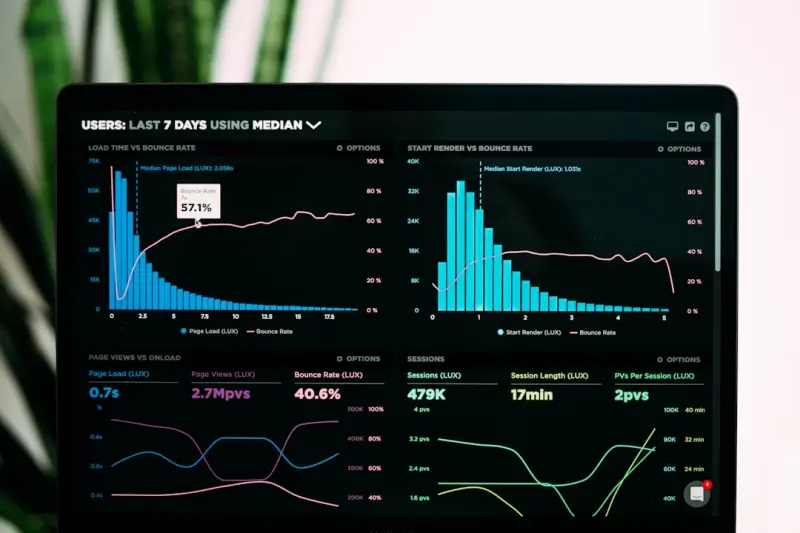
7. Continuous SEO Monitoring with a Data‑Driven Dashboard
All the technical work in the world is moot if you can’t measure its impact. Build a live SEO dashboard that pulls data from multiple sources:
- Google Search Console API for impressions, clicks, and average position.
- Core Web Vitals API for LCP, FID, CLS metrics across device types.
- Product performance metrics (conversion rate, average order value) from your analytics platform.
- Event‑driven alerts when a price change or out‑of‑stock event triggers a drop in ranking.
Set up automated alerts for anomalies (e.g., a sudden 30% drop in impressions for a top‑selling category). When you tie these alerts to your CI/CD pipeline, you can roll back a faulty SEO change or trigger a quick content fix—closing the feedback loop before revenue is impacted.
8. The Human Touch Still Matters
While automation, AI, and composable architectures drive scale, the ultimate test is the shopper’s experience. Conduct regular usability studies to ensure that the SEO optimizations you implement do not compromise the buying journey. A page that ranks well but confuses users will increase bounce rates, sending negative signals to search engines.
In practice, blend quantitative data with qualitative insights. For instance, after launching a new internal linking graph, run a short‑term user test to verify that shoppers can find related products intuitively. Iterate based on feedback, and you’ll create a virtuous cycle where SEO and UX reinforce each other.
Putting It All Together—A Step‑by‑Step Playbook
- Audit your product data. Ensure every SKU has complete, normalized attributes and schema markup.
- Shift to a composable, headless architecture. Decouple the CMS from the commerce engine to enable rapid SEO experiments.
- Implement an event‑driven pipeline. Push real‑time product updates to your CDN and search index.
- Run AI‑driven intent clustering. Align content types with identified search intents.
- Build a graph‑based internal linking system. Automate link equity distribution across your catalog.
- Optimize for voice and visual search. Add conversational FAQs and rich image metadata.
- Deploy a unified SEO dashboard. Monitor rankings, Core Web Vitals, and conversion metrics in real time.
- Validate with user testing. Keep the shopper’s journey at the heart of every technical change.
By following this blueprint, you move from a reactive “keyword‑first” mindset to a proactive, data‑driven SEO engine that scales with your product catalog, adapts to new search modalities, and ultimately drives sustainable revenue growth.
Final Thoughts
eCommerce SEO is no longer a siloed marketing activity. It sits at the intersection of product data engineering, modern web architecture, AI‑enhanced intent analysis, and user experience design. When you treat SEO as a system of interconnected components—each optimized for speed, relevance, and freshness—you unlock a competitive moat that search engines recognize and reward.
Start small: pick a high‑margin category, apply the schema enhancements, set up the real‑time pipeline, and watch the rankings climb. Then iterate, expand, and let the data guide each next step. In the fast‑moving world of online retail, the only way to stay ahead is to let your SEO strategy evolve as quickly as your product catalog does.

Brian LeBlanc is a front-end web developer, UX designer, and web application developer with experience building scalable, user-friendly digital solutions.Holding a degree from University, he specializes in leveraging a wide array of modern languages, frameworks, and tools—such as JavaScript/ES6, HTML5/CSS3, PHP, and responsive interface design—to create efficient applications that simplify user experiences.
Related Posts

Signal‑First eCommerce SEO: Turning Data Into Rankings
A fresh take on eCommerce SEO treats rankings as a live signal pipeline. By mapping product metrics,... Read More
Unlocking the Power of Structured Data for eCommerce SEO Dominance
This guide reveals why structured data is essential for eCommerce SEO, details the key schema types ... Read More

Why Structured Data Is the Secret Weapon for eCommerce SEO
Structured data tells search engines exactly what your products are, letting them appear as rich sni... Read More
Top Posts

Turning Cart Abandonment Into Revenue: A Data‑First Playbook for Modern E‑Commerce
A practical guide that turns cart abandonment into a revenue engine by focusing on trust signals, personalized recovery, progressive web checkout, and sustainab...Read More

Why a VPS Is the Secret Weapon for a Rapid‑Feedback Development Loop
A VPS can be transformed into an automated, disposable sandbox for rapid feedback, enabling engineers to test micro‑services, multi‑tenant models, and AI wo...Read More

Why GitOps Is the Missing Link in Modern DevOps Strategies
GitOps unifies infrastructure and code changes through pull‑requests, delivering versioned truth, automated reconciliation, and built‑in security—making i...Read More

Beyond Keywords: Structured Data Strategies That Transform eCommerce SEO
This article reveals how eCommerce brands can leverage structured data—product, review, offer, and more—to earn rich snippets, improve core web vitals syner...Read More
0 Comments
Post Comment
You will need to Login or Register to comment on this post!