

Why Dedicated Server Hosting Is the Quiet Powerhouse Behind Modern Enterprise Apps
When I first cut my teeth on shared hosting, the allure was obvious: cheap, easy, “just works.” Fast forward a decade, and the conversation has shifted. Today, the real differentiator for high‑stakes workloads—real‑time analytics, AI inference, low‑latency financial transactions—is dedicated server hosting. Not because it’s flashy, but because it gives you the kind of control and predictability that “the cloud” can’t always guarantee.
The Myth of “All‑In‑One” Cloud Services
There’s a pervasive narrative that every modern SaaS can be built entirely on public‑cloud services: serverless functions, managed databases, auto‑scaling containers. While that model works for many use‑cases, it also introduces hidden costs:
- Cold‑start latency: Serverless functions spin up on demand, adding milliseconds—or even seconds—of delay.
- Noisy‑neighbor effects: Multi‑tenant environments can suffer when a neighboring tenant spikes CPU or memory usage.
- Opaque networking: You rarely get granular control over routing, packet shaping, or the ability to run custom kernel modules.
In contrast, a dedicated server gives you a single‑tenant environment where every byte of CPU, RAM, and I/O is yours alone. That predictability is a game‑changer for workloads that can’t tolerate jitter.
Real‑World Scenarios Where Dedicated Wins
Let’s walk through three concrete scenarios where the advantages of dedicated servers become undeniable.
1. Real‑Time Data Pipelines
Imagine a fintech platform that processes market data feeds in microseconds. The pipeline ingests a high‑velocity stream, normalizes it, and feeds it into a risk‑calculation engine. Any millisecond of latency can translate into millions of dollars at stake.
On a shared or generic cloud VM, you might contend with:
- Variable network throughput due to shared NICs.
- CPU throttling when the hypervisor reallocates cores.
- Unexpected OS‑level interrupts from other tenants.
By contrast, a dedicated server with a high‑performance NIC (10 GbE or 25 GbE) and CPU pinning gives you a guaranteed bandwidth pipe. You can even enable confidential computing enclaves to protect sensitive data in transit, something that many public‑cloud services only offer as an add‑on.
2. AI/ML Inference at Scale
Machine‑learning inference often requires GPUs or specialized accelerators. While many cloud providers now sell GPU instances, the price per compute hour can be astronomical, and you still face the “noisy neighbor” problem.
With a dedicated server, you can:
- Install the exact driver stack you need, without waiting on provider‑managed updates.
- Run multiple inference services side‑by‑side, each with its own allocated GPU memory.
- Fine‑tune the kernel for low‑latency memory paging, a crucial factor for large model weights.
The ROI becomes evident when you compare per‑inference cost on a dedicated GPU server versus a cloud on‑demand GPU instance. The dedicated model often reduces costs by 30‑50 % while delivering consistent latency.
3. Legacy Enterprise Systems Migration
Many large enterprises still run monolithic ERP or CRM systems on Windows Server or legacy Linux distributions. Moving these to a public cloud can be a massive undertaking, requiring code refactoring, data re‑architecture, and extensive testing.
Dedicated servers provide a safe migration bridge. You can:
- Clone the existing environment exactly—same OS, same patches, same networking stack.
- Run integration tests in an isolated environment that mirrors production hardware.
- Gradually phase out the old data center without risking service disruption.
In my experience, treating the dedicated server as a live lab for migration experiments saves weeks of engineering time and eliminates costly roll‑backs.
Performance Engineering: What You Can Do on a Dedicated Box
Owning the hardware means you can engage in performance engineering that’s impossible on a multi‑tenant platform.
Kernel Tweaks
Adjusting kernel parameters—like net.core.somaxconn for backlog queues or vm.swappiness to control swap usage—can shave off microseconds from request processing. Because you control the entire stack, you can also compile a custom kernel optimized for your workload (e.g., low‑latency preemptible kernels for trading platforms).
Network Stack Optimizations
Dedicated servers let you install and configure DPDK (Data Plane Development Kit) or SR‑IOV to bypass the kernel network stack entirely. The result is a 10‑x increase in packet throughput and sub‑microsecond latency—critical for gaming servers, VoIP services, or any UDP‑based protocol.
Storage Choices That Matter
While SSDs are the default, you can opt for NVMe drives that provide up to 5 GB/s of sequential read/write. Pair that with a RAID‑0 stripe for burst workloads, and you have a storage pipeline that can keep up with high‑frequency transaction logs.
Security Advantages You Can’t Overlook
Security is often the first reason organizations balk at moving to the cloud, but dedicated servers offer a unique set of controls:
- Physical isolation: No other tenant can physically tap into your NIC or RAM.
- Custom firewall rules: You can run
iptablesornftableswith full visibility, without provider‑imposed limits. - Hardware‑rooted trust: TPM modules can be leveraged for secure boot, ensuring the box only runs signed firmware.
Combine these with confidential computing enclaves, and you’ve built a security posture that rivals even the most hardened cloud VPCs.
Cost Modeling: When Dedicated Beats the Cloud
Many decision‑makers default to “cloud is cheaper because you pay as you go.” That’s a simplistic view. Let’s break down a realistic cost model for a medium‑scale SaaS handling 2 TB of daily logs, 500 GB of active data, and requiring 8 vCPU‑equivalent compute.
| Component | Dedicated Server (Annual) | Equivalent Cloud (Annual) |
|---|---|---|
| Hardware amortization | $12,000 | — |
| Managed support & SLA | $3,000 | $6,000 |
| Power & cooling (colocation) | $2,500 | — |
| Bandwidth (1 TB outbound) | $1,200 | $2,400 |
| Backup & DR (off‑site) | $1,800 | $2,800 |
| Software licenses (OS, monitoring) | $1,500 | $2,500 |
| Total | $22,000 | $26,200 |
At first glance, the cloud still looks close, but this model excludes variable scaling spikes. If your traffic doubles for a week, the cloud bill can balloon by >30 %. Dedicated hardware, on the other hand, handles the spike with the same baseline cost—only the electricity may rise marginally.
Operational Discipline: The Hidden ROI
Running a dedicated box forces you to adopt operational best practices that pay dividends:
- Automated provisioning: Use
TerraformorAnsibleto spin up identical configurations across multiple racks, reducing manual errors. - Observability pipelines: Deploy full‑stack observability tools (e.g., Prometheus + Grafana) with custom exporters for hardware metrics—CPU temperature, NIC errors, etc.
- Continuous security hardening: Regularly patch the kernel and firmware, a habit that reduces exposure compared to “set‑and‑forget” cloud images.
These practices echo the principles I championed in my feature‑flags at scale article: consistency, visibility, and rapid rollback capability.
Choosing the Right Provider: What to Look For
Not all dedicated hosting is created equal. Here’s a quick checklist:
- Network redundancy: Dual‑uplink carriers, anycast routing, and BGP peering options.
- Hardware refresh policy: Providers should replace servers at least every 3‑4 years to keep up with CPU and memory advancements.
- Managed services tier: If you lack an in‑house sysadmin team, look for 24/7 monitoring, proactive replacement, and SLA‑backed hardware guarantees.
- Customizability: Ability to choose NICs, storage controllers, and even bring your own OS image.
- Security certifications: ISO 27001, SOC 2, and compliance with GDPR or HIPAA if applicable.
Future‑Proofing: Dedicated Servers in an AI‑First World
We’re on the cusp of an AI‑first era where inference workloads will dominate data‑center usage. Dedicated servers are uniquely positioned to evolve alongside this trend. You can retrofit a standard rack‑mount box with GPUs, FPGAs, or even emerging AI‑specific ASICs without waiting for a cloud provider to roll out a new instance type.
Moreover, the rise of edge computing—processing data close to its source—means you’ll see more micro‑data‑centers powered by dedicated hardware placed at telco exchanges or 5G sites. In that scenario, the “dedicated” part is not a luxury; it’s a necessity for low‑latency, high‑throughput workloads.
Wrapping Up: When to Double‑Down on Dedicated
If any of the following rings true for your organization, it’s time to re‑evaluate your hosting strategy:
- You need sub‑millisecond latency for mission‑critical transactions.
- Your workloads consistently consume >70 % of the allocated CPU on a cloud VM, indicating under‑utilization of paid resources.
- Compliance or data‑sovereignty mandates require physical isolation.
- You’re building a product that will eventually need GPU or FPGA acceleration.
Dedicated server hosting isn’t a step back; it’s a strategic move toward predictability, performance, and long‑term cost efficiency. In a world obsessed with “the cloud,” the quiet, single‑tenant powerhouse often ends up being the most reliable partner for scaling the next generation of SaaS.

Dale Peterson is a freelance writer with a passion for technology, travel, law and personal finance. With 10 years of experience crafting compelling and informative content, he's dedicated to delivering high-quality writing for Blogging Fusion that engages audiences and achieves specific goals.
Related Posts

Unlocking the Strategic Advantage of Bare‑Metal Dedicated Servers for SaaS Growth
Dedicated servers offer predictable performance, compliance isolation, and cost efficiencies that mo... Read More
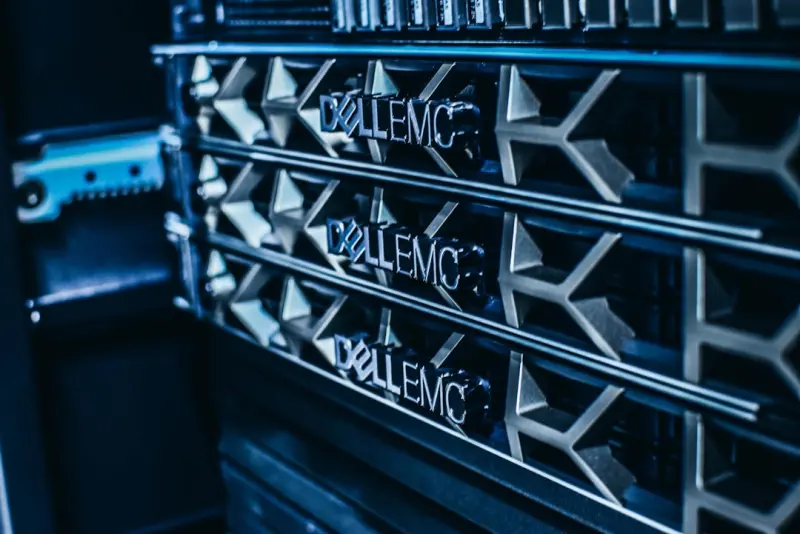
Compliance‑First Dedicated Server Strategy: Turning Regulation into Advantage
Discover a step‑by‑step guide to building a compliance‑first dedicated server environment that... Read More

Dedicated Servers: The Unsung Heroes of SaaS Scaling
Dedicated servers offer predictable performance, strict security, and cost certainty, making them a ... Read More
Top Posts

Bootstrap Beyond the Grid: Crafting Accessible, Token‑Driven UI Systems
Explore a fresh, accessibility‑first approach to Bootstrap that leverages design tokens, utility APIs, and platform‑team collaboration to build scalable, in...Read More
Why Accessibility‑First WordPress Themes Are a Game‑Changer for B2B SaaS
An accessibility‑first WordPress theme drives higher conversion, lowers support costs, and safeguards your SaaS against compliance risks—making inclusive de...Read More
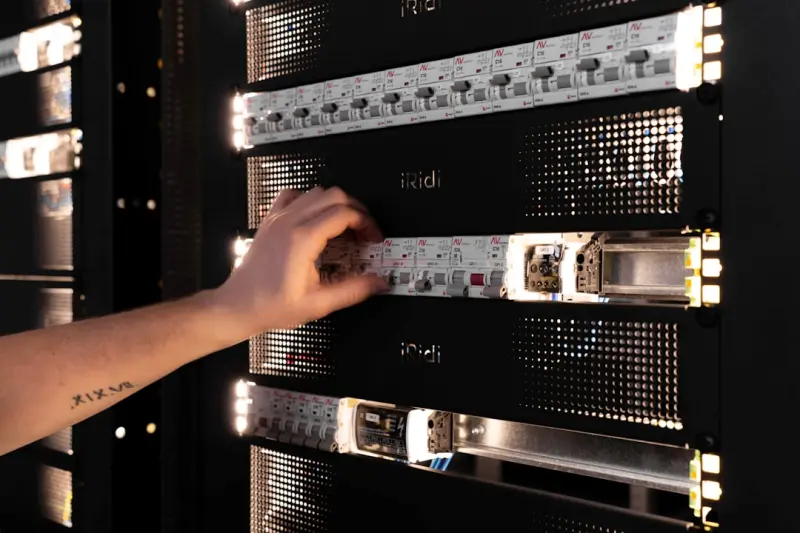
Turning Reseller Hosting into a Self‑Service Profit Engine
A deep dive into building an automated, self‑service reseller hosting platform—covering provisioning APIs, real‑time billing, security foundations, and a ...Read More

Semantic SEO for eCommerce: Turning Data Into Search Dominance
Discover how to build an intent graph, deploy advanced schema markup, and index user reviews as crawlable pages, turning every data point on your store into a p...Read More
0 Comments
Post Comment
You will need to Login or Register to comment on this post!