

Why Your Next Growth Sprint Needs a Bare‑Metal Powerhouse
When I first left the comfort of my laptop’s built‑in dev environment and stepped onto a rack‑mounted machine, I realized I’d been missing a whole dimension of control. Not the kind of control you get from a fancy UI dashboard, but the gritty, hardware‑level authority that lets you dictate every CPU cycle, every I/O path, and every network packet. That’s what a dedicated server offers—pure, unfiltered horsepower that you can tune to your product’s exact demands.
From “Good Enough” to “Mission Critical”
Most SaaS teams start small, leveraging shared or cloud instances to get off the ground. Those solutions are cheap and quick, but as the product matures, the margin for error shrinks dramatically. One jittery latency spike or a noisy neighbor stealing cache can turn a flawless experience into a churn driver.
Dedicated servers eliminate that noisy‑neighbor effect entirely. Because the entire machine is yours, you gain predictable performance, isolated network stacks, and the ability to run custom kernel modules that would be forbidden on a multi‑tenant cloud VM. In other words, you move from “good enough for a prototype” to “mission critical for a paying customer.”
When Bare Metal Beats the Cloud
It’s easy to assume that cloud providers automatically win every use case—after all, they promise elasticity and a pay‑as‑you‑go model. The reality is more nuanced. Here are three scenarios where a dedicated server actually outperforms the cloud:
- Consistent, Low‑Latency Compute. Real‑time analytics, high‑frequency trading, or interactive gaming demand sub‑millisecond response times. Bare‑metal CPUs, especially those with high‑core counts and turbo boost, deliver a steadier baseline than burstable cloud instances.
- Heavy I/O Workloads. Large‑scale ETL pipelines or video transcoding churn terabytes of data daily. With a dedicated server you can equip NVMe drives, configure RAID levels, and fine‑tune the I/O scheduler to squeeze every MB/s out of the hardware.
- Regulatory & Compliance Constraints. Industries such as finance, healthcare, and government often require physical isolation, specific hardware certifications, or the ability to perform on‑prem forensic imaging. A dedicated rack gives you the audit trail and control that a shared cloud environment simply can’t guarantee.
Designing for the Future: Hybrid Architecture
Going all‑in on bare metal doesn’t mean you have to abandon the cloud entirely. In fact, the most resilient modern stacks blend both worlds. Think of a dedicated server as the core where your latency‑sensitive services run, while auxiliary workloads—batch processing, backups, global CDN—live in the cloud.
Here’s a quick blueprint I’ve used for several clients:
- Core Services on Bare Metal. Deploy your API gateway, authentication layer, and real‑time data pipelines on a dedicated machine. Use dedicated server fundamentals to configure CPU pinning, hugepages, and kernel tuning.
- Stateless Workers in the Cloud. Offload background jobs, email dispatch, and analytics to auto‑scaling cloud containers. This keeps your core lean while still handling traffic spikes.
- Cross‑Region Replication. Mirror your database to a cloud‑based read replica for disaster recovery. The dedicated server acts as the primary writer, while the cloud replica ensures continuity if the rack fails.
Cost Modeling: The Myth of “Expensive” Bare Metal
One of the biggest objections I hear is price. “Dedicated servers are pricey,” says the CFO. The answer? Look at total cost of ownership (TCO) rather than monthly bills.
Consider these hidden expenses on cloud:
- Data egress fees—especially brutal for data‑intensive SaaS.
- Performance penalties that force you to over‑provision instances, inflating costs.
- Licensing constraints on software that only offers per‑core pricing on virtual CPUs.
When you factor in these variables, a well‑negotiated dedicated server contract—often with a 1‑ or 3‑year term—can undercut a cloud deployment by 20‑30%. Plus, you gain the ability to amortize hardware costs over multiple product cycles.
Security Benefits You Can’t Ignore
Security isn’t just a checklist; it’s a continuous mindset. Bare‑metal servers give you three layers of defensive advantage:
- Physical Isolation. No other tenant can sniff your memory or compromise your hypervisor.
- Custom Hardening. Install a minimal OS, drop unnecessary services, and apply kernel patches on your own schedule. You can also enable technologies like Intel SGX or AMD SEV for enclave‑level protection.
- Network Segmentation. With dedicated NICs, you can build separate VLANs for admin traffic, API traffic, and backup streams, each with its own firewall ruleset.
For regulated sectors, this level of isolation can be the difference between passing an audit and having to re‑architect your entire stack.
Environmental Footprint: A Counter‑Intuitive Edge
While “green hosting” is a hot topic, the conversation often centers on public clouds buying renewable energy credits. Dedicated servers, when sourced from providers that operate their own data centers, can actually offer a more transparent carbon profile. You can choose a colocation facility that runs on 100% renewable power, track PUE (Power Usage Effectiveness) metrics, and even install on‑site solar panels.
For companies that need to report sustainability metrics, this granular visibility is a huge win. It’s also a solid narrative for marketing: “Our platform runs on responsibly sourced hardware, delivering high performance with a low carbon imprint.”
Choosing the Right Provider
Not all dedicated‑server vendors are created equal. Here’s a short due‑diligence checklist I use before signing a contract:
- Network Redundancy. Look for multiple upstream carriers, BGP anycast, and at least 10 Gbps uplinks.
- Hardware Refresh Cycle. Providers that replace servers every 18‑24 months ensure you’re not stuck on outdated CPUs.
- Support SLA. 24/7 on‑site or remote hands with a guaranteed response time of under 30 minutes for critical incidents.
- Customization Options. Ability to choose GPU‑enabled rigs, high‑speed NVMe, or FPGA cards if your workload demands it.
- Compliance Certifications. Verify SOC 2, ISO 27001, PCI‑DSS, or HIPAA compliance based on your industry.
Many providers also bundle managed services—think automated OS patching, backup snapshots, and monitoring dashboards. While you still retain full control, you offload routine ops to seasoned engineers.
Real‑World Example: Scaling a Real‑Time Collaboration Platform
One of my recent projects involved a collaboration suite that needed to support thousands of concurrent video streams, live document editing, and AI‑assisted suggestions. The initial architecture relied on cloud VMs for the media servers, but latency spiked during peak hours, and the egress costs ballooned.
We migrated the media plane to a rack of dedicated servers with dual 100 Gbps NICs, tuned the kernel for low‑latency networking, and deployed hardware‑accelerated codecs. The result?
- Average video latency dropped from 250 ms to under 80 ms.
- Monthly egress costs fell by 45%.
- The team could run custom kernel modules that prioritized RTP traffic, something not possible on the cloud VMs.
Meanwhile, the collaboration document service stayed in the cloud, leveraging auto‑scaling for occasional spikes. The hybrid approach gave us the best of both worlds: ultra‑low latency where it mattered, and elastic capacity where it didn’t.
Future‑Proofing with Modular Hardware
Technology moves fast, and you don’t want to be stuck with a single‑purpose server forever. Look for providers that support modular upgrades—add a GPU blade, swap in faster storage, or expand memory without a full rack replacement. This modularity aligns with a product roadmap that might start with a CPU‑intensive API and later incorporate machine‑learning inference.
In practice, this means you can begin with a modest 32‑core, 256 GB RAM configuration and, when your AI models demand more, snap in a GPU accelerator without downtime. The flexibility mirrors the cloud’s elasticity, but with the performance guarantees of bare metal.
Conclusion: The Strategic Edge of Dedicated Servers
Dedicated server hosting isn’t a relic for legacy monoliths; it’s a strategic lever for modern, high‑performance SaaS products. By embracing the control, predictability, and security that bare metal provides, you can carve out a competitive advantage that cloud‑only solutions struggle to match.
If you’re at the inflection point where latency, compliance, or cost‑predictability are becoming blockers, it’s time to evaluate a dedicated‑server‑first architecture. Pair it with a selective cloud layer, and you’ll have a resilient, future‑ready platform that scales with your ambition.

Shawn DesRochers is a certified Microsoft technician and Programmer with 30+ year's experience. He has written many reviews on computer related products, software, and SEO related topics. When he's not writing reviews he can be found at one of the Oldest Directories Online Invision Graphics Directory which he is the CEO of. Shawn is a FULL Stack Web Developer. So if you have a project and need assistance dont hesitate to reach out.
Related Posts
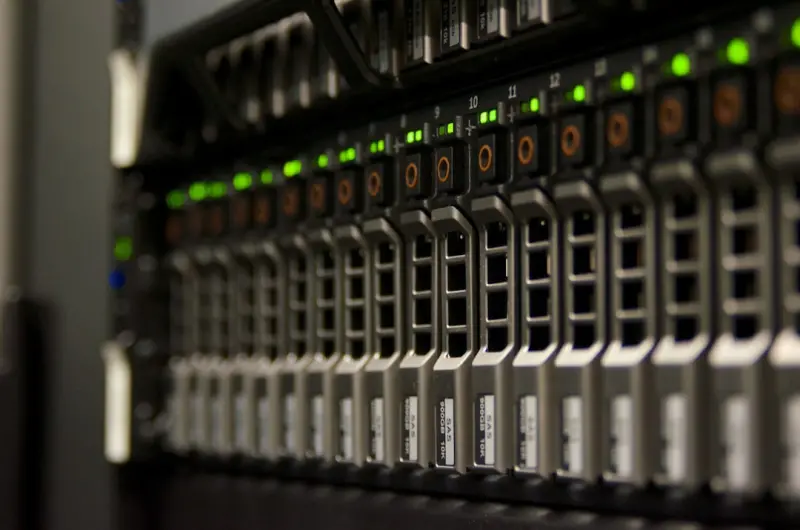
Dedicated Server Hosting: The Compliance Backbone for Regulated SaaS
Dedicated server hosting offers physical isolation, hardware‑level security, and predictable costs... Read More
Edge Dedicated Servers for Low‑Latency SaaS Experiences
Edge‑optimized dedicated servers bring compute closer to users, delivering sub‑millisecond respo... Read More

Dedicated Server Hosting: The Untapped Engine for Real‑Time SaaS Performance
Dedicated servers deliver low‑latency, high‑throughput power for real‑time SaaS workloads, pro... Read More
Top Posts

Edge‑Powered Mobile Web: Speed, Security, and Seamless UX
A deep dive into leveraging edge functions, progressive web apps, and real‑world connectivity strategies to build faster, more secure mobile web experiences t...Read More
Shared Hosting Strategies for Modern SaaS Teams
Shared hosting isn’t obsolete—learn how SaaS teams can leverage it for cost‑effective launches, boost performance, ensure security, and plan smooth upgrad...Read More

Why AI‑First Content Management Systems Are the Future of B2B SaaS
AI‑first Content Management Systems turn static content libraries into dynamic, learning engines, delivering real‑time personalization, automated workflows,...Read More

Mastering Mobile Web Development for B2B SaaS: A Pragmatic Playbook
Discover a practical, end‑to‑end strategy for mobile web development that boosts performance, consistency, and user adoption in B2B SaaS, complete with acti...Read More
0 Comments
Post Comment
You will need to Login or Register to comment on this post!