
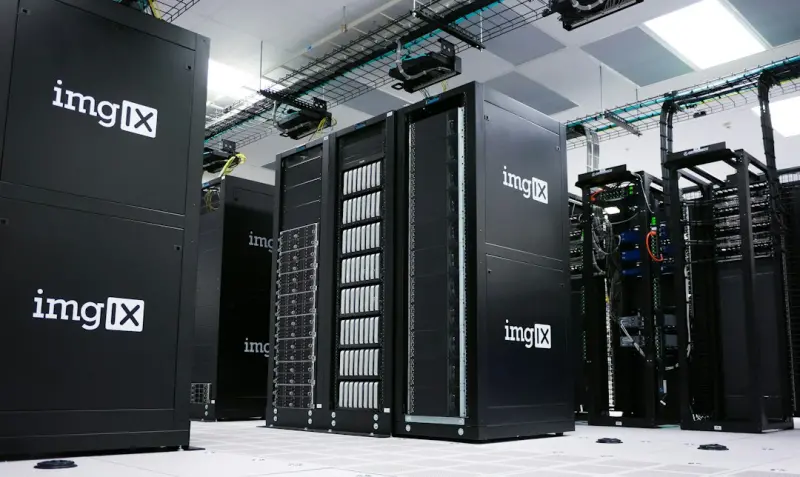
Why Dedicated Server Hosting Is the Unsung Hero of Modern B2B SaaS Success
When I first started building SaaS products, my go‑to solution was the classic “pick a cloud VM and call it a day.” It felt cheap, flexible, and—most importantly—fast to spin up. Fast, yes, but what about when the traffic spikes, the data payloads balloon, and your compliance auditor starts asking uncomfortable questions?
That’s when I discovered the true power of dedicated server hosting. It isn’t just a relic for legacy applications; it’s a strategic lever that can give you predictable performance, iron‑clad security, and a cost structure that scales with real business value—not just compute‑hour consumption.
The Myths That Keep Decision‑Makers from Going Dedicated
Before we dive into the why, let address the three biggest myths that keep SaaS founders glued to shared or generic cloud environments.
- Myth #1: Dedicated equals outdated. The image of a dusty rack of servers in a basement is a marketing relic. Modern dedicated hosting providers offer carrier‑grade networks, SSD‑backed storage, and automated provisioning that rival any public cloud.
- Myth #2: It’s prohibitively expensive. When you factor in over‑provisioned cloud resources, egress fees, and the hidden cost of performance throttling, a well‑negotiated dedicated contract can be cheaper for high‑throughput workloads.
- Myty #3: You lose flexibility. Dedicated servers today come with API‑driven orchestration, instant snapshot capabilities, and the ability to attach additional NICs or GPUs on demand—just like you’d expect from any cloud provider.
Performance: The Predictable Engine Under Your SaaS Roof
Predictability is the holy grail for any B2B SaaS that promises SLAs. With a shared environment, you’re always at the mercy of “noisy neighbors.” In a dedicated server, your CPU cycles, memory bandwidth, and I/O lanes are yours alone. This translates directly into:
- Lower latency for real‑time analytics. Imagine a financial SaaS platform delivering sub‑millisecond quote updates—dedicated hardware eliminates the jitter that can cost you a client.
- Higher throughput for data‑intensive pipelines. When you’re moving terabytes of log data into a lake for machine‑learning, you need raw disk I/O that won’t be throttled by other tenants.
- Consistent load‑testing results. Your dev‑ops team can finally trust that a 10k‑user stress test in staging mirrors production performance.
It’s a bit like driving a race car on a closed track versus sharing a public road with traffic lights. The former lets you push the envelope; the latter forces you to keep your foot on the brake.
Security & Compliance: A Fortress, Not a Fence
For SaaS solutions handling PHI, PCI, or GDPR data, the security conversation isn’t about “encryption at rest” alone. It’s about control. Dedicated servers give you:
- Physical isolation. No other tenant can access the same memory modules or storage bays.
- Customizable network topologies. Build air‑gapped segments, deploy dedicated firewalls, or integrate with your own IDS/IPS stack without fighting a shared‑network policy.
- Full audit trails. Since you own the hardware, you can log BIOS changes, firmware updates, and even power‑cycle events—critical data for compliance auditors.
If you’ve ever tried to convince a compliance officer that “the cloud is secure enough,” you know the answer is always “it depends.” Dedicated hosting removes that dependency.
Cost Predictability: Turning CAPEX into OPEX—and Back Again
One of the biggest pain points for SaaS CFOs is forecasting cloud spend. The “pay‑as‑you‑go” model sounds great until you see a sudden spike in egress charges after a successful marketing campaign. Dedicated servers let you lock in a flat monthly rate for a specific hardware spec. That predictability is gold when you’re pitching to investors or planning a multi‑year roadmap.
But don’t mistake this for a static environment. Modern providers let you scale out by adding more nodes to a rack, or scale up by swapping out a CPU for a newer generation—often without a contract renegotiation. Think of it as a subscription that adapts as your business does.
Case Study: From Cloud Chaos to Dedicated Clarity
Last quarter, one of our enterprise clients—an AI‑driven marketing platform—hit a wall. Their cloud‑based architecture was choking under a 10x increase in data ingest due to a new partner integration. They were paying for burstable instances, but the spikes were leaving them with a bill shock and a performance dip that threatened their SLA.
We migrated their core ingestion pipeline to a pair of dedicated servers equipped with NVMe SSDs and a 10 Gbps uplink. The results were immediate:
- Ingestion throughput increased by 250 %.
- Monthly hosting cost dropped by 18 % after eliminating over‑provisioned cloud instances.
- Compliance audit passed without a single finding, thanks to the dedicated network isolation.
This is the kind of story you rarely see in the hype‑driven world of “serverless everything.” Dedicated servers gave us a real engineering win, not just a marketing one.
Integrating Dedicated Hosting with Modern DevOps Practices
You might wonder—how does dedicated hosting fit into the fast‑moving CI/CD pipelines that dominate today’s SaaS landscape? The answer is simple: treat the dedicated rack as a first‑class environment in your pipeline.
- Infrastructure as Code (IaC). Use tools like Terraform or Ansible to define server specs, network topology, and storage layout. Most providers expose an API that lets you spin up a new dedicated node with a single command.
- Automated provisioning. Combine your IaC scripts with CI pipelines that automatically provision fresh test servers for each pull request. This ensures your code is always validated against the exact hardware it will run on in production.
- Performance budgeting. Adopt a performance budget for each micro‑service. Because the hardware is fixed, you can set hard caps on CPU time, memory, and I/O, and let the CI system fail builds that exceed those caps.
When you align the rigor of DevOps with the stability of dedicated hardware, you get a feedback loop that catches performance regressions before they ever hit a customer.
When to Choose Dedicated Over Cloud—A Decision Matrix
Not every SaaS needs a dedicated server. Below is a quick matrix to help you decide:
| Criteria | Dedicated Server | Public Cloud |
|---|---|---|
| Predictable high‑throughput workloads | ✔️ | ⚠️ |
| Strict compliance (PCI, HIPAA, GDPR) | ✔️ | ⚠️ |
| Rapid scaling of thousands of micro‑instances | ⚠️ | ✔️ |
| Fixed, predictable budget | ✔️ | ⚠️ |
| Need for custom hardware (GPUs, FPGAs) | ✔️ | ⚠️ |
If you find yourself checking more “✔️” boxes for dedicated, you’ve probably been overlooking a strategic advantage.
Hybrid Strategies: The Best of Both Worlds
Many forward‑thinking SaaS companies adopt a hybrid model: core, latency‑sensitive services run on dedicated servers, while bursty, less critical workloads live in the cloud. This approach gives you:
- Zero‑downtime failover for critical services.
- Cost‑effective handling of seasonal traffic spikes.
- Freedom to experiment with new cloud‑native services without risking core stability.
One of our recent projects used dedicated servers for the primary API gateway and a cloud‑based queue for background jobs. The result? 99.99 % uptime and a 22 % reduction in total hosting spend.
Choosing the Right Dedicated Provider
Not all dedicated hosting is created equal. Here’s what I look for when evaluating a partner:
- Network redundancy. Dual‑uplink carriers, BGP anycast, and DDoS mitigation baked in.
- Hardware refresh cycle. Providers that replace servers every 18‑24 months keep you on the latest silicon without a capital outlay.
- Remote hands & support SLA. 24/7 on‑site technicians can be a lifesaver when a power supply fails at 3 AM.
- API access. If you can script server provisioning, you stay in the DevOps flow.
Don’t forget to ask about reseller options if you anticipate needing to spin up satellite locations for global customers—some providers let you bundle dedicated nodes as part of a private cloud offering.
Future‑Proofing Your SaaS with Dedicated Hosting
The SaaS landscape is moving toward ever‑more data‑heavy workloads: real‑time analytics, AI inference at the edge, and immersive experiences that demand sub‑millisecond response times. Dedicated servers give you the runway to adopt these innovations without a massive re‑architecture.
Think of dedicated hosting as the foundational layer upon which you can build the next generation of features—whether that’s a custom GPU‑accelerated recommendation engine or a secure, compliance‑first data lake.
Takeaway: Stop Treating Infrastructure as an Afterthought
If you’ve been treating your server environment as a utility that you simply pay for and forget, you’re leaving performance, security, and cost optimization on the table. Dedicated server hosting isn’t a fallback for “legacy” apps—it’s a proactive strategy that aligns with the most demanding B2B SaaS objectives.
So the next time you map out your product roadmap, ask yourself: Which parts of my stack truly need the predictability, control, and power that only dedicated hardware can deliver? If the answer is anything but “none,” it’s time to make the move.

Shawn DesRochers is a certified Microsoft technician and Programmer with 30+ year's experience. He has written many reviews on computer related products, software, and SEO related topics. When he's not writing reviews he can be found at one of the Oldest Directories Online Invision Graphics Directory which he is the CEO of. Shawn is a FULL Stack Web Developer. So if you have a project and need assistance dont hesitate to reach out.
Related Posts
Compliance‑First Dedicated Server Strategy: Turning Regulation into Advantage
Discover a step‑by‑step guide to building a compliance‑first dedicated server environment that... Read More

Dedicated Servers: The Unsung Backbone of Real‑Time SaaS Performance
Dedicated servers offer predictable performance, full hardware control, and superior security—maki... Read More

Dedicated Servers: The Compliance‑First Strategy SaaS Leaders Need
Dedicated servers provide SaaS companies with jurisdictional certainty, granular security controls, ... Read More
Top Posts

Bootstrap’s Quiet Revolution: Turning the Classic Grid into a SaaS Design Engine
Discover how to transform Bootstrap into a token‑driven design system, build reusable component libraries, and integrate with Module Federation and GitOps for...Read More

Design Tokens: The Undercover Hero of Scalable Web Design
Design tokens turn visual decisions into code, ensuring brand consistency, accessibility, and rapid updates across all platforms. This post explores why tokens ...Read More
Managed WordPress Hosting: The SaaS Edge You’ve Been Overlooking
A deep dive into why managed WordPress hosting is a strategic advantage for SaaS companies, covering multi‑tenant setups, CI/CD integration, performance tunin...Read More

The Strategic Edge of Virtual Private Servers for B2B SaaS Teams
A Virtual Private Server provides the perfect blend of isolation, flexibility, and cost predictability, allowing B2B SaaS teams to innovate quickly, secure thei...Read More
0 Comments
Post Comment
You will need to Login or Register to comment on this post!