
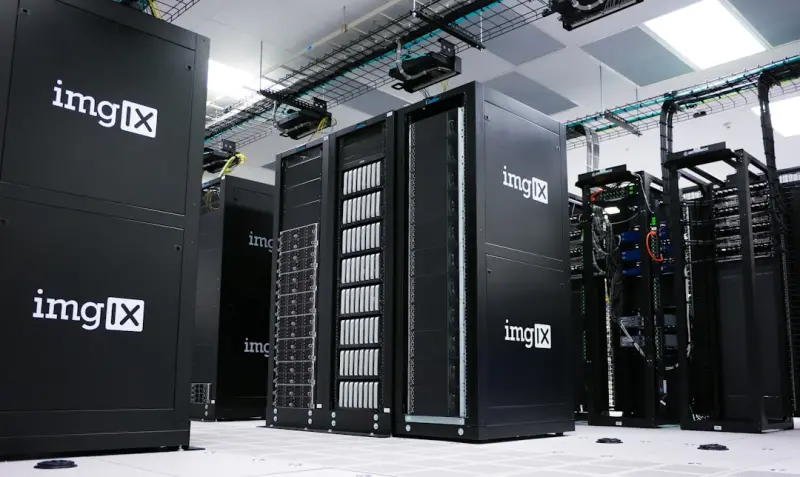
Why Dedicated Server Hosting Is the Secret Weapon for Data‑Intensive SaaS
When I first started architecting SaaS platforms, the default was to spin up the cheapest virtual machine we could find, then add more instances as traffic grew. It worked—until we hit the wall of latency, compliance roadblocks, and unpredictable performance spikes that made our customers nervous. That experience taught me a simple truth: for many B2B SaaS businesses, especially those handling large data sets, real‑time processing, or stringent regulatory requirements, shared or generic cloud resources simply aren’t enough. A properly provisioned dedicated server can be the difference between a product that merely works and one that truly delivers on its promise.
What Makes a Dedicated Server Different?
At its core, a dedicated server is a single physical machine that you rent (or own) exclusively. No other tenants, no noisy neighbors, and no “noisy neighbor” syndrome where a neighbor’s workload throttles yours. The benefits cascade across three critical dimensions:
- Performance predictability: With every core, every gigabyte of RAM, and every terabyte of storage under your control, you can fine‑tune the OS, kernel, and application stack to extract maximum throughput.
- Security & compliance: Isolating workloads on a single piece of hardware simplifies audit trails, encryption key management, and meeting standards like SOC 2, ISO 27001, or HIPAA.
- Custom networking: Dedicated servers let you configure VLANs, BGP routing, or even private peering arrangements that are impossible on multi‑tenant VMs.
When to Choose Dedicated Over Cloud
Don’t mistake this for “ditch the cloud forever.” Many SaaS teams adopt a hybrid approach: critical workloads on dedicated hardware, burstable workloads on public cloud. Here’s a quick decision matrix:
- Heavy compute or GPU workloads – Think machine‑learning inference, video transcoding, or large‑scale simulations. The raw, uninterrupted CPU/GPU cycles on a dedicated box can reduce processing time by 30‑50% compared to burstable cloud instances.
- Low‑latency networking – Financial SaaS, real‑time analytics, and gaming platforms benefit from direct‑connect or carrier‑grade links that a dedicated data‑center rack can provide.
- Regulatory isolation – If your contracts require data residency on a single physical host, a dedicated server meets that demand without complex multi‑region encryption gymnastics.
- Predictable cost at scale – When you have a steady, high‑volume workload, the flat‑rate cost of a dedicated server can undercut the variable pricing of on‑demand cloud instances.
Architecting for Maximum ROI
Getting the most out of a dedicated server isn’t just about buying the biggest box; it’s about designing for efficiency from the ground up.
1. Optimize the OS and Kernel
Strip out unnecessary services, tune sysctl parameters for network throughput, and enable CPU pinning for high‑performance threads. The Zero‑Trust on a VPS: A Practical Playbook for Small Businesses article provides a solid baseline for hardening a Linux host—most of those steps apply directly to a bare‑metal server.
2. Leverage NVMe and Tiered Storage
Modern dedicated servers often ship with NVMe SSDs for the OS and hot data, backed by larger SATA or SAS drives for cold storage. Configure your database to place redo logs on the fastest tier, and use a separate mount for analytics snapshots.
3. Use Containerization, Not Just VMs
Containers give you the flexibility of VMs while keeping the performance of native processes. Pair Docker or Podman with a lightweight orchestrator (even systemd or Nomad) to keep deployment friction low.
4. Automate with Infrastructure‑as‑Code (IaC)
Even though you’re on a single box, treat it like a cloud environment. Tools like Terraform’s external provider or Ansible can provision the entire stack, ensuring repeatability across upgrades or hardware swaps.
5. Monitor at the Hardware Level
CPU throttling, memory errors, and drive wear are real risks on dedicated hardware. Implement Why Sustainable Cloud Choices Are the New Competitive Edge for SaaS style observability: collect metrics from IPMI, SMART data, and kernel perf events, then feed them into a central dashboard.
Case Study: From Bottleneck to Breakthrough
One of my clients—a B2B SaaS platform for supply‑chain risk analysis—was choking on a combination of heavy Elasticsearch queries and nightly data ingest pipelines. They were on a 16‑core, 64 GB VPS with autoscaling, but the spikes during data loads caused CPU throttling and occasional timeouts, leading to SLA breaches.
We migrated the search tier to a dedicated 32‑core server with 256 GB RAM and NVMe storage. By pinning Elasticsearch’s JVM heap to a dedicated NUMA node and moving the ingest pipeline to a separate NIC, they saw:
- Query latency drop from 1.8 seconds to 0.45 seconds.
- Ingestion windows shrink from 45 minutes to under 12 minutes.
- Zero SLA violations for three consecutive quarters.
The switch also simplified compliance reporting because the entire data pipeline lived on a single, auditable host.
Cost Considerations: Debunking the “Expensive” Myth
It’s easy to assume dedicated servers are a premium line item, but the reality is nuanced:
- Flat‑rate pricing: Many providers offer monthly contracts that include bandwidth, power, and remote hands. No surprise overage charges.
- Depreciation vs. OPEX: For companies that can amortize hardware over a 3‑year lifecycle, the effective cost per compute unit can be lower than on‑demand cloud rates.
- Reduced third‑party fees: With direct network peering, you can eliminate data‑egress fees that often balloon on public clouds.
Run a simple cost = (monthly fee * 12) / (average CPU hours per month) calculation and compare it to your cloud spend. You’ll often find the dedicated route competitive, especially at scale.
Choosing the Right Provider
Not all data centers are created equal. Here are the top criteria I use when vetting a dedicated server host:
- Network redundancy: Dual uplinks, multiple ISPs, and a 99.99%+ uptime SLA.
- Physical security: Biometric access, video surveillance, and SOC‑type controls.
- Support model: 24/7 remote hands, on‑site technicians, and a clear escalation path.
- Scalability options: Ability to add more rack units, upgrade CPUs, or spin up adjacent servers without migration headaches.
- Environmental responsibility: Look for providers powered by renewable energy or those with carbon‑offset programs—this ties back to the sustainability narrative we’ve championed elsewhere.
Future‑Proofing: Edge & Hybrid Scenarios
Dedicated servers aren’t a dead‑end; they’re a launchpad for the next wave of edge‑centric SaaS. Imagine deploying a small, hardened server at a carrier hotel right where your customers’ traffic originates. You gain sub‑millisecond latency, local data residency, and the ability to offload heavy processing from the central cloud.
Hybrid models can also blend the elasticity of the public cloud with the control of dedicated hardware. For example, keep your primary database on a dedicated server for consistency, while using serverless functions in the cloud for bursty, non‑critical tasks. This “best‑of‑both‑worlds” strategy is gaining traction among enterprises that need both reliability and flexibility.
Getting Started: A Quick Checklist
- Define workload characteristics: CPU‑intensive, I/O‑heavy, latency‑sensitive, or compliance‑driven?
- Map out required network topology: Do you need private VLANs, BGP peering, or dedicated fiber?
- Select hardware specs: Core count, RAM, storage type, and NIC speed.
- Choose a provider using the criteria above.
- Plan for automation: IaC for OS, containers, and monitoring.
- Implement security baselines (firewalls, SELinux/AppArmor, encrypted disks).
- Set up observability at the hardware, OS, and application layers.
- Run a pilot with a subset of traffic, validate performance, then scale.
By following this roadmap, you’ll avoid the common pitfalls of “just spin up a box and hope for the best.” Instead, you’ll be building a resilient foundation that can evolve alongside your product vision.
Conclusion: Dedicated Servers as a Competitive Advantage
In a market where SaaS companies race to add features, the underlying infrastructure often becomes the silent differentiator. A well‑engineered dedicated server environment delivers raw performance, airtight security, and the flexibility to innovate at the edge—all while keeping costs predictable. It’s not a silver bullet, but when paired with modern DevOps practices, it becomes a strategic asset that can elevate your platform from “good enough” to “industry‑leading.”

Brian LeBlanc is a front-end web developer, UX designer, and web application developer with experience building scalable, user-friendly digital solutions.Holding a degree from University, he specializes in leveraging a wide array of modern languages, frameworks, and tools—such as JavaScript/ES6, HTML5/CSS3, PHP, and responsive interface design—to create efficient applications that simplify user experiences.
Related Posts
Dedicated Server Hosting: The Strategic Backbone for High‑Performance B2B SaaS
Dedicated server hosting isn’t a relic; it’s a strategic advantage for SaaS companies needing pr... Read More

Why Dedicated Servers Still Matter in a Cloud‑First World
Dedicated servers deliver consistent performance, hardware isolation, and predictable costs that clo... Read More

Dedicated Server Hosting: When Performance, Security, and Cost Align
Dedicated servers offer unmatched performance predictability, security isolation, and cost transpare... Read More
Top Posts

Shared Hosting’s Modern Comeback: Cost‑Effective Launchpad for SaaS
Shared hosting isn’t a relic; it’s a strategic, low‑cost foundation for early‑stage SaaS. This post explores performance, security, and scaling tactics ...Read More

Joomla’s Quiet Revolution: Enterprise‑Ready API‑First Architecture for Modern B2B
Joomla can be repurposed as a robust API engine, delivering enterprise‑grade security, multilingual support, and granular access control for modern B2B platfo...Read More

Unlocking the Power of Progressive Web Apps for Mobile‑First SaaS
Progressive Web Apps turn responsive SaaS sites into native‑like experiences, offering offline functionality, push alerts, and lightning‑fast load times—a...Read More

Why an Internal Developer Platform Is the Secret Sauce for SaaS Velocity
An Internal Developer Platform (IDP) eliminates repetitive setup, automates observability, and brings edge capabilities to SaaS teams, dramatically increasing d...Read More
0 Comments
Post Comment
You will need to Login or Register to comment on this post!