
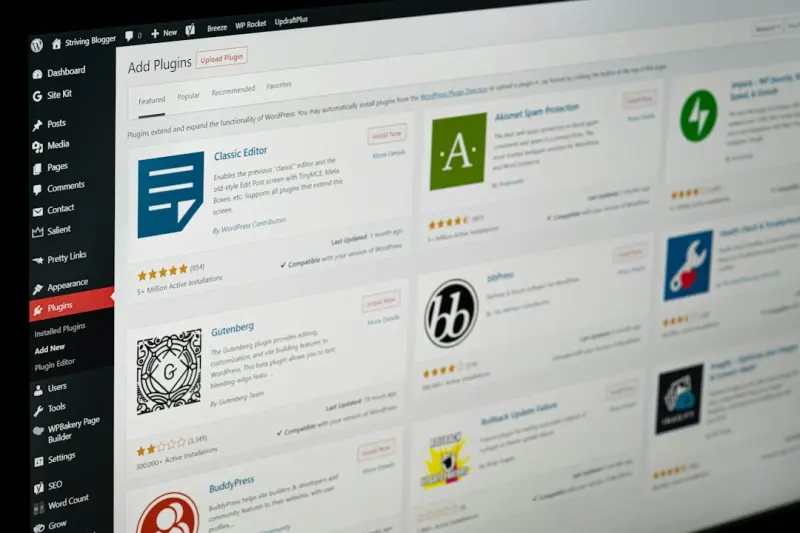
Re‑imagining the Enterprise CMS: Managed WordPress as the Backbone for Headless Strategies
When a large organization decides to decouple its front‑end experience from its content repository, the term “headless CMS” instantly surfaces. The promise is clear: developers get the freedom to build React, Vue, or Svelte interfaces while marketers retain a familiar editing environment. Yet, the real challenge lies in finding a hosting foundation that can handle the traffic spikes of global campaigns, enforce strict security policies, and still deliver the rapid iteration cycles demanded by modern product teams.
Managed WordPress hosting has traditionally been marketed to bloggers and small businesses, but its evolution over the past few years positions it as a compelling platform for enterprise‑grade headless deployments. In this article, I’ll walk through why the managed WordPress stack—when paired with a robust hosting provider—delivers the scalability, reliability, and developer experience needed for mission‑critical headless architectures.
1. The “Headless” Misconception: It’s Not a Separate Product, It’s a Deployment Model
Many decision‑makers assume that moving to a headless approach means abandoning WordPress altogether and adopting a purpose‑built API‑first CMS. The truth is that WordPress already ships with a powerful REST API and, more recently, a GraphQL layer via the next‑generation WordPress themes ecosystem. What changes is how you host and serve that content.
When you host WordPress on a managed platform, you gain:
- Automatic updates for core, plugins, and PHP versions, reducing the operational burden on your DevOps team.
- Built‑in caching layers that understand WordPress’s query patterns, delivering API responses in milliseconds.
- Isolation and security hardening that keep the underlying server surface area minimal, a critical factor when exposing content APIs to the public internet.
These capabilities let you treat WordPress as a content hub while the front‑end lives completely on a separate rendering stack—whether that’s a static site generator, a server‑side rendered React app, or a mobile‑first PWA.
2. Scaling the API: From Hundreds to Millions of Requests
Enterprise applications can see traffic surges that dwarf typical blog visits. A product launch, a viral social post, or a global marketing campaign can generate millions of API calls within minutes. Managed WordPress providers anticipate these spikes by offering:
- Horizontal scaling of PHP workers behind a load balancer, ensuring that concurrent requests never queue up.
- Edge‑aware caching that pushes API responses to CDN nodes, trimming latency for geographically dispersed users.
- Resource quotas that automatically expand CPU, memory, and I/O bandwidth based on real‑time utilization metrics.
These features mirror the elasticity of cloud‑native platforms but retain the simplicity of a single‑tenant WordPress environment. The result is a predictable cost model—no surprise overages from an uncontrolled scaling event.
3. Security at Scale: Zero‑Trust for Content APIs
When your API becomes a public entry point, every request is a potential attack vector. Managed WordPress hosting providers typically enforce a zero‑trust posture out of the box:
- Network segmentation isolates the web server from the database tier, preventing lateral movement in case of a breach.
- Web Application Firewalls (WAF) are pre‑configured with WordPress‑specific rules that block common injection attacks.
- Automatic TLS certificates with HTTP/2 support guarantee encrypted transport without manual certificate management.
For enterprises that must comply with GDPR, HIPAA, or PCI‑DSS, these built‑in controls can significantly shorten audit cycles. You no longer need a separate security team to harden a self‑managed VM; the hosting platform handles it for you.
4. Development Velocity: CI/CD Pipelines Integrated with Managed WordPress
One of the biggest friction points in headless projects is synchronizing code changes with content updates. Managed WordPress platforms now expose APIs and CLI tools that integrate smoothly with modern CI/CD pipelines:
- Deploy static assets (JavaScript bundles, CSS, images) directly to the provider’s edge network as part of a GitHub Actions workflow.
- Run automated tests against a staging WordPress instance that mirrors production settings, catching regression bugs before they go live.
- Leverage webhook triggers that notify your front‑end build system whenever a new post, page, or custom post type is published.
By treating the WordPress environment as a first‑class artifact in your source control, you eliminate the “it works locally but not in production” syndrome that has plagued many headless migrations.
5. Data Governance: Centralized Content, Distributed Presentation
Enterprises often struggle with content silos—different teams publishing to separate CMSes, leading to duplicated effort and inconsistent branding. Managed WordPress hosting gives you a single source of truth for content, while still allowing each product line to render that content in its own UI language.
Because the hosting environment is centrally managed, you can enforce:
- Versioned content schemas via custom fields and Advanced Custom Fields (ACF) blocks.
- Approval workflows that require legal or compliance sign‑off before content becomes API‑visible.
- Audit logs that track every change, satisfying governance requirements without additional tooling.
This governance model is especially valuable for regulated industries where every piece of published content must be traceable.
6. Cost Predictability: Pay‑for‑What‑You‑Use, Not for Over‑Provisioned VMs
Traditional on‑prem or self‑managed cloud VMs force you to over‑provision resources to survive traffic spikes, leading to under‑utilized infrastructure and wasted spend. Managed WordPress providers usually charge on a tiered basis that includes:
- Baseline compute and storage allocation.
- Burst credits that cover short‑term traffic spikes without triggering a tier upgrade.
- Transparent usage dashboards that let finance teams forecast monthly spend with confidence.
This model aligns perfectly with the variable traffic patterns of headless front‑ends, where API usage can fluctuate dramatically based on marketing pushes or seasonal demand.
7. Real‑World Example: A Global Retailer’s Headless Migration
Consider a multinational retailer that operated a monolithic WordPress site for its e‑commerce catalog. The marketing team needed faster page loads and personalized experiences, while the engineering team wanted to adopt a React‑based storefront. The company chose a managed WordPress host that offered:
- Dedicated CPU cores for the API tier, ensuring low latency during flash sales.
- Edge caching of REST endpoints, cutting API response times from 350 ms to under 80 ms worldwide.
- Built‑in WAF that blocked a surge of credential‑stuffing attacks during a high‑profile launch.
- Integration with their GitHub Actions pipeline, automatically promoting content schema changes from staging to production.
Within six months, the retailer reported a 40 % reduction in time‑to‑market for new product pages and a 25 % drop in hosting costs compared to their previous self‑managed VM setup. The headless architecture also allowed them to launch a mobile‑first PWA that leveraged the same WordPress API, delivering a unified experience across web and app channels.
8. Future‑Proofing: The Path to Edge‑First and Serverless Extensions
Managed WordPress hosting isn’t a static offering. Many providers are now adding:
- Serverless function hooks that let you run custom logic (e.g., webhook transformations) without provisioning additional infrastructure.
- Edge‑runtime capabilities that execute JavaScript directly at CDN nodes, enabling ultra‑low‑latency personalization.
- Integration points for headless commerce platforms, turning WordPress into the content hub while the checkout flow lives on a dedicated service.
These advancements mean that the same managed WordPress instance you adopt today can evolve alongside your product roadmap, reducing the need for costly migrations down the line.
9. Choosing the Right Managed Provider
Not all managed WordPress hosts are created equal. When evaluating a partner for an enterprise headless strategy, consider the following criteria:
- Performance guarantees: Look for SLAs that specify API response times and cache hit ratios.
- Security certifications: ISO‑27001, SOC 2, and GDPR compliance are good indicators of a mature security posture.
- Developer tooling: Access to SSH, WP‑CLI, and API keys for automation should be standard.
- Scalability architecture: Confirm that the provider uses containerized PHP workers or similar technology that can auto‑scale.
- Support for edge and serverless: Future‑proof your investment by selecting a platform that already offers edge function hooks.
By aligning your choice with these benchmarks, you ensure that your headless journey starts on a foundation that can sustain growth and innovation.
10. Bottom Line: Managed WordPress Is No Longer “Just Hosting”
In the past, “managed WordPress” was synonymous with a worry‑free blog. Today, it’s a strategic platform that blends the editorial simplicity of WordPress with the performance, security, and scalability demanded by enterprise headless applications. When you pair it with a provider that offers edge‑aware caching, zero‑trust security, and CI/CD integration, you unlock a powerful engine for delivering consistent, personalized experiences across every touchpoint.
Whether you’re a retailer looking to launch a React storefront, a financial services firm needing strict compliance for content APIs, or a global brand aiming to reduce time‑to‑market for seasonal campaigns, managed WordPress hosting can serve as the connective tissue that binds your content to the modern front‑end stack.
Ready to evaluate whether a managed WordPress solution fits your headless roadmap? Start by mapping your API traffic patterns, security requirements, and CI/CD workflows against the capabilities outlined above. The right partnership will not only accelerate your migration but also future‑proof your architecture for the next wave of digital experiences.

Brian LeBlanc is a front-end web developer, UX designer, and web application developer with experience building scalable, user-friendly digital solutions.Holding a degree from University, he specializes in leveraging a wide array of modern languages, frameworks, and tools—such as JavaScript/ES6, HTML5/CSS3, PHP, and responsive interface design—to create efficient applications that simplify user experiences.
Related Posts
Multi‑Site Mastery: Why Managed WordPress Hosting Is a Game‑Changer for Agencies
Managing dozens of WordPress sites can be chaotic. This post shows why a managed hosting platform is... Read More
Why Headless WordPress Needs Managed Hosting to Thrive
Managed WordPress hosting provides the performance, security, and developer-friendly tooling needed ... Read More
Managed WordPress Hosting: The Headless Engine Powering SaaS Marketing Success
A deep dive into why managed WordPress hosting is the perfect foundation for headless SaaS marketing... Read More
Top Posts
Riding the Edge: Why Cloud Hosting’s New Frontier Is Worth the Surf
Edge‑optimized cloud hosting brings compute and cache closer to users, delivering sub‑100 ms response times, better compliance, and cost savings for laten...Read More

Turning Bootstrap Into a SaaS Utility Engine
Learn how Bootstrap’s modern utility‑first approach can accelerate SaaS UI development, keep design tokens in sync, and deliver lean, responsive interfaces ...Read More
Unleashing CSS Houdini: When the Browser Becomes Your Engineer
A deep dive into CSS Houdini, showing how SaaS developers can use worklets to build dynamic brand theming, custom data grid layouts, and physics‑based animati...Read More

Compliance‑First VPS: Building a Secure, Auditable, and Scalable Foundation
A modern VPS can be transformed into a compliance‑ready platform that meets data‑residency laws, provides immutable audit logs, and delivers high performanc...Read More
0 Comments
Post Comment
You will need to Login or Register to comment on this post!