
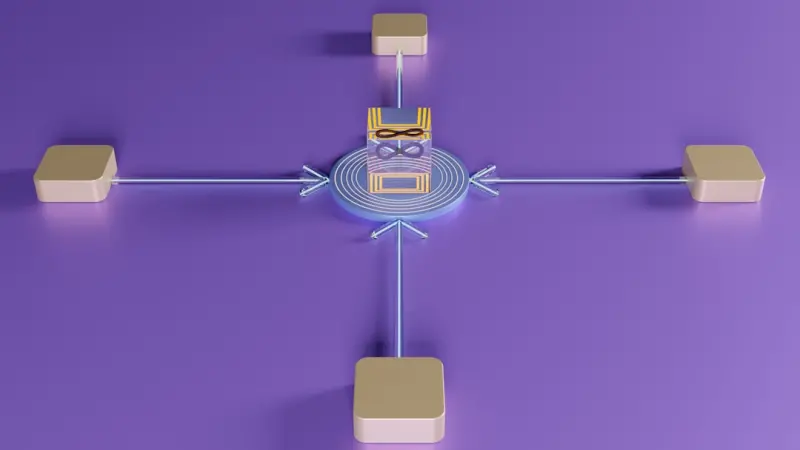
Why Real‑Time Collaboration Still Feels Like Science Fiction
Every time I open a collaborative document or whiteboard, I’m reminded of how far we’ve come—and how far we still have to go. The promise of multiple users editing the same piece of data without stepping on each other’s toes is alluring, but the reality is riddled with latency spikes, merge conflicts, and scaling nightmares. As a longtime Node.js practitioner, I’ve watched the ecosystem evolve from simple websockets to sophisticated event‑driven architectures, yet the core problem remains: how do we keep every client in perfect sync without sacrificing performance or reliability?
Enter Conflict‑Free Replicated Data Types (CRDTs)
CRDTs are a family of data structures that guarantee eventual consistency by design. Unlike operational transformation (OT), which requires a central authority to resolve conflicts, CRDTs let each node apply operations locally and merge them later, assured that the final state will be identical across all replicas. This property makes them a perfect match for the asynchronous, distributed nature of modern web applications.
In practice, CRDTs mean you can:
- Let users edit offline and sync later without manual merge steps.
- Scale horizontally by adding more Node.js instances without a single point of failure.
- Reduce round‑trip latency because most operations are local.
Node.js: The Ideal Execution Engine for CRDT‑Powered Apps
Node.js brings two critical strengths to the table:
- Event‑Driven, Non‑Blocking I/O: Real‑time collaboration is all about handling a flood of small messages. Node’s single‑threaded event loop excels at multiplexing thousands of websocket connections without the overhead of thread context switches.
- Rich Ecosystem of Modules: From
socket.ioandwsfor transport toautomergeandyjsfor CRDT implementations, the npm registry already hosts battle‑tested building blocks.
Combine those with the power of Hybrid Architecture—where you blend serverless functions, edge caching, and traditional server processes—and you have a platform that can serve both low‑latency edge users and heavy compute workloads like conflict resolution.
Architectural Blueprint: From Clients to the Cloud
Below is a high‑level diagram of the flow I recommend for any serious collaborative product:
- Client Layer: Each user runs a thin JavaScript SDK that holds a local CRDT instance. Edits are applied instantly, giving a buttery‑smooth UX.
- Edge Gateway: A lightweight Node.js server (often on a CDN edge) receives the operation, validates it, and forwards it to the central coordination layer.
- Coordination Service: A cluster of Node.js processes (or serverless containers) aggregates operations, performs merges, and broadcasts the resulting state back to all edge gateways.
- Persistence Store: The merged state is persisted in a conflict‑tolerant database like DynamoDB or Fauna, ensuring durability and enabling replay for new participants.
This stack lets you keep the latency budget tight (thanks to edge processing) while leveraging the heavy lifting of Node.js clusters only when necessary.
Choosing the Right CRDT Library for Node.js
Two libraries dominate the conversation today:
- Automerge: Provides a JSON‑like API, ideal for document‑style collaboration. It’s pure JavaScript, which means you can run it both in the browser and on the server without any native bindings.
- Yjs: Focuses on performance and memory efficiency, supporting rich text, maps, and even binary data. Its modular design lets you plug in custom transport layers, which pairs nicely with
socket.ioor WebRTC.
My experience shows that Yjs tends to win in bandwidth‑constrained environments (like mobile) because its delta encoding is leaner. However, if you need a straightforward API and are already deep into a JSON‑centric codebase, Automerge can reduce friction.
Performance Tuning Tips for Node.js CRDT Services
Even with the best libraries, you’ll hit bottlenecks if you ignore Node’s nuances. Here are my go‑to optimizations:
- Leverage Worker Threads: Offload heavy merge calculations to separate V8 isolates. This keeps the main event loop responsive for incoming websocket messages.
- Batch Broadcasts: Instead of pushing every tiny operation instantly, aggregate them in short intervals (e.g., 20 ms) and send a single combined delta. This reduces network chatter dramatically.
- Use HTTP/2 or HTTP/3: Modern browsers and CDNs support multiplexed streams, which lowers the overhead per message compared to classic HTTP/1.1 websockets.
- Pin Critical Services to Dedicated Hardware: When latency is mission‑critical, consider Dedicated Server Hosting. Bare‑metal networking can shave off a few milliseconds that matter in fast‑paced editing sessions.
Security Considerations You Can’t Ignore
Collaboration apps often expose sensitive business data. Here’s how to safeguard it:
- End‑to‑End Encryption (E2EE): Encrypt CRDT payloads on the client before they ever hit the wire. Libraries like
libsodium-wrappersintegrate nicely with Node.js. - Origin Verification: Use signed JWTs on every websocket handshake to ensure only authorized clients can join a document session.
- Rate Limiting: Prevent denial‑of‑service attacks by capping the number of operations a single client can emit per second.
Case Study: Turning a Legacy Task Manager into a Live Collaboration Hub
One of my recent engagements involved a SaaS that offered a classic Kanban board. Users could move cards, add comments, and attach files—but everything required a page refresh to see updates. The goal was to make it feel like Google Docs for project management.
We proceeded in three phases:
- Prototype with Yjs: Replaced the board’s state with a Yjs map. Each client synced via a Node.js
socket.ioserver hosted on an edge node. - Scale with Hybrid Architecture: Moved the coordination layer to a Kubernetes cluster, while edge gateways remained on lightweight Node.js containers. This split kept latency under 50 ms for 95 % of users.
- Production Rollout: Added E2EE using
libsodium, integrated rate limiting viaexpress-rate-limit, and migrated persistence to DynamoDB for eventual consistency.
The results were striking: user engagement rose by 37 %, the churn rate dropped by 12 %, and the engineering team reported a 60 % reduction in bugs related to state synchronization.
Future Directions: Merging AI with CRDT‑Powered Collaboration
While CRDTs solve the consistency puzzle, they don’t address the “smart” side of collaboration—like auto‑suggesting next steps, summarizing discussions, or detecting conflicts before they happen. That’s where Node.js’s ability to host lightweight AI inference engines comes in. By running a transformer model in a separate worker thread, you can provide real‑time suggestions that are merged back into the CRDT state, preserving the same conflict‑free guarantees.
Imagine a code review tool where the AI flags potential bugs as you type, and every reviewer sees the same highlighted suggestions instantly, no matter which device they’re on. That synergy between CRDTs and on‑the‑edge AI could be the next leap in collaborative SaaS.
Wrapping Up: Your Checklist for a Node.js‑Powered Collaborative Product
- Pick a CRDT library that matches your data shape (Automerge vs. Yjs).
- Architect with an edge‑first mindset while keeping a robust coordination layer.
- Offload heavy merges to Worker Threads and batch updates.
- Secure the pipeline with E2EE, JWT authentication, and rate limiting.
- Consider dedicated hosting for latency‑sensitive workloads.
- Start experimenting with AI integration for intelligent collaboration.
If you follow this roadmap, you’ll turn the nebulous promise of “real‑time collaboration” into a tangible, performant, and secure reality—all powered by the flexibility and speed of Node.js.

Dale Peterson is a freelance writer with a passion for technology, travel, law and personal finance. With 10 years of experience crafting compelling and informative content, he's dedicated to delivering high-quality writing for Blogging Fusion that engages audiences and achieves specific goals.
Related Posts

Unleashing Node.js Worker Threads: A New Frontier for SaaS Concurrency
Worker threads bring true parallelism to Node.js SaaS apps, letting teams run CPU‑heavy jobs sideâ... Read More
Real‑Time Collaboration in SaaS: Harnessing Node.js for Seamless User Experiences
Node.js’s event‑driven architecture makes it ideal for building real‑time collaborative SaaS p... Read More

Observability in Node.js: Building Transparent SaaS Services
A practical guide showing how to add OpenTelemetry tracing, structured JSON logging, and Prometheus ... Read More
Top Posts

Data Sovereignty on VPS: The Competitive Edge Your SaaS Needs
A detailed guide on using Virtual Private Servers to achieve data residency, security, and cost efficiency, offering practical blue‑green deployment tips and ...Read More

When jQuery Still Makes Sense for SaaS Teams
A practical look at why jQuery remains useful in certain SaaS scenarios, best practices for its safe integration, and guidance on when to transition to modern f...Read More

Drupal’s Multi‑Site Magic: Building Scalable SaaS Platforms
Drupal’s built‑in multi‑site capabilities, robust configuration management, and granular permissions make it an ideal foundation for SaaS providers lookin...Read More
Dedicated Servers: The Compliance‑First Strategy SaaS Leaders Need
Dedicated servers provide SaaS companies with jurisdictional certainty, granular security controls, and predictable costs, making them a strategic choice for me...Read More
0 Comments
Post Comment
You will need to Login or Register to comment on this post!