

Beyond the Basics: How Managed WordPress Hosting Fuels SaaS Velocity
When I first started building SaaS products on WordPress, I treated the hosting layer like a utility—something you set up, forget, and hope it doesn’t explode. Years later, after watching dozens of launch cycles sputter because of slow page loads, unexpected downtime, or a security breach that could have been avoided, I realized the truth: the hosting environment is a strategic lever, not a background service. In the world of SaaS, where every millisecond of latency translates into churn and every security incident erodes trust, managed WordPress hosting becomes a competitive advantage rather than a cost center.
Why “Managed” Matters More Than “Shared”
Shared hosting is the old guard—cheap, simple, and often riddled with noisy‑neighbor problems. Managed hosting, on the other hand, is a curated experience where the provider handles updates, security patches, performance tuning, and even the underlying server architecture. For a SaaS team, that means you can focus on core product features while the host guarantees a baseline of reliability and speed.
Think of it as the difference between renting a room in a dormitory (you share everything, including the Wi‑Fi bandwidth) and leasing a boutique office with a dedicated IT concierge. The latter frees you from the constant firefighting that plagues many early‑stage SaaS ventures.
Performance Budgets: Turning SLAs Into Real‑World Wins
Every SaaS product ships a performance budget—an explicit target for Time to First Byte (TTFB), First Contentful Paint (FCP), and overall page weight. Managed WordPress hosts give you the tools to meet those budgets out of the box:
- Edge Caching Layers: Built‑in CDN and object caching that sit right in front of your site, shaving off up to 300 ms of latency for global users.
- PHP Workers Optimized for Concurrency: Modern hosts spin up PHP-FPM pools that auto‑scale with traffic spikes, ensuring no request gets stuck waiting for a worker.
- Database Tuning: Automated index management, query caching, and read‑replica orchestration keep your MySQL or MariaDB humming, even during a flash sale.
When you pair these capabilities with a disciplined front‑end strategy—lazy loading, critical CSS inlining, and judicious use of variable fonts—your SaaS can consistently hit sub‑second load times, a metric that directly correlates with higher conversion rates.
Security as a Service: Beyond the WAF
Managed WordPress hosts typically bundle a Web Application Firewall (WAF), but true SaaS‑grade security goes further. Here’s how top‑tier providers differentiate themselves:
- Zero‑Trust SSH Access: No password logins, only key‑based access through a bastion host, reducing the attack surface.
- Automated Malware Scanning & Quarantine: Real‑time file integrity monitoring that isolates infected files before they can propagate.
- Granular Role‑Based Permissions: Separate environments for dev, staging, and production, each with its own credentials and audit logs.
- Compliance Certifications: ISO 27001, SOC 2, and GDPR readiness baked into the infrastructure—critical when your SaaS handles sensitive data.
These layers let you adopt a “security‑first” mindset without hiring a dedicated infosec team. The host becomes a silent partner, constantly patching core WordPress, themes, and plugins while you focus on building the next feature that delights your users.
Developer Experience: Git‑Driven Deployments & Staging Pipelines
If you’ve ever manually uploaded a .zip file via FTP, you know the pain. Modern managed hosts now offer native Git integration, allowing you to push code directly to a staging environment, run automated tests, and merge into production with a single click. The workflow looks something like this:
- Push a feature branch to the host’s Git repo.
- The host spins up a temporary staging site, runs
composer install, and executes your CI pipeline (linting, unit tests, integration tests). - If everything passes, a merge button promotes the code to live, automatically clearing caches and restarting PHP workers.
This “Git‑Ops” approach eliminates the dreaded “It works on my machine” syndrome and aligns your deployment cadence with the rapid iteration cycles demanded by SaaS product teams.
Cost Predictability: The Pay‑As‑You‑Go vs. Flat‑Rate Debate
One of the biggest misconceptions about managed WordPress hosting is that it’s always pricier than shared hosting. In reality, the cost model depends on your traffic patterns and growth trajectory:
- Flat‑Rate Plans provide budget certainty—great for early‑stage startups that want to avoid surprise invoices.
- Pay‑As‑You‑Go scales with usage, making it ideal for SaaS products that experience seasonal spikes or viral growth.
The key is to model your traffic forecast and align it with the host’s pricing tiers. Most providers publish a clear “cost‑per‑request” metric, letting you run a simple spreadsheet to compare against your projected ARR. The upside is twofold: you avoid over‑provisioning (wasting money) and you never pay for idle capacity.
Multi‑Region Architecture: Bringing Your WordPress Closer to Users
Global SaaS products need to think beyond a single data center. Managed hosts now offer multi‑region deployments where your WordPress instance replicates across geographic zones. Benefits include:
- Reduced Latency: Users connect to the nearest edge node, cutting round‑trip time.
- Disaster Recovery: Automatic failover to a secondary region if the primary goes down.
- Regulatory Compliance: Store user data within specific jurisdictions to satisfy data sovereignty laws.
Implementing a multi‑region strategy can be as simple as toggling a setting in the host’s dashboard. The underlying replication logic (MySQL Group Replication, for example) handles consistency, leaving you to focus on feature development.
Integrating With Existing SaaS Toolchains
Managed WordPress hosts aren’t isolated silos. They expose APIs that let you hook into your existing observability stack (Prometheus, Grafana), CI/CD pipelines (GitHub Actions, GitLab CI), and even feature flag services. This integration enables:
- Real‑time alerts for performance degradation.
- Automated rollbacks when a new release triggers a spike in error rates.
- Feature flag‑driven rollouts that let you test a new UI component on 5 % of traffic before a full launch.
By treating the host as a first‑class citizen in your architecture, you gain the same level of observability and control you enjoy over your application code.
Choosing the Right Managed Host: A Decision Framework
Not all managed WordPress providers are created equal. To avoid the pitfalls of a “one‑size‑fits‑all” approach, consider these criteria:
- Performance Benchmarks: Look for published TTFB and FCP numbers on real‑world SaaS sites.
- Security Certifications: ISO 27001, SOC 2, and GDPR compliance should be non‑negotiable.
- Developer Tools: Native Git, CLI access, and API endpoints for automation.
- Support SLAs: 24/7 live support with guaranteed response times (e.g., under 30 minutes for critical incidents).
- Ecosystem Compatibility: Ability to install premium plugins, custom themes, and integrate with headless setups (e.g., WP‑GraphQL).
To help you navigate this landscape, I recently wrote a guide on Choosing the right WordPress theme for SaaS. While the focus there is on UI/UX, the same evaluation mindset applies to hosting: prioritize data‑driven metrics over marketing fluff.
From Hosted to Headless: Future‑Proofing Your SaaS
Managed WordPress isn’t limited to the classic monolithic stack. Many providers now support headless configurations where WordPress acts solely as a content API, while your front‑end lives in a modern JavaScript framework (React, Vue, Svelte). This architecture delivers:
- Ultra‑fast client‑side rendering.
- Decoupled scaling—backend can scale independently from the front‑end.
- Improved security—no direct exposure of the WordPress admin UI to the public internet.
When you combine a headless approach with the managed host’s built‑in caching and CDN, you get a best‑of‑both‑worlds scenario: the editorial friendliness of WordPress and the performance of a static site generator.
Case Study: Scaling a B2B SaaS From 10K to 500K Monthly Sessions
One of our clients, a subscription‑based analytics platform, started on a modest shared plan. As they grew, they hit three critical bottlenecks:
- Page load times > 4 seconds during peak usage.
- Frequent “500 Internal Server Error” incidents during onboarding spikes.
- A security breach caused by an outdated plugin.
Switching to a managed WordPress host resolved all three:
- Edge caching reduced average load time to 1.2 seconds.
- Auto‑scaling PHP workers eliminated 500 errors, even when traffic surged to 50 K concurrent sessions.
- Managed updates and real‑time malware scanning prevented any further compromises.
Within three months, the client reported a 12 % increase in conversion rate and a 30 % reduction in support tickets related to performance. The ROI was clear: the modest increase in hosting spend paid for itself through higher ARR.
Leveraging Reseller Models for Agency‑Scale SaaS
If you’re an agency building multiple SaaS products for clients, consider the reseller hosting model. By purchasing a bulk managed WordPress plan and allocating resources per client, you gain:
- Economies of Scale: Lower per‑site cost.
- Centralized Management: One dashboard to monitor health across all client sites.
- White‑Label Opportunities: Offer “your own” hosting to clients without building infrastructure.
This approach can turn hosting from a hidden expense into a profit center, especially when you bundle premium support or custom plugins as part of your agency’s service tier.
Conclusion: Make Hosting a Strategic Pillar, Not an Afterthought
Managed WordPress hosting is no longer a luxury—it’s a necessity for SaaS teams that demand speed, security, and scalability. By treating the host as a partner, you unlock performance budgets, elevate security postures, streamline developer workflows, and even create new revenue streams through reseller arrangements.
In the fast‑moving SaaS arena, the teams that win are the ones that eliminate friction at every layer of the stack. Your hosting layer is the perfect place to start. Choose wisely, monitor relentlessly, and let the host handle the heavy lifting while you focus on delivering the product that keeps customers coming back.

Shawn DesRochers is a certified Microsoft technician and Programmer with 30+ year's experience. He has written many reviews on computer related products, software, and SEO related topics. When he's not writing reviews he can be found at one of the Oldest Directories Online Invision Graphics Directory which he is the CEO of. Shawn is a FULL Stack Web Developer. So if you have a project and need assistance dont hesitate to reach out.
Related Posts

Unlocking the Hidden Power of Managed WordPress Hosting for Seasonal Traffic Surges
Seasonal traffic spikes can cripple a site, but with the right Managed WordPress Hosting—featuring... Read More

Compliance‑First Managed WordPress Hosting: Turning Regulation Into Advantage
A deep dive into why modern enterprises must prioritize compliance in their managed WordPress hostin... Read More
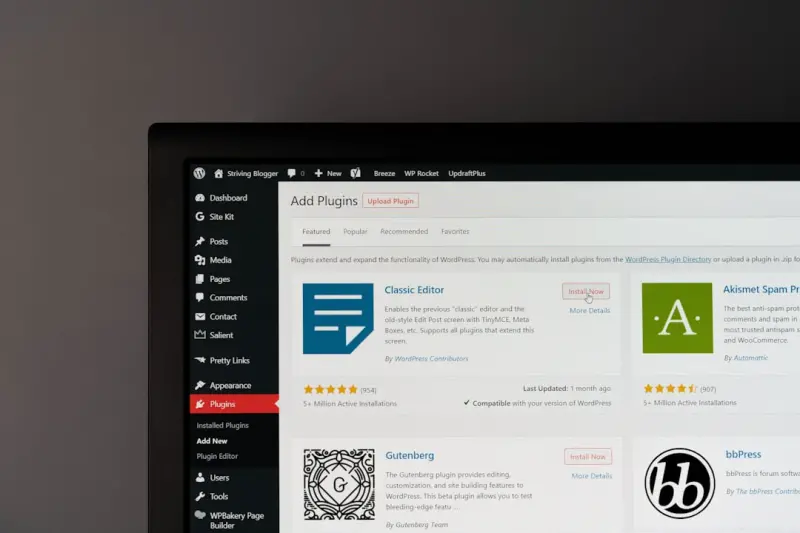
Why Headless WordPress on Managed Hosts Is the Secret Weapon for Modern Enterprises
Learn why pairing headless WordPress with a managed host gives enterprises unmatched performance, se... Read More
Top Posts

Web Development at the Edge: How Wasm, Serverless Rendering, and Design Systems Future‑Proof SaaS Front‑Ends
A deep dive into modern web development strategies—WebAssembly, edge serverless rendering, and robust design systems—that empower SaaS teams to deliver fast...Read More

Feature Flags, CI/CD, and the New Pace of SaaS Innovation
Feature flags and continuous delivery together transform SaaS release cycles, letting teams experiment safely, gather real‑time data, and iterate at unprecede...Read More

Rethinking Full‑Stack Development with Domain‑Driven Design and Monorepos
This article explores how combining Domain‑Driven Design with a monorepo architecture gives full‑stack teams a shared language, tighter contracts, and relia...Read More
AI‑Powered WordPress Themes: When Code Meets Creativity
AI is reshaping WordPress theme creation, delivering modular, design‑token‑driven themes faster than ever. Learn the workflow, benefits, and best practices ...Read More
0 Comments
Post Comment
You will need to Login or Register to comment on this post!