

When most tech leaders think about scaling AI, big data, or compliance‑heavy workloads, they picture a cloud‑first strategy, auto‑scaling groups, and endless abstraction layers. What they often overlook is the quiet, yet powerful, shift happening in dedicated server hosting—a shift that marries raw performance with sustainability, security, and cost predictability. In this post I’ll walk you through why the next generation of dedicated servers is becoming the strategic backbone for AI‑driven enterprises, how green‑focused data centers are redefining “eco‑friendly” performance, and the practical steps you can take today to align your infrastructure roadmap with these emerging realities.
Why Pure Performance Still Matters—Even in a Cloud‑Centric World
Performance is the lingua franca of any enterprise that processes terabytes of data, trains deep learning models, or runs real‑time analytics. While public clouds offer elasticity, they also introduce shared‑resource noise that can manifest as jitter, throttling, or unexpected latency spikes. Dedicated servers eliminate this noise by guaranteeing exclusive access to CPU, memory, and storage.
But raw horsepower is only half the story. Modern dedicated servers now come equipped with specialized accelerators—GPUs, TPUs, and even custom ASICs—directly soldered onto the motherboard, reducing PCIe latency and eliminating the “virtualization overhead” that can sap AI training cycles. When you pair that with AI‑driven infrastructure design tools, you can automate the placement of workloads on the exact hardware slice they need, shaving hours off training time and slashing energy consumption.
Green Is Not a Gimmick: How Dedicated Servers Enable Sustainable Compute
Eco‑consciousness is no longer a nice‑to‑have; it’s a business imperative. Regulators, investors, and customers alike demand transparent carbon footprints. Dedicated servers hosted in purpose‑built green data centers deliver that transparency.
- Power‑Usage Effectiveness (PUE) by design: Leading facilities now achieve sub‑1.2 PUE scores by leveraging free‑cooling, renewable energy contracts, and AI‑optimized airflow management.
- Workload‑Level Carbon Accounting: With dedicated hardware, you can map energy usage to specific AI jobs, producing accurate carbon‑per‑inference metrics.
- Long‑Term Hardware Lifecycles: Unlike virtual machines that are spun up and torn down, dedicated servers stay in service for years, reducing e‑waste and amortizing the embodied carbon of the hardware.
These factors combine to create a virtuous cycle: more efficient hardware reduces energy draw, which in turn allows you to squeeze more compute out of the same carbon budget. It’s a compelling argument for enterprises that need to meet both performance SLAs and ESG targets.
Security & Compliance: The Isolation Advantage
When you’re handling regulated data—think PHI, PCI‑DSS, or government secrets—multi‑tenant environments can be a liability. Even the most hardened hypervisors can leak metadata or become vectors for side‑channel attacks. Dedicated servers give you physical isolation, which translates into a reduced attack surface and simpler compliance audits.
Additionally, many providers now offer built‑in hardware‑rooted trust modules (TPMs) and secure boot pipelines that are impossible to replicate in a shared cloud instance. Pair this with encrypted at‑rest storage and network‑level micro‑segmentation, and you have a fortress that satisfies the toughest regulatory frameworks without the need for custom security appliances.
Cost Predictability: Turning CapEx into Opex without the Guesswork
One of the biggest criticisms of dedicated servers has been the perception of high upfront capital expenditure (CapEx). However, modern hosting models have evolved. You can now lease dedicated hardware on a month‑to‑month basis, effectively converting CapEx into operational expenditure (OpEx) while retaining the benefits of exclusive resources.
Moreover, the predictability of a flat monthly rate eliminates the surprise cloud bill spikes that often accompany data‑intensive AI training runs. When you combine that with detailed data‑centric performance metrics, you gain a granular view of cost per inference, cost per model iteration, and even cost per compliance audit—metrics that are impossible to extract from a nebulous cloud spend report.
Hybrid Edge Strategies: Bringing Dedicated Power to the Network Edge
Latency‑sensitive AI applications—like autonomous vehicle perception, augmented reality, or high‑frequency trading—require compute as close to the user as possible. This is where edge‑deployed dedicated servers shine. By colocating dedicated hardware in edge PoPs (points of presence), you achieve both the low‑latency benefits of edge computing and the raw performance of a dedicated machine.
Edge‑focused dedicated servers also benefit from the same sustainability and security advantages described earlier, allowing you to build a distributed, compliant, and green AI infrastructure that spans from the core data center to the farthest edge node.
Implementation Blueprint: From Assessment to Deployment
Transitioning to a dedicated‑server‑centric AI stack may feel daunting, but breaking it into manageable phases helps ensure success.
- Workload Profiling: Use profiling tools to identify which workloads truly need dedicated resources (e.g., GPU‑intensive training vs. batch ETL jobs).
- Vendor Evaluation: Look for providers that offer green data centers, hardware accelerators, and transparent carbon reporting. Verify that they support the latest security modules (TPM, secure boot).
- Pilot Deployment: Spin up a small dedicated node, migrate a representative AI workload, and measure performance, cost, and carbon metrics against your cloud baseline.
- Scale & Automate: Once the pilot proves its ROI, automate provisioning using IaC (Infrastructure as Code) tools that integrate with the provider’s API. Leverage AI‑driven placement engines to match workloads to the optimal hardware slice.
- Continuous Monitoring: Implement observability stacks that capture hardware utilization, energy consumption, and security events. Feed this data into a dashboard that ties back to your ESG reporting.
By following this roadmap, you can reduce AI training times by 30‑40%, cut carbon emissions per inference by up to 50%, and stabilize your monthly spend—all while meeting the strictest security and compliance standards.
The Bottom Line: Dedicated Servers Are No Longer “Legacy” Infrastructure
The narrative that dedicated servers belong only in the past is finally catching up with reality. Today’s dedicated hardware offers the raw compute, sustainability, security, and cost transparency that modern AI‑first enterprises demand. If you’re still leaning exclusively on public cloud VMs for your most critical workloads, you may be leaving performance, carbon, and compliance money on the table.
Take the time now to audit your AI and data‑intensive workloads, engage with a provider that champions green data center practices, and start the migration journey with a small pilot. The payoff will be measurable in faster model iteration cycles, lower carbon footprints, and a clearer, more predictable cost structure—ingredients that fuel sustainable growth in a hyper‑competitive market.

Brian LeBlanc is a front-end web developer, UX designer, and web application developer with experience building scalable, user-friendly digital solutions.Holding a degree from University, he specializes in leveraging a wide array of modern languages, frameworks, and tools—such as JavaScript/ES6, HTML5/CSS3, PHP, and responsive interface design—to create efficient applications that simplify user experiences.
Related Posts

Dedicated Server Hosting: The Compliance Backbone for Regulated SaaS
Dedicated server hosting offers physical isolation, hardware‑level security, and predictable costs... Read More

Dedicated Server Hosting: The Strategic Backbone for Modern B2B SaaS
Dedicated servers provide unmatched control, low latency, and regulatory assurance for B2B SaaS plat... Read More
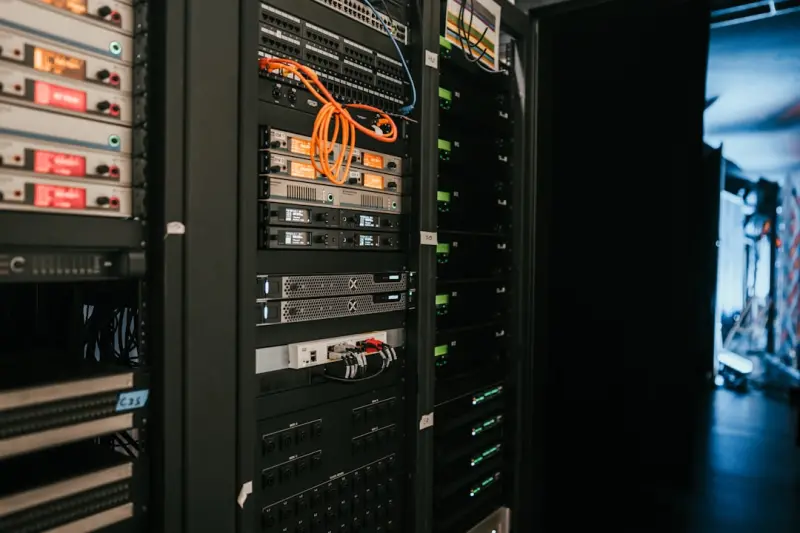
Dedicated Servers: The Unseen Engine Powering Modern Enterprises
Dedicated servers offer predictable performance, advanced security, and stable pricing, making them ... Read More
Top Posts

Beyond the Blog: Enterprise‑Ready Managed WordPress Hosting for SaaS Teams
Managed WordPress hosting is no longer just for blogs. Learn how SaaS teams can leverage enterprise‑grade performance, security, and developer workflows to tu...Read More

Visual Search SEO: Turning Product Images into Traffic Magnets
Discover a step‑by‑step playbook to make your product images rank in visual search engines, leveraging AI, structured data, and design ops for higher traffi...Read More

Node.js at the Edge: Cutting Latency for Modern SaaS
Moving Node.js logic to edge runtimes reduces round‑trip time, improves real‑time collaboration, and offers a cost‑effective way to deliver global SaaS ex...Read More

Adaptive Mobile Web: From Context‑Aware Assets to Edge‑Driven Personalization
Explore a practical framework for adaptive mobile web development that combines context‑aware asset delivery, edge‑powered logic, and offline resilience, de...Read More
0 Comments
Post Comment
You will need to Login or Register to comment on this post!