
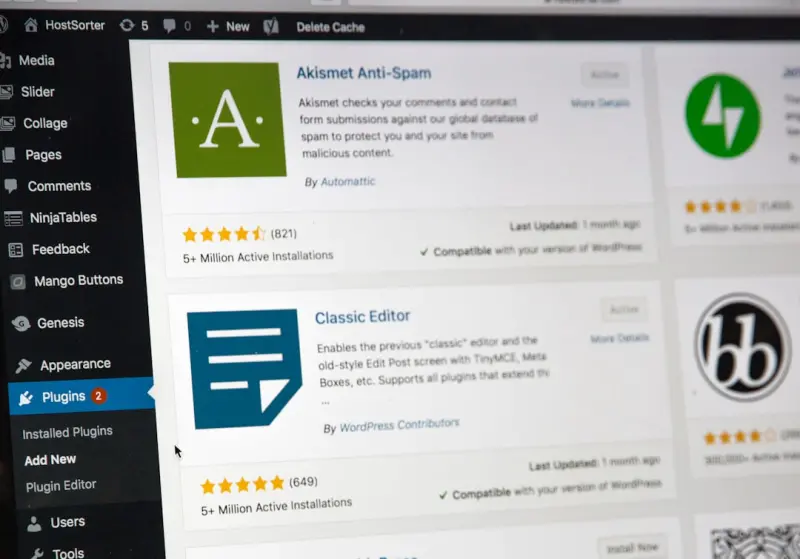
Why Managed WordPress Hosting Isn’t Just for Bloggers Anymore
When most people hear “WordPress,” they picture a personal blog or a small‑business website built with a theme and a handful of plugins. That perception is rapidly changing. Modern SaaS companies are treating WordPress as a content‑delivery engine that can power product documentation, community forums, marketing microsites, and even headless front‑ends for their core applications. The catch? To make WordPress work at that scale, you need a hosting environment that does the heavy lifting for you – enter managed WordPress hosting.
The Enterprise Pain Points Managed Hosts Solve
Running WordPress on a generic cloud VM or a shared plan quickly runs into three classic enterprise roadblocks:
- Performance variance. Traffic spikes from a product launch or a viral post can overwhelm a single server, leading to slow page loads and lost conversions.
- Security exposure. Open source software is a target. Unpatched core or plugin vulnerabilities can become a compliance nightmare.
- Operational overhead. Your devops team ends up spending more time on server patches, backups, and scaling logic than on building core product features.
Managed WordPress providers abstract those concerns. They deliver a hardened stack, automated updates, built‑in CDN, and a scaling layer that reacts to traffic in real time – all while keeping the developer experience familiar.
Performance at Scale: From PageView to Transactional Load
In a SaaS context, WordPress isn’t just serving static content; it’s often the conduit for API calls, personalized dashboards, and even e‑commerce checkout flows for premium add‑ons. A managed host typically offers:
- Layer‑7 load balancing. Requests are routed to the fastest available worker, reducing latency for end users worldwide.
- Edge caching. HTML fragments, REST responses, and GraphQL payloads are cached at the edge, slashing time‑to‑first‑byte.
- Object storage integration. Media assets are off‑loaded to S3‑compatible buckets, freeing up the web tier for compute‑intensive tasks.
Combine those with a micro‑frontends architecture that decouples UI modules, and you’ve got a system that can handle thousands of concurrent users without a single manual scaling event.
Security & Compliance: The Peace of Mind You Can’t Afford to Skip
Regulated industries (fintech, healthtech, edtech) demand strict controls. Managed hosts typically provide:
- Automatic core and plugin patching. Vulnerabilities are closed the moment a fix is released.
- Web‑application firewalls (WAF). Rulesets tuned for WordPress attacks – XML‑RPC abuse, credential stuffing, and file inclusion exploits.
- PCI‑DSS and SOC 2‑ready environments. Audit logs, encryption‑at‑rest, and role‑based access controls keep you compliant.
Because the host owns the underlying OS, you also gain immutable infrastructure – a pattern where servers are rebuilt from a known good image rather than patched in place, reducing drift and the attack surface.
Developer Workflow: CI/CD, Staging, and Git Integration
Modern development teams expect a Git‑first workflow. The best managed WordPress platforms now ship with:
- One‑click staging environments. Spin up an identical replica of production, test new plugins or theme updates, then promote with a single button.
- CLI tooling. WP‑CLI is pre‑installed, letting you script migrations, database dumps, and batch updates as part of your CI pipeline.
- Git hooks. Push code to a repo, and the host automatically builds and deploys to staging, running linting and security scans on every commit.
If you’re already leveraging virtual private servers for agile experimentation, you’ll notice the managed host eliminates the “infrastructure friction” layer, letting you focus on product logic.
Headless WordPress: The API‑First Pivot
Headless WordPress decouples the front‑end from the back‑end, exposing content via the REST API or GraphQL. This opens doors to:
- React, Vue, or Svelte apps that pull content on demand, delivering ultra‑fast, interactive experiences.
- Multi‑channel publishing – the same WordPress content can power a web app, a mobile app, and even a voice assistant without duplication.
- Granular caching strategies where HTML is cached at the CDN, while JSON payloads are cached separately based on query complexity.
The managed host’s built‑in CDN and edge functions make this pattern production‑ready out of the box, so you don’t have to spin up separate API gateways or manage serverless functions manually.
Multi‑Site Management for Multi‑Tenant SaaS
Many SaaS platforms need to spin up isolated customer sites quickly – think partner portals, regional microsites, or white‑label solutions. WordPress Multisite, when paired with a managed host, gives you:
- Centralized dashboard. Create, clone, or delete tenant sites with a few clicks, while each site inherits the host’s security and performance stack.
- Resource isolation. CPU and memory quotas keep one tenant from hogging the entire pool.
- Uniform updates. Core, plugins, and themes can be rolled out across all sites simultaneously, ensuring consistency.
This approach dramatically reduces the engineering effort required to support a growing portfolio of brand‑specific experiences.
Cost Predictability: From CapEx to OpEx
Running a self‑managed WordPress fleet can be a financial black box. You might need to over‑provision servers to handle peak load, only to sit on idle capacity most of the month. Managed hosting turns that into a predictable, usage‑based subscription:
- Transparent pricing tiers. You pay for the number of sites, storage, and bandwidth, not for “ghost” CPU cycles.
- Auto‑scaling baked in. The host adds resources during traffic spikes and scales back down, ensuring you only pay for what you use.
- Built‑in backups and disaster recovery. No extra spend on third‑party backup solutions.
Choosing the Right Managed Host for SaaS
Not all managed WordPress providers are created equal. Here’s a quick checklist:
- Performance SLAs. Look for guaranteed 99.9% uptime, sub‑100 ms response times, and a global CDN network.
- Security certifications. PCI‑DSS, ISO 27001, SOC 2 – the more, the better for regulated customers.
- Developer tooling. Native WP‑CLI, staging environments, and Git integration are must‑haves.
- Headless support. Ability to serve REST and GraphQL at scale, with edge functions for custom logic.
- Multi‑site scalability. Confirm that the platform can handle hundreds or thousands of sites without manual provisioning.
Future‑Proofing: Edge‑First, API‑First, and Beyond
The next wave of web performance is edge‑first computing. While not every managed host advertises it yet, the ones that do allow you to run serverless functions right at the CDN edge. That means you can transform a WordPress request into a custom API call, personalize content on the fly, or even run A/B tests without hitting the origin server.
Couple that with the rise of Jamstack patterns – static generation, incremental builds, and edge caching – and you have a roadmap that keeps your WordPress layer relevant for years to come.
Conclusion: Managed WordPress Hosting as a Strategic Asset
For SaaS teams, WordPress is no longer a “nice‑to‑have” CMS; it’s a strategic content platform that can power everything from marketing pages to headless APIs. The managed hosting model removes the operational friction that traditionally kept enterprises away from WordPress, delivering enterprise‑grade performance, security, and developer experience.
If you’re still running WordPress on a generic VM, you’re likely paying for hidden costs – time spent patching, outages during traffic spikes, and the engineering bandwidth diverted from core product work. Switching to a managed host can unlock the true potential of WordPress as a scalable, secure, and flexible backbone for your SaaS ecosystem.

Shawn DesRochers is a certified Microsoft technician and Programmer with 30+ year's experience. He has written many reviews on computer related products, software, and SEO related topics. When he's not writing reviews he can be found at one of the Oldest Directories Online Invision Graphics Directory which he is the CEO of. Shawn is a FULL Stack Web Developer. So if you have a project and need assistance dont hesitate to reach out.
Related Posts
Enterprise‑Ready Managed WordPress Hosting for Compliance and Resilience
A deep dive into how managed WordPress hosting can become an enterprise‑grade platform, covering c... Read More
Fortifying Managed WordPress Hosting: Compliance, Security, and Peace of Mind
A deep dive into how modern managed WordPress providers can turn security and compliance into a comp... Read More

Managed WordPress Hosting: The Strategic Lever Every B2B SaaS Needs
Managed WordPress hosting removes operational friction, giving SaaS teams faster releases, stronger ... Read More
Top Posts

Shift‑Left Security: Making Threat Modeling a CI/CD Habit
Shift‑left security moves threat modeling and vulnerability checks to the earliest stages of development, turning security into a continuous, collaborative ha...Read More

Reseller Hosting: The Agency Growth Engine You’ve Been Overlooking
Reseller hosting isn’t just an add‑on; it’s a strategic growth engine. Learn how agencies can leverage white‑label APIs, tiered support, and future‑pr...Read More

WebAssembly on Mobile: Unlocking Native‑Level Speed for the Browser
WebAssembly brings near-native performance to mobile browsers, allowing developers to offload heavy computations to compact binary modules, improve load times, ...Read More

Mastering Mobile Web Development for B2B SaaS: A Pragmatic Playbook
Discover a practical, end‑to‑end strategy for mobile web development that boosts performance, consistency, and user adoption in B2B SaaS, complete with acti...Read More
0 Comments
Post Comment
You will need to Login or Register to comment on this post!