
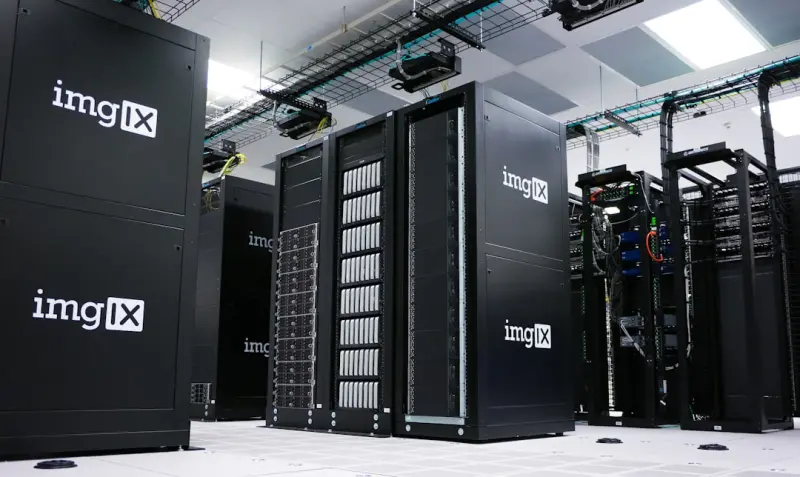
When I first started architecting SaaS platforms, I was dazzled by the hype around containers, serverless, and the endless promise of “infinite scalability”. Those tools are fantastic, but they also introduced a new kind of abstraction fatigue. You spend weeks tweaking Kubernetes configs only to discover that your latency spikes are rooted in something as old‑school as the hardware beneath it.
The Real Reason Some Teams Still Choose Bare‑Metal
Dedicated server hosting isn’t a nostalgic throwback; it’s a strategic choice that solves three persistent pain points: raw performance, predictable cost, and regulatory compliance. When you lease an entire physical box, you own the full CPU, memory, network stack, and storage I/O—not a slice of a virtual machine that might be throttled by a noisy neighbor.
Performance isolation is the most obvious benefit. A single tenant can tune BIOS settings, reserve cores for latency‑sensitive workloads, and even install custom firmware patches. In a shared environment, your database’s burst could be throttled because another tenant is running a nightly batch job. With a dedicated box, the burst is yours alone.
Beyond raw speed, dedicated servers give you predictable cost modeling. Instead of paying per‑hour for a cloud instance that can fluctuate based on usage spikes, you lock in a flat monthly rate. For SaaS businesses that operate on tight margins, this predictability makes budgeting less of a guessing game.
When to Upgrade from Shared to Dedicated
Most SaaS startups begin on shared or virtualized infrastructure because the upfront cost is low and provisioning is instant. That works great for proof‑of‑concepts and early adopters, but there’s a tipping point where the trade‑offs become too costly.
- CPU‑bound workloads: If your service performs heavy data transformations, real‑time analytics, or AI inference, you’ll quickly outgrow the shared CPU quota.
- Low‑latency requirements: Gaming, financial trading, or video streaming demand sub‑millisecond response times that shared environments can’t guarantee.
- Compliance mandates: PCI DSS, HIPAA, or GDPR often require dedicated hardware or at least a documented chain of custody for data.
- Predictable traffic patterns: When you can forecast usage, the fixed cost of a dedicated server usually beats the variable pricing of cloud instances.
If any of these flags light up, it’s time to start a dedicated‑first feasibility study.
Designing for the Bare‑Metal Reality
Moving to dedicated hardware isn’t just a lift‑and‑shift exercise; it demands a different design mindset. Below are the pillars you should re‑evaluate.
1. Operating System & Kernel Tuning
On a virtual machine you’re stuck with the host’s kernel configuration. With a dedicated server you can:
- Enable
CPU pinningto bind critical processes to specific cores. - Adjust
swappinessandvm.overcommit_memoryfor memory‑intensive workloads. - Deploy a custom
real‑timekernel if you need deterministic scheduling.
These tweaks can shave off dozens of milliseconds from request latency—an impact that compounds across millions of API calls.
2. Network Stack Mastery
Dedicated servers give you direct control over NIC settings, jumbo frames, and even hardware offloads like checksum and TCP segmentation. Pair those with a software‑defined networking layer—such as Calico or Cilium—running in containers, and you get the best of both worlds: the raw throughput of bare‑metal and the agility of modern networking abstractions.
Don’t forget to benchmark TCP vs UDP for your specific protocol. In many low‑latency scenarios, UDP with a custom reliability layer can outperform TCP by a large margin, especially when you control the entire network path.
3. Storage Strategies That Match the Workload
SSD versus NVMe, RAID levels, and even direct‑attach storage (DAS) become decisions you can make based on actual I/O patterns. For write‑heavy logs, consider a RAID‑10 array; for read‑heavy analytics, NVMe drives with a cache tier can provide sub‑microsecond latency.
And remember: data locality matters. Co‑locating your database and application servers on the same physical chassis reduces intra‑rack latency dramatically.
4. Security Hardening at the Ground Level
When you own the hardware, you also own the attack surface. Implement a defense‑in‑depth strategy that starts at the firmware level:
- Enable Secure Boot and Trusted Platform Module (TPM) for boot‑time integrity checks.
- Apply vendor‑specific microcode updates promptly—these patches often close low‑level vulnerabilities that cloud providers may not expose.
- Isolate services using Linux namespaces and cgroups, even before you spin up containers.
For SaaS platforms handling sensitive data, this level of control can be the difference between compliance and costly remediation.
5. Automation Without the Cloud Glue
One objection to dedicated servers is the perceived loss of “infrastructure as code” convenience. The reality is that modern tooling—Ansible, Terraform (via vsphere or baremetal providers), and Packer—works just as well on bare‑metal. You can provision the OS, install packages, and apply your security baseline in minutes.
In fact, I like to think of dedicated servers as the ultimate sandbox for testing edge‑case performance optimizations that would be impossible to emulate in a shared environment.
6. The Cost Equation: Fixed vs Variable
Let’s run a quick mental model. A mid‑range dedicated server might cost $150/month. A comparable cloud instance (8 vCPU, 32 GB RAM, high‑performance SSD) could be $0.40/hour. Assuming 720 hours in a month, the cloud bill reaches $288—almost double the dedicated cost.
But the cloud also includes elasticity. If your SaaS experiences a sudden traffic surge, you could spin up extra instances on demand. The trick is to blend both approaches: keep a core of dedicated servers for baseline traffic and burst to the cloud when needed. This hybrid model preserves the performance guarantees of bare‑metal while still offering the flexibility you love about the cloud.
Real‑World Example: A Data‑Intensive SaaS Platform
A client of mine built a real‑time analytics platform for IoT telemetry. They started on shared virtual machines, but as device counts grew, they hit a wall: ingestion latency spiked, and CPU throttling became a daily headache. By migrating the ingestion pipeline to a dedicated server equipped with dual 40 Gbps NICs and NVMe drives, they achieved a 2.5× reduction in end‑to‑end latency.
To retain the ability to scale out for batch analytics, they paired the dedicated ingestion nodes with a multi‑cloud strategy that ran Spark jobs on spot instances. The result? Predictable performance for real‑time workloads, and cost‑effective batch processing on demand.
Balancing the Trade‑offs: When Dedicated Isn’t the Answer
Dedicated servers shine for workloads that are CPU‑bound, latency‑sensitive, or subject to strict compliance. However, they aren’t a panacea. If your SaaS is heavily event‑driven with unpredictable spikes, a pure bare‑metal model could lead to over‑provisioning.
In those cases, consider a hybrid architecture:
- Core services (auth, billing, core APIs) on dedicated servers for stability.
- Elastic services (worker pools, batch jobs) on a public cloud with auto‑scaling.
- Use a shared hosting trade‑off analysis to decide which micro‑services can afford the variability.
This approach lets you keep the “quiet power” of dedicated hardware where it matters most, while still leveraging the cloud’s elasticity where you can afford it.
Future‑Proofing Your Dedicated Investment
Technology evolves fast, but hardware lasts longer. To ensure your dedicated servers remain an asset, adopt these long‑term practices:
- Modular hardware selection: Choose motherboards and chassis that support hot‑swap components, so you can upgrade CPUs or add storage without full downtime.
- Standardized imaging: Keep a golden image repository for OS and base services, enabling rapid re‑provisioning across multiple racks.
- Observability pipelines: Deploy agents that feed metrics into a centralized platform (Prometheus, Grafana, or a SaaS observability tool). Even on bare‑metal, you need the same visibility you’d get in the cloud.
- Vendor lock‑in mitigation: Negotiate contracts that allow you to move hardware between data centers or providers, preserving flexibility.
By treating your dedicated servers as a living component of your architecture, you protect your investment against both technical debt and market shifts.
Bottom Line: Dedicated Servers Are Not a Relic
In the noisy world of cloud‑first narratives, dedicated server hosting often gets written off as “old tech”. Yet for SaaS teams that demand deterministic performance, strict compliance, or predictable cost structures, dedicated servers are the quiet powerhouse that keeps the lights on—without the surprise bills or the jittery latency.
Take a step back, evaluate where your latency spikes, compliance constraints, and cost models intersect, and you might discover that a single, well‑tuned physical box can unlock more value than a fleet of auto‑scaled VMs.

Alex Moss is a digital marketing professional and SEO consultant, focusing on technical and structural SEO along with product development. With more than six years of experience in various facets of digital marketing, he has assisted brands of all sizes in establishing and enhancing their online presence, as well as fostering increased product loyalty.
Related Posts

Dedicated Servers: The Unsung Heroes of SaaS Scaling
Dedicated servers offer predictable performance, strict security, and cost certainty, making them a ... Read More
Dedicated Server Hosting: The Strategic Backbone for High‑Performance B2B SaaS
Dedicated server hosting isn’t a relic; it’s a strategic advantage for SaaS companies needing pr... Read More

Dedicated Servers: The Unseen Engine Driving Real‑Time Data Success
Dedicated servers deliver consistent low‑latency performance, robust security, and predictable cos... Read More
Top Posts

Managed WordPress Hosting: The Strategic Lever Every B2B SaaS Needs
Managed WordPress hosting removes operational friction, giving SaaS teams faster releases, stronger security, and predictable performance—all without sacrific...Read More

Sustainable WordPress Themes: Building Green Sites Without Compromise
A deep dive into green WordPress theme development, covering lightweight code, renewable hosting, and design choices that reduce environmental impact while enha...Read More

Dynamic Pricing Meets Real‑Time Inventory: A Playbook for Modern E‑Commerce
Dynamic pricing combined with live inventory feeds transforms scarcity into profit and excess stock into volume, offering a practical playbook for e‑commerce ...Read More

Why Modern CMS Must Become a Real‑Time Collaboration Hub
A modern CMS should enable live, multi‑user editing, contextual commenting, and instant previews, turning content creation into a real‑time collaborative ex...Read More
0 Comments
Post Comment
You will need to Login or Register to comment on this post!