
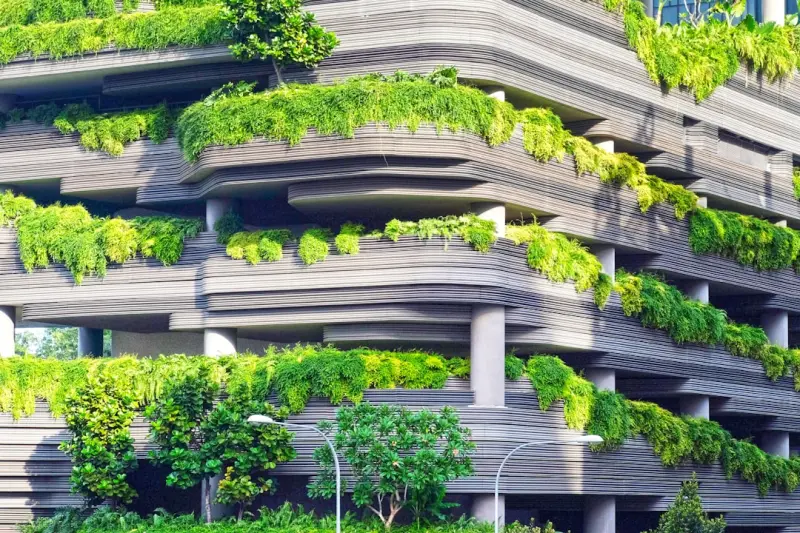
Why Sustainability Should Be the Next Frontier for WordPress Themes
When I first cut my teeth on WordPress, the conversation was all about looks and speed. Fast page loads, slick typography, and a pixel‑perfect layout were the holy trinity of a “good” theme. But as the internet matures, a new metric is creeping onto that podium: environmental impact. If you’re building themes for clients—or your own SaaS product—ignoring the carbon cost of every line of CSS, every JavaScript bundle, and every third‑party font is no longer an option.
Carbon‑Conscious Coding: The Basics
Every request that travels from a browser to a server consumes energy. The more data you send, the longer the server works, and the higher the electricity draw. That electricity, in many regions, still comes from fossil fuels. So, reducing the data payload isn’t just a performance win; it’s a carbon‑reduction strategy.
Here are three practical levers you can pull while developing a WordPress theme:
- Trim the fat. Use native HTML5 elements wherever possible. Avoid polyfills unless you truly need them for a specific audience.
- Modular assets. Split CSS and JavaScript into logical modules that load on demand. If a visitor never interacts with a carousel, they shouldn’t download its script.
- Image stewardship. Serve next‑gen formats (WebP, AVIF) and implement lazy loading out of the box. A single unoptimized hero image can dwarf the rest of a page’s payload.
These steps echo the advice in designing WordPress themes for performance and flexibility, but the lens is now greener.
Choosing a Green Hosting Partner
Even the most feather‑light theme can be nullified by a data center powered by coal. Partnering with a hosting provider that sources renewable energy—or at least offsets its emissions—moves the needle significantly. Look for certifications like Renewable Energy Certificates (RECs) or participation in the EU Green Hosting Initiative. If you already run a multi‑cloud strategy, you can route traffic to the greenest edge location in real time.
For a deeper dive on multi‑cloud strategies and why they matter for modern SaaS, check out Why a Multi‑Cloud Hosting Blueprint Is the Secret Weapon for Modern SaaS. The same principles apply when you want to keep your WordPress sites as low‑impact as possible.
Design Tokens Meet Sustainability
Design tokens—those single‑source variables for color, spacing, and typography—have become the backbone of UI consistency across SaaS products. When you bake tokens directly into a theme’s stylesheet, you eliminate the need for multiple, duplicated style declarations.
Beyond consistency, tokens enable you to:
- Switch themes on the fly. Swap a dark palette for a high‑contrast, low‑energy alternative with a single JSON update.
- Automate accessibility audits. Tokens can be validated against WCAG contrast ratios, ensuring you don’t waste time refactoring later.
- Reduce CSS bloat. By referencing tokens instead of hard‑coding values, you keep the final CSS file lean, which translates to fewer bytes transferred.
The concept ties neatly into Design Tokens: The Backbone of Consistent SaaS UI, but here we spotlight the environmental upside of a lean token‑driven stylesheet.
Progressive Enhancement as a Sustainability Tool
Progressive enhancement isn’t new, yet it’s often misunderstood as a “fallback” strategy. In the sustainability context, it becomes a method to serve only the resources a user truly needs. Start with a solid HTML foundation that works everywhere, then layer on advanced features—animations, interactive widgets, third‑party widgets—only for browsers that support them.
Benefits include:
- Lower data transfer for older devices and slower connections.
- Reduced CPU load on the client side, extending battery life for mobile users.
- Fewer server‑side processing cycles, which directly cuts energy consumption.
Monetizing Green Themes Without Sacrificing Ethics
There’s a growing market for eco‑friendly digital products, and themes are no exception. You can position a theme as “carbon‑neutral” by:
- Calculating the average emissions per page view (tools like Website Carbon Calculator help).
- Purchasing an equivalent amount of carbon offsets—ideally from verified projects like reforestation.
- Displaying a badge in the theme’s documentation that tells users the exact offset amount.
This approach creates a win‑win: clients get a lightweight, fast site while also aligning with sustainability goals, and you open a new revenue stream that resonates with green‑focused brands.
Testing for Green Metrics
Traditional QA focuses on functionality and visual fidelity. Add a third pillar: environmental testing. Here’s a quick checklist you can integrate into your CI pipeline:
- Page weight audit. Fail builds if total page size exceeds a defined threshold (e.g., 500 KB).
- Energy‑impact score. Tools like EcoIndex provide a score based on data transfer, request count, and rendering time.
- Server‑side processing time. Longer PHP execution times mean more CPU cycles—set a max acceptable limit.
By treating sustainability as a non‑functional requirement, you embed it into the development culture rather than tacking it on as an afterthought.
The Role of Community and Open Source
WordPress thrives on a massive, collaborative ecosystem. When you publish a theme with a transparent sustainability report, you invite feedback and improvement from the community. Encourage contributors to suggest further carbon‑saving measures—perhaps a lighter icon set or a more efficient grid system.
Open‑source projects also benefit from shared tooling. If you develop a lightweight CSS reset or a PHP helper that reduces database calls, consider releasing it as a separate package. Other developers will adopt it, amplifying the positive impact.
Case Study: A Niche SaaS Platform Goes Green
Let me walk you through a real‑world scenario I helped a client with last quarter. The client runs a niche B2B SaaS that offers a membership portal powered by WordPress. Their theme was originally a heavy, feature‑rich bundle that loaded over 1 MB per page. After a sustainability audit, we took the following steps:
- Modularized the JavaScript. Moved analytics and chat widgets to async load only after user interaction.
- Implemented design tokens. Consolidated spacing and color definitions, cutting CSS size by 35%.
- Switched to a green host. Migrated to a provider that powers its data centers with 100% wind energy.
- Added a carbon badge. Calculated an average of 0.15 gCO₂ per page view and offset it quarterly.
The results? A 42% reduction in average page weight, a 30% drop in bounce rate (faster pages keep users happy), and a measurable decrease in the site’s carbon footprint. The client also leveraged the sustainability badge in their marketing, attracting several new environmentally conscious accounts.
Future‑Proofing Through Ethical Design
Looking ahead, the regulatory landscape is evolving. Governments worldwide are beginning to discuss digital carbon taxes and mandatory disclosures for high‑traffic websites. By adopting sustainable theme practices today, you’ll be ahead of any compliance curve.
Moreover, as users become more eco‑aware, the “green” label will shift from a differentiator to an expectation. Building that foundation now ensures you won’t have to retro‑fit your themes under pressure later.
Actionable Checklist for Sustainable Theme Development
Grab a pen (or your favorite note‑taking app) and run through this list on your next theme project:
- Audit current asset size—identify the heaviest files.
- Adopt native HTML5 and CSS features; retire unnecessary polyfills.
- Implement lazy loading for images, iframes, and off‑screen components.
- Switch to next‑gen image formats and serve responsive sizes via
srcset. - Modularize JavaScript with code‑splitting; load bundles conditionally.
- Introduce design tokens to keep CSS lean and consistent.
- Choose a hosting partner with verified renewable energy credentials.
- Set up CI checks for page weight, EcoIndex score, and PHP execution time.
- Publish a carbon‑offset badge and disclose your methodology.
- Invite community contributions to continuously improve the theme’s eco‑profile.
Take one step at a time—sustainability is a journey, not a sprint. The cumulative effect of small, intentional decisions can turn a typical WordPress theme into a low‑impact digital asset that aligns with both business goals and planetary stewardship.
Wrapping Up
WordPress themes have long been a playground for creativity, performance optimization, and even recurring revenue models. Now they’re poised to become a canvas for responsible, carbon‑aware design. By weaving sustainability into every layer—from code to hosting—you’ll deliver faster experiences, lower operating costs, and a stronger brand story that resonates with today’s environmentally minded customers.
If you’re curious about how these ideas intersect with other areas of modern SaaS—like multi‑cloud strategies or design token systems—take a look at the related posts linked throughout this article. The more you connect the dots, the clearer the roadmap to a greener web becomes.

Brian LeBlanc is a front-end web developer, UX designer, and web application developer with experience building scalable, user-friendly digital solutions.Holding a degree from University, he specializes in leveraging a wide array of modern languages, frameworks, and tools—such as JavaScript/ES6, HTML5/CSS3, PHP, and responsive interface design—to create efficient applications that simplify user experiences.
Related Posts
The Strategic Power of Performance‑First WordPress Themes for B2B SaaS
A deep dive into why WordPress themes should be treated as strategic assets—covering performance b... Read More
Designing WordPress Themes for Speed, Accessibility, and Future‑Proof Flexibility
A practical guide to building WordPress themes that prioritize performance, accessibility, and modul... Read More

Headless WordPress Themes: Unlocking Speed and Flexibility for SaaS Brands
A deep dive into why SaaS companies are adopting headless WordPress themes, covering performance gai... Read More
Top Posts
CSS Logical Properties: Crafting Global‑Ready SaaS Interfaces
Explore why CSS logical properties are essential for building SaaS interfaces that automatically adapt to different languages, reading directions, and accessibi...Read More

Bootstrap Reimagined: A SaaS Team’s Guide to Faster, Consistent UI
A deep dive into turning Bootstrap into a living design system for SaaS, covering theming, feature flags, multi‑tenant styling, performance tricks, and edge d...Read More
WordPress Multisite as the Engine for Scalable SaaS Products
Discover how WordPress Multisite can serve as a powerful, low‑maintenance backbone for SaaS offerings, covering tenancy, API design, security, performance, an...Read More

GitOps & Chaos: Resilient Pipelines for SaaS
Discover a fresh DevOps approach that merges GitOps with systematic chaos engineering, delivering faster, more reliable SaaS pipelines through automated failure...Read More
0 Comments
Post Comment
You will need to Login or Register to comment on this post!