
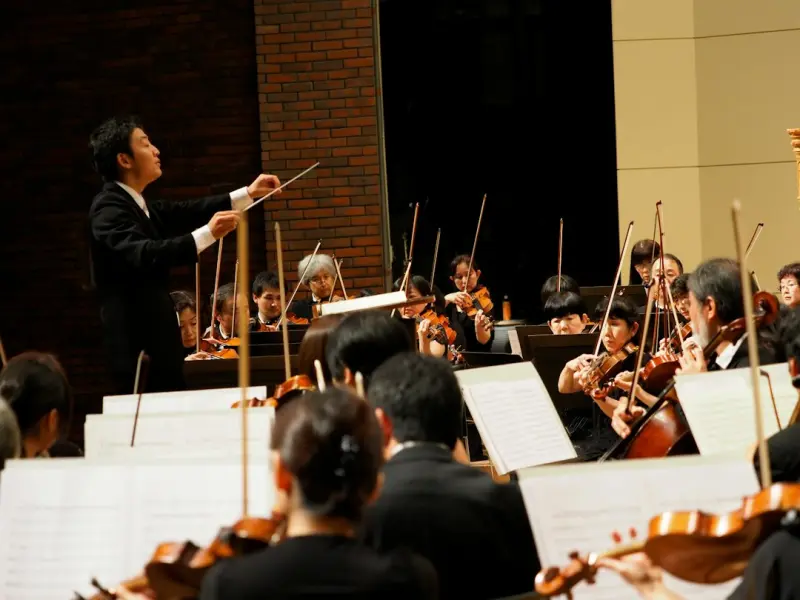
Why Full‑Stack Development Needs a Conductor, Not Just Musicians
When I first stepped onto a SaaS startup’s engineering floor, the “full‑stack” label felt like a badge of honor. It meant I could write a REST endpoint, sprinkle some Vue components on the page, and claim ownership of the entire user journey. Fast forward a few years, and the landscape has mutated into a sprawling symphony of services, APIs, serverless functions, and front‑end frameworks. The old “jack‑of‑all‑trades” mindset is no longer enough; we need an orchestral mindset where every instrument plays in time.
The Myth of the One‑Person Stack
There’s a lingering myth that a single developer can magically spin up a full‑stack product from idea to production in a week. In reality, the friction points have multiplied:
- Infrastructure complexity: Multi‑region deployments, container orchestration, and edge caches are now baseline expectations.
- Feature velocity: Customers demand weekly releases, which means continuous integration pipelines must be rock‑solid.
- Compliance and security: GDPR, SOC‑2, and PCI‑DSS add layers of gate‑keeping that a solo coder can’t realistically manage.
Attempting to juggle all of these alone is akin to a violinist also trying to conduct the orchestra. The result is inevitable dissonance—bugs, performance regressions, and missed deadlines.
Enter the Conductor: Continuous Delivery as the Score
What if we treated our delivery pipeline as a musical score? Each section—backend, API gateway, UI, data layer—has its own tempo and key signature, but they all reference a shared sheet that dictates when and how they should play together. This is the essence of a continuous delivery orchestra:
- Define the tempo: Establish a release cadence that aligns with business goals (e.g., bi‑weekly feature pushes).
- Write the score: Codify standards for API contracts, UI component libraries, and infrastructure as code.
- Assign sections: Empower specialized squads (backend, front‑end, data) while maintaining a shared “conductor” role that synchronizes merges and rollouts.
- Practice regularly: Automated testing, canary releases, and observability act as rehearsals before the live show.
When the conductor (your CI/CD pipeline) knows exactly when each part should enter, the resulting performance feels seamless to the end‑user.
Building the Score: Contracts, Schemas, and Shared Libraries
One of the biggest sources of chaos in full‑stack teams is the lack of a clear contract between front‑end and back‑end. To combat this, I champion the use of API schemas (OpenAPI or GraphQL) combined with type‑safe client generators. The front‑end no longer guesses the shape of data; it receives a generated TypeScript client that mirrors the back‑end contract.
Similarly, UI components should be sourced from a shared design system—think micro frontends that expose reusable widgets across multiple applications. By treating these widgets as first‑class citizens in your repository, you reduce duplication and ensure visual consistency.
On the infrastructure side, adopting edge‑first full‑stack patterns means your services can be deployed close to the user without rewriting business logic. Edge functions become another instrument in the orchestra, delivering low‑latency responses while the core API handles heavy lifting.
Feature Flags: The Dynamic Conductor’s Baton
Imagine a conductor who can instantly mute a trumpet mid‑performance if it sounds off. Feature flags give us that power in software. By wrapping new functionality behind a flag, you can roll out changes to a subset of users, observe impact, and roll back without a new deployment.
Effective flag management requires three practices:
- Granular targeting: Tie flags to user attributes, geographic regions, or device types.
- Observability integration: Pair flags with real‑time metrics so you can see if a toggle introduces latency or errors.
- Lifecycle hygiene: Remove stale flags after a sprint; otherwise they become technical debt that clutters the score.
The Role of Observability in the Orchestra
Even with a perfect score, you need an audience to tell you whether the performance resonated. In software, that audience is your monitoring stack. Observability isn’t just about dashboards; it’s about full‑stack observability that stitches together logs, traces, and metrics across the entire stack.
When a latency spike appears, a well‑instrumented system lets you trace the issue from the edge function, through the API gateway, into the database query. This end‑to‑end view is the equivalent of a conductor hearing every section clearly and making on‑the‑fly adjustments.
Team Topology: Squads, Chapters, and Guilds
Adopting an orchestral mindset also reshapes how teams are organized. The Team Topology model proposes four fundamental team types: Stream‑aligned, Enabling, Complicated‑Subsystem, and Platform. In a full‑stack environment, you might map them as follows:
- Stream‑aligned squads: Own a specific product feature from UI to data storage.
- Enabling teams: Provide expertise on CI/CD pipelines, security hardening, or observability tooling.
- Platform team: Maintains shared services—authentication, logging, and the feature flag infrastructure.
- Complicated‑Subsystem team: Handles high‑throughput components like recommendation engines or real‑time analytics.
This separation of concerns ensures each “instrument” can focus on its part while still adhering to the shared score.
Continuous Learning: The Rehearsal Loop
Every great orchestra schedules rehearsals. In software, rehearsals are automated test suites, integration pipelines, and post‑mortem reviews. To keep the orchestra in tune:
- Invest in test automation: Unit, integration, and end‑to‑end tests act as sheet music that validates every note.
- Run canary deployments: Deploy to a small percentage of traffic first, observe, then expand.
- Hold blameless retrospectives: When a flag misbehaves, treat it as a learning opportunity, not a finger‑pointing session.
Over time, this rehearsal loop builds a culture where “shipping fast” doesn’t mean “shipping broken.”
Balancing Innovation and Stability
Full‑stack developers love to experiment—new UI frameworks, serverless runtimes, or AI‑enhanced APIs. However, too much experimentation can destabilize the orchestra. I recommend a “sandbox‑first” approach:
- Separate sandbox environments: Give engineers a dedicated space to trial new tech without affecting the main stage.
- Feature‑gate experiments: Use flags to expose experimental features to internal users first.
- Document the decision process: When an experiment graduates, capture the why, how, and trade‑offs so future teams can make informed choices.
Conclusion: From Soloists to Symphony
Full‑stack development has outgrown the solo‑artist archetype. By treating delivery pipelines as scores, employing feature flags as conductors’ batons, and building robust observability, we can transform a chaotic jam session into a harmonious symphony. The result isn’t just faster releases; it’s a resilient, scalable, and delightful experience for both engineers and customers.
So the next time you hear the term “full‑stack,” imagine a full orchestra—each musician skilled, each section coordinated, and a conductor ensuring the music never misses a beat.

Brian LeBlanc is a front-end web developer, UX designer, and web application developer with experience building scalable, user-friendly digital solutions.Holding a degree from University, he specializes in leveraging a wide array of modern languages, frameworks, and tools—such as JavaScript/ES6, HTML5/CSS3, PHP, and responsive interface design—to create efficient applications that simplify user experiences.
Related Posts

Monorepo Mastery: Scaling Full‑Stack Development with Unified Codebases
A deep dive into monorepo versus polyrepo strategies for full‑stack SaaS development, covering ben... Read More

Full‑Stack Observability: Building a Unified Insight Engine for SaaS
A step‑by‑step guide on integrating full‑stack observability into SaaS apps, covering telemetr... Read More

Monorepo Mastery: Streamlining Full‑Stack Development for Agile Teams
A monorepo consolidates all code—UI, API, shared libraries, and infrastructure—into a single rep... Read More
Top Posts
Beyond the Look: Building Resilient WordPress Themes for Long‑Term Success
A theme is more than a visual wrapper; it’s a strategic asset. This guide shows how to define core goals, implement a style variables system, leverage blockâ€...Read More

Global Collaboration Made Easy: Managed WordPress Hosting for Distributed Teams
Discover how a modern managed WordPress platform can transform distributed content teams by delivering edge performance, fine‑tuned permissions, and seamless ...Read More

WebAssembly: The Game‑Changer for Mobile Web Performance
WebAssembly brings near‑native performance to mobile browsers, allowing developers to offload heavy computations, improve load times, and deliver richer exper...Read More

Why Drupal Is the Unsung Hero for AI‑Driven Content Automation
Explore how Drupal’s decoupled architecture, robust access control, and rich ecosystem enable seamless AI‑driven content generation and automation, deliveri...Read More
0 Comments
Post Comment
You will need to Login or Register to comment on this post!