
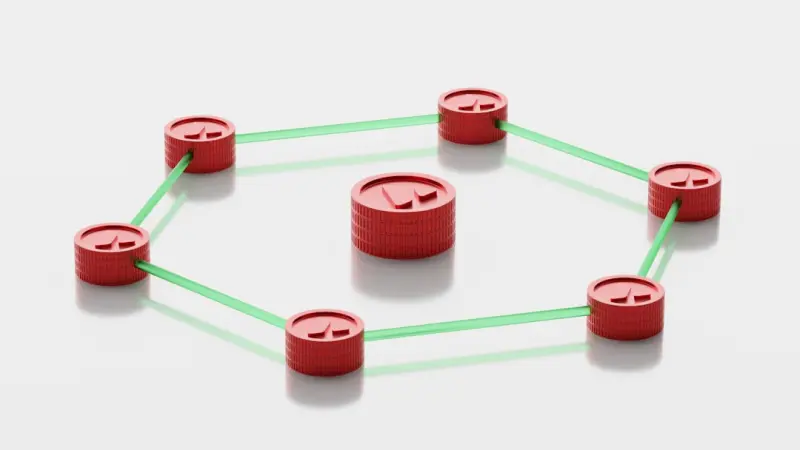
Why Multi‑Tenant SaaS Needs a Node.js‑Centric Architecture
When you’re building a SaaS platform that must serve dozens, hundreds, or even thousands of customers from a single codebase, the question of tenancy becomes a strategic decision rather than a technical afterthought. Multi‑tenant architectures promise lower operational costs, easier feature roll‑outs, and a unified data model—but they also introduce a unique set of challenges: data isolation, per‑tenant scaling, and granular billing. Node.js, with its non‑blocking I/O, thriving ecosystem, and modern language features, provides an ideal foundation for tackling these challenges head‑on.
Isolation: From Process to Database
At the heart of any multi‑tenant system lies the guarantee that one tenant’s data never leaks into another’s. Node.js offers several isolation patterns, each with trade‑offs in performance, operational overhead, and security.
- Shared Process, Shared Database (Row‑Level Security) – The simplest to implement. All tenants run in the same Node.js process and share a single relational database, with tenant IDs attached to every record. PostgreSQL’s Row‑Level Security (RLS) policies can enforce isolation at the DB layer, turning a potentially risky approach into a manageable one.
- Shared Process, Separate Schemas – Still a single Node.js instance, but each tenant gets its own schema (or set of tables). This improves logical isolation, simplifies backup/restore for individual tenants, and can reduce the blast radius of a data corruption event.
- Isolated Process per Tenant (Container or VM) – Using Docker or Kubernetes, you spin up a dedicated Node.js container for each tenant. This gives you OS‑level isolation and lets you allocate resources (CPU, memory) on a per‑tenant basis. The downside is increased infrastructure complexity and cost, but for high‑value enterprise customers, the trade‑off is often worth it.
Choosing the right isolation model depends on your risk tolerance, regulatory environment, and the scale at which you expect to operate. In practice, many fast‑growing SaaS firms start with a shared database + RLS model and evolve toward per‑tenant containers as their customer base expands.
Scaling: Horizontal Growth Without Breaking the Bank
Node.js shines when you need to serve a burst of concurrent requests without spawning a thread per connection. Its event loop can handle thousands of I/O‑bound operations with minimal overhead. However, scaling a multi‑tenant platform isn’t just about handling more HTTP requests; it’s about ensuring each tenant gets a fair slice of resources.
Stateless Services & The Power of the Cloud
Design your Node.js services to be stateless. Store session state in Redis, user preferences in a distributed cache, and all persistent data in your database. When services are stateless, you can horizontally scale them behind a load balancer with ease. Kubernetes’ Horizontal Pod Autoscaler (HPA) can automatically adjust the number of pods based on CPU utilization or custom metrics like request latency.
Tenant‑Aware Autoscaling
Standard autoscaling treats every request equally, but in a multi‑tenant world you may need to prioritize premium customers. One approach is to tag incoming requests with a tenantTier identifier and feed that into a custom metric that influences the HPA. For example, you could maintain a requests_per_minute metric per tier and upscale more aggressively for “Gold” tenants.
Database Sharding Strategies
Node.js can connect to multiple database shards seamlessly using libraries like sequelize or typeorm. You can shard by tenant ID, geographic region, or even data size. Sharding reduces the load on any single DB instance, improves latency for geographically dispersed users, and isolates failures.
Billing: Turning Usage Into Revenue
Accurate, real‑time billing is a make‑or‑break feature for SaaS. Node.js’s ability to process streams and emit events makes it a natural fit for usage tracking pipelines.
- Event‑Driven Metering – Emit a
usageevent every time a tenant performs a billable action (e.g., API call, data storage, email sent). Use a message broker like Kafka or NATS to collect these events, and have a dedicated Node.js worker aggregate them into daily or hourly usage records. - Real‑Time Dashboards – With WebSockets or Server‑Sent Events (SSE), push usage metrics to a tenant’s admin console the moment they occur. This transparency builds trust and reduces support tickets.
- Flexible Pricing Models – Node.js’s dynamic nature lets you implement tiered, per‑seat, or consumption‑based pricing without major code rewrites. Store pricing rules in a JSON schema and evaluate them on the fly during the billing cycle.
Security: Zero‑Trust in a Multi‑Tenant World
Isolation and scaling are useless if a security breach compromises a single tenant’s data. Adopt a zero‑trust mindset: verify every request, limit the blast radius, and encrypt data both at rest and in transit.
API Gateways as the First Line of Defense
Deploy an API gateway (e.g., Kong, Apigee, or a custom Node.js Express middleware) that authenticates every request with JWTs that embed the tenant ID. The gateway can enforce rate limits per tenant, apply IP whitelisting, and route traffic to the appropriate service pool.
Fine‑Grained Access Control
Leverage libraries like casl or accesscontrol to define permissions at the resource level. Combine this with database‑level Row‑Level Security to ensure that even a compromised service cannot overreach its privileges.
Secrets Management
Never hard‑code API keys or DB passwords. Use a secret manager (AWS Secrets Manager, HashiCorp Vault) and let your Node.js process fetch secrets at startup. Rotate credentials regularly to reduce the window of exposure.
Observability: Knowing What’s Happening Across Tenants
When you serve dozens of tenants, blind spots can become costly. While our recent deep dive on Observability in Node.js covered the fundamentals, multi‑tenant systems demand a few extra layers.
- Tenant‑Scoped Metrics – Tag all metrics (latency, error rates, throughput) with
tenantId. Tools like Prometheus and Grafana can then surface per‑tenant dashboards, helping you spot a single customer’s performance degradation before it escalates. - Distributed Tracing – Use OpenTelemetry to trace requests across services, and include the tenant ID in the trace context. This makes root‑cause analysis across micro‑services much faster.
- Alert Fatigue Management – Configure alerts to fire only when a tenant’s error rate exceeds a threshold relative to its traffic volume, rather than a generic global threshold.
Developer Experience: Keeping the Codebase Manageable
Multi‑tenant SaaS platforms can quickly become monolithic nightmares if you don’t enforce discipline. Node.js ecosystems offer tools to keep the codebase modular and testable.
Monorepos with Lerna or Nx
Group shared libraries (authentication, billing, logging) in a monorepo, but separate tenant‑specific plugins into their own packages. This encourages reuse while allowing isolated development of tenant‑specific features.
Feature Flags for Tenant Customization
Implement a feature flag service (e.g., LaunchDarkly or an in‑house solution) that evaluates flags based on tenant tier. This lets you roll out new capabilities to a subset of customers for beta testing without branching the code.
Testing at Scale
Automate tenant‑aware integration tests. Use Docker Compose to spin up isolated stacks that mimic real tenant environments, and run your test suite in CI pipelines. Mock external services to ensure your billing and security logic behaves correctly under load.
Case Study: From Single‑Tenant to Multi‑Tenant in Six Months
One of our clients, a project‑management SaaS, started with a single‑tenant Node.js app hosted on a modest VPS. As they grew, they faced three pain points: escalating server costs, difficulty rolling out new features to all customers, and an inability to accurately bill usage.
We guided them through a phased migration:
- Introduce Tenant IDs – Added a
tenant_idcolumn to every table and enabled PostgreSQL RLS. - Stateless Services – Refactored the Express API to store session data in Redis, enabling horizontal scaling.
- Containerize Per‑Tenant Workers – Critical background jobs (e.g., PDF generation) were moved to per‑tenant Docker containers, ensuring heavy workloads didn’t impact other customers.
- Implement Event‑Driven Billing – Leveraged AI‑Powered Code Assistants Are Redefining Node.js Development to auto‑generate usage aggregation scripts, cutting development time by 40%.
- Deploy Observability Stack – Integrated Prometheus, Grafana, and Jaeger with tenant tags, giving the ops team instant visibility.
Result: server costs dropped 30%, new feature rollout time shrank from weeks to days, and the client could now charge per‑user and per‑API‑call, unlocking a new revenue stream.
Conclusion: Embrace the Multi‑Tenant Mindset Early
Node.js provides the performance, flexibility, and ecosystem needed to build a robust multi‑tenant SaaS platform. By thoughtfully designing isolation, scaling, billing, security, and observability from day one, you’ll avoid costly refactors later and deliver a smoother experience for every customer.
Whether you’re a solo founder or part of an enterprise engineering team, the principles outlined here will help you turn Node.js into a tenant‑centric powerhouse. The journey may be complex, but with the right patterns and tools, your SaaS can scale gracefully while keeping each tenant’s data safe, performance high, and billing transparent.

Dale Peterson is a freelance writer with a passion for technology, travel, law and personal finance. With 10 years of experience crafting compelling and informative content, he's dedicated to delivering high-quality writing for Blogging Fusion that engages audiences and achieves specific goals.
Related Posts

Event‑Driven Node.js: The Quiet Powerhouse Behind Scalable SaaS
Discover why shifting from a classic request‑response model to an event‑driven architecture empo... Read More

Unleashing Parallel Power in Node.js: A Deep Dive into Worker Threads
Worker Threads let Node.js achieve true parallelism for CPU‑intensive tasks. This article walks th... Read More

Observability in Node.js: From Reactive Logging to Predictive Insight
Discover a practical, observability‑first approach to Node.js development that transforms raw logs... Read More
Top Posts

Why Building a Self‑Service Platform Is the Next Evolution in DevOps
A developer‑driven platform transforms chaotic provisioning into a seamless self‑service experience, boosting speed, consistency, and ownership across DevOp...Read More

Supercharging SaaS with Joomla’s Modular API: A Playbook for Rapid Integration
Learn how to transform Joomla into a modular API engine for SaaS, leveraging its native REST services, custom adapters, and edge‑ready extensions to accelerat...Read More
Why Internal Developer Platforms Are the Next DevOps Game‑Changer
Internal Developer Platforms (IDPs) unify tooling, enforce policy‑as‑code, and embed resilience, turning DevOps from a checklist into a product that acceler...Read More
Managed WordPress Hosting: The Enterprise API Engine You’ve Been Overlooking
Managed WordPress hosting turns WordPress into a reliable API engine, delivering performance, security, and compliance for enterprise headless deployments....Read More
0 Comments
Post Comment
You will need to Login or Register to comment on this post!