

When I first built a SaaS product, my biggest fear was scaling the business without losing the intimate, product‑first vibe that made early adopters fall in love. Fast‑forward to today, and the landscape is littered with growth hacks, aggressive sales funnels, and endless feature dumps that often drown the very experience that attracted users in the first place. The paradox is clear: the louder you shout, the more you risk silencing the product’s voice.
Why “Product‑Led” Isn’t Enough Anymore
Product‑led growth (PLG) has been the holy grail for SaaS founders for the past few years. It promises organic virality, lower acquisition costs, and a frictionless path from trial to paid. Yet, many companies treat PLG as a static label rather than a dynamic discipline. They launch a polished onboarding flow, call it product‑led, and then stop iterating. The result? A stagnant experience that can’t keep pace with evolving user expectations or market shifts.
The reality is that product‑led growth is a continuous experiment. It’s a mindset where every click, every micro‑interaction, and every data point fuels a hypothesis that is then tested, measured, and refined. When you embed this experimental culture into the DNA of your SaaS, you unlock a feedback loop that drives sustainable growth without sacrificing the core product experience.
Embedding Experimentation Into the Product Core
Experimentation isn’t just about A/B tests on landing pages. It’s about creating a living product where new ideas can be deployed, observed, and rolled back in real time. Below are three pillars that turn experimentation from a marketing after‑thought into a product‑first strategy.
- Feature Flags & Incremental Rollouts: Decouple release from deployment. Use feature flags to expose new capabilities to a small, controlled user segment. This lets you collect real usage data before a full launch, reducing risk and improving confidence.
- Telemetry‑Driven Metrics: Move beyond vanity metrics like sign‑ups. Track activation depth, time‑to‑value, and post‑feature adoption curves. These signals reveal whether a change truly enhances the user journey.
- Rapid Feedback Loops: Integrate in‑product surveys, usage heatmaps, and automated sentiment analysis. When users encounter friction, you hear it instantly, not weeks later through support tickets.
Data as the Engine of Continuous Learning
Every experiment generates a data set that should be treated as a learning asset. Modern SaaS teams are turning to event‑driven architectures to capture fine‑grained user actions without overwhelming their core systems. By streaming events to a centralized lake, you can query, visualize, and act on user behavior in near real‑time.
If you’re curious about building such a pipeline, check out event‑driven full‑stack. It illustrates how asynchrony can be harnessed to create a responsive, data‑rich SaaS platform that fuels experimentation without sacrificing performance.
The Role of AI‑Powered Personalization in Experiments
Personalization often feels like a “nice‑to‑have” after the core product is stable, but it can be a powerful lever for experimentation. AI models can dynamically adjust UI elements, pricing tiers, or feature recommendations based on real‑time user signals.
Instead of a static A/B test where 50% see version A and 50% see version B, an AI engine can present a bespoke version to each user, learning continuously which variations drive the highest engagement. This approach not only accelerates the testing cycle but also respects each user’s unique journey.
Read more on how AI can be woven into your interface in AI‑powered personalization, which offers a practical playbook for integrating smart, adaptive experiences without overwhelming your engineering team.
Composable Architecture: The Secret Sauce for Fast Experimentation
Traditional monolithic SaaS applications can be a nightmare to iterate upon. Every change ripples through a tightly coupled codebase, demanding extensive regression testing and lengthy release cycles. Enter the composable approach: break your product into independent, reusable modules that communicate through well‑defined APIs.
By treating each functional block—billing, analytics, notifications, user management—as a separate service, you can experiment on one piece without touching the others. This modularity also opens doors for third‑party integrations, marketplace extensions, and even internal “sandbox” environments where product teams can prototype safely.
For a deeper dive into this transformation, see Composable SaaS architecture, which outlines how to migrate from monolith to mosaic without disrupting existing customers.
From Hypothesis to Insight: A Step‑by‑Step Playbook
Let’s walk through a concrete example of turning a product hypothesis into a data‑backed decision.
- Identify the Problem: Users abandon the onboarding flow at step three when configuring integrations.
- Formulate the Hypothesis: Simplifying the integration UI will increase completion rates by at least 15%.
- Design the Experiment: Deploy a lightweight version of the integration wizard behind a feature flag, targeting 10% of new sign‑ups.
- Define Success Metrics: Track completion rate, time‑to‑complete, and downstream activation (e.g., first data import).
- Collect & Analyze Data: Use your event‑driven pipeline to compare flagged users versus control. Look for statistical significance.
- Iterate or Roll Out: If the new UI outperforms, roll it out to 100% of users. If not, iterate on the design and retest.
This loop can be repeated weekly, ensuring that the product is constantly refined based on actual usage rather than assumptions.
Balancing Speed with Stability
Rapid experimentation can feel chaotic if not anchored by robust observability. Implement comprehensive monitoring that captures latency, error rates, and user‑facing anomalies for every feature flag rollout. When a new experiment introduces a regression, you should be able to roll it back instantly—feature flags make this possible, but you need the alerting infrastructure to notice the problem first.
Additionally, adopt a “canary release” mindset: start with a minuscule user cohort, gradually expand as confidence builds, and always keep a fallback path. This disciplined approach allows you to move quickly without compromising the reliability that enterprise customers demand.
Culture: Turning Experimentation Into a Shared Value
Technology alone won’t sustain an experimental engine; culture does. Here’s how to embed the ethos across the organization:
- Celebrate Learning Over Wins: Reward teams for insightful findings, even when an experiment fails. Failure is data.
- Cross‑Functional Pods: Pair product managers, designers, and engineers in small squads that own the full experiment lifecycle.
- Transparent Dashboards: Publish experiment results company‑wide. When everyone sees the impact, they’re more likely to propose new ideas.
- Documentation as a Living Artifact: Keep a “hypothesis backlog” where each experiment’s goal, design, and outcome are recorded for future reference.
Scaling Experiments for Enterprise SaaS
Enterprise customers often have longer sales cycles and higher stakes, but they also provide richer data. Use segmentation to run experiments tailored to different account tiers, usage patterns, or industry verticals. For example, a feature that reduces onboarding friction for SMBs might need a different approach for a Fortune 500 client with complex compliance requirements.
Leverage your composable architecture to roll out bespoke variations without fragmenting the core codebase. This level of personalization—driven by data and delivered through modular services—creates a competitive edge that resonates with large accounts.
Measuring the Business Impact
At the end of the day, experiments must tie back to business outcomes. Common north stars include:
- Customer Lifetime Value (CLV): Does the experiment increase upsell or reduce churn?
- Net Revenue Retention (NRR): Are existing customers expanding faster after the change?
- Time‑to‑Value (TTV): Are new users achieving their first success milestone sooner?
Link these metrics back to your experimentation platform so you can see, in real time, how a small UI tweak cascades into revenue growth.
Future‑Proofing Your Experiment Engine
As AI, low‑code platforms, and generative tech mature, the velocity of product experiments will only accelerate. Prepare by:
- Investing in a flexible data stack that can ingest high‑velocity streams.
- Standardizing API contracts for all modular services.
- Adopting AI‑assisted hypothesis generation, where machine learning surfaces high‑impact experiment ideas based on usage patterns.
- Ensuring compliance and security are baked into every experiment, especially when handling sensitive data.
By treating experimentation as a core product capability—rather than an occasional marketing stunt—you create a resilient, growth‑centric SaaS that adapts to market shifts, user expectations, and emerging technologies.
Conclusion: The Experimentation Mindset Is Your Growth Engine
The SaaS landscape will keep evolving, but one principle remains immutable: products that learn from their users win. By embedding a rigorous, data‑driven experimentation framework into your product architecture, you empower teams to move fast, fail safely, and scale responsibly. The result isn’t just higher revenue—it’s a product that feels alive, continually improving, and deeply aligned with the needs of every customer.

Brian LeBlanc is a front-end web developer, UX designer, and web application developer with experience building scalable, user-friendly digital solutions.Holding a degree from University, he specializes in leveraging a wide array of modern languages, frameworks, and tools—such as JavaScript/ES6, HTML5/CSS3, PHP, and responsive interface design—to create efficient applications that simplify user experiences.
Related Posts
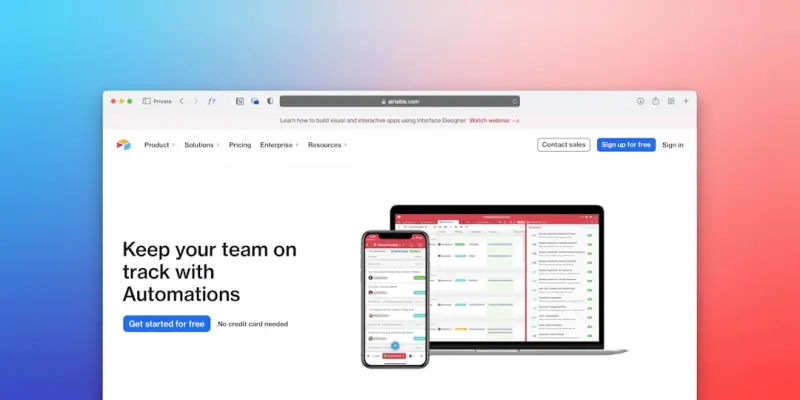
No‑Code Integration Platforms: Accelerating SaaS Growth
No‑code integration platforms transform SaaS growth by letting product teams quickly connect APIs ... Read More
Turning Developer Experience Into a SaaS Superpower
A great developer experience (DX) accelerates feature delivery, reduces technical debt, and fuels gr... Read More

Feature Flags: The Safer Path to Continuous SaaS Innovation
Feature flags let SaaS teams ship code continuously while keeping control over what users see, turni... Read More
Top Posts
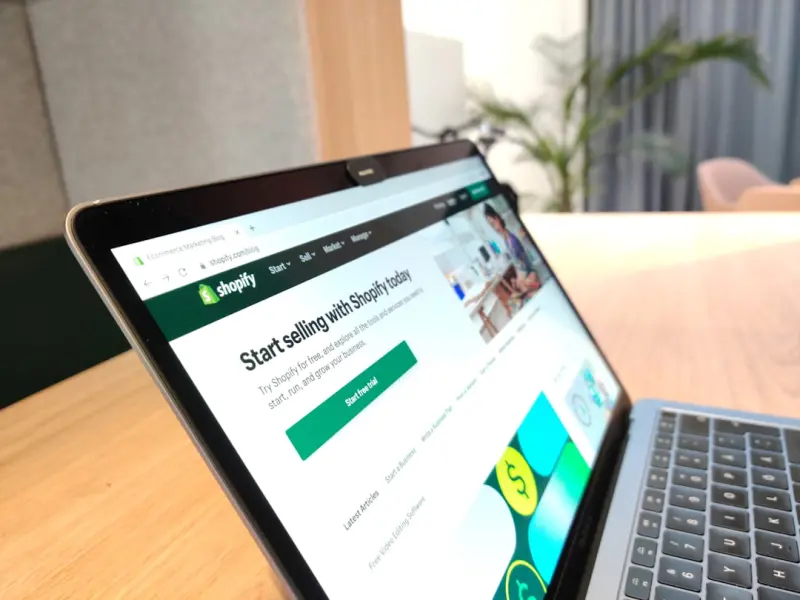
Composable Commerce: Crafting a Modular Marketplace That Scales
Composable commerce lets businesses assemble a marketplace from best‑in‑class services, delivering flexibility, faster experiments, and seamless scaling whi...Read More
Unleashing Parallel Power in Node.js: A Deep Dive into Worker Threads
Worker Threads let Node.js achieve true parallelism for CPU‑intensive tasks. This article walks through setup, pooling, real‑world use cases, observability,...Read More

Unlocking Joomla’s Potential for Scalable, Global SaaS Content
Explore Joomla’s hidden strengths—from headless APIs and built‑in multilingual support to edge‑ready scaling—showing why it’s a powerful, secure fou...Read More

Full‑Stack Observability: Turning Data Into Real‑Time Development Feedback
Full‑stack observability stitches together frontend performance, backend latency, and infrastructure metrics into a single, actionable narrative, enabling fas...Read More
0 Comments
Post Comment
You will need to Login or Register to comment on this post!