

Why Dedicated Servers Are the Unsung Heroes of Modern Enterprise Workloads
When the buzzword of the moment is “cloud‑native,” it’s easy to overlook the raw, unfiltered power that a properly provisioned dedicated server can bring to a business that demands performance, predictability, and total control. I’ve spent the last decade hopping between managed cloud platforms, container orchestration layers, and even serverless functions, only to find that certain workloads—think ultra‑low‑latency trading engines, high‑throughput data pipelines, and legacy monoliths that simply won’t bend—still crave the isolation and consistency only a dedicated box can deliver.
Isolation Isn’t Just a Security Feature; It’s a Performance Enabler
Most discussions about isolation focus on security: “keep the noisy neighbor away,” they say. While that’s a valid concern, the performance upside is often under‑appreciated. On a dedicated server, you own the entire CPU cache hierarchy, the RAM bandwidth, and the storage I/O pipeline. There’s no hyper‑visor stealing cycles, no “burstable” credits to worry about, and no “shared‑disk” latency spikes caused by an unrelated tenant’s backup job.
For data‑intensive applications—real‑time analytics, AI model training, or massive video transcoding farms—this level of determinism translates directly into cost savings. You can predict exactly how many cores you need to finish a job in X minutes, and you won’t be blindsided by a “noisy neighbor” suddenly consuming 80% of the network I/O.
Predictable Billing: The Hidden ROI of Dedicated Hardware
One of the most compelling arguments I hear from CFOs is “we need predictable OPEX.” Cloud providers excel at elasticity, but that same elasticity often means a bill that fluctuates wildly month‑to‑month based on traffic spikes, data egress, or even a misconfigured auto‑scale rule. Dedicated servers, on the other hand, operate on a simple, flat‑rate model: you pay for the hardware you own, period.
When you combine that flat rate with the performance guarantees described above, the ROI becomes crystal clear. Your engineering team can fine‑tune workloads to the exact hardware specs, your finance team can forecast spend with confidence, and your product managers can set realistic SLAs without the “cloud‑cost‑uncertainty” safety net.
Turning a Dedicated Box Into a Private Cloud—Without the Cloud’s “Complexity”
Many enterprises shy away from dedicated servers because they perceive them as “legacy” or “hard to scale.” Not true. With tools like dynamic configuration and modern orchestration layers, you can spin up a private cloud on top of a handful of dedicated machines. Think of a Kubernetes cluster running on bare metal, or a HashiCorp Nomad farm that gives you the same API‑driven scheduling you love in the public cloud—only with zero abstraction overhead.
This hybrid approach gives you the best of both worlds: the elasticity of container‑orchestrated workloads, paired with the raw throughput of bare‑metal networking. And because you control the entire stack, you can apply “zero‑trust” principles at the network, host, and application layers without relying on a third‑party’s security model.
Compliance and Auditing Made Straightforward
Industries such as finance, healthcare, and government have stringent regulatory requirements: data residency, encryption‑at‑rest, immutable logging, and so on. While many cloud providers now offer compliance certifications, the shared‑infrastructure model still adds a layer of complexity for auditors. With a dedicated server, the hardware footprint is yours—physically or virtually—making it dramatically easier to demonstrate “full‑stack” compliance.
In fact, many organizations pair dedicated servers with a compliance‑first VPS mindset, extending those principles to a full‑blown dedicated environment. The result? A single audit trail that covers everything from BIOS settings to application logs, without the “cloud provider‑provided logs” footnote.
Network Performance: When Milliseconds Matter
Latency‑sensitive applications—high‑frequency trading, VoIP, gaming back‑ends—cannot afford the “one‑way round‑trip” jitter introduced by multi‑tenant cloud networking. Dedicated servers often sit in data centers with direct, low‑latency peering to major ISPs, and they can be provisioned with 10 GbE or even 40 GbE NICs. Some providers even allow you to attach your own smart NICs, offloading TLS termination or packet inspection to hardware.
By co‑locating your dedicated servers next to your partner’s exchange points, you shave off precious milliseconds, turning a “good enough” user experience into a competitive advantage.
Hardware Customization: Tailor‑Made for Your Stack
Unlike a generic VM, a dedicated server lets you pick exactly the CPU generation, amount of RAM, storage type (NVMe vs. SATA), and even GPU configurations that match your workload. Need a server with dual Intel Xeon Scalable processors and 256 GB of DDR4 RAM for a massive in‑memory database? Done. Want to experiment with the latest AMD EPYC “Rome” chips to squeeze out extra cores for a parallel rendering farm? No problem.
This granularity extends to firmware-level tweaks: BIOS power‑capping, NUMA node pinning, and PCIe lane allocation. Those “low‑level” knobs are often the difference between a job completing in 2 hours versus 4 hours—a tangible win you can quantify for stakeholders.
Security From the Ground Up
When you own the physical hardware, you control the entire attack surface. You can enable Secure Boot, TPM 2.0, and full‑disk encryption without having to negotiate with a cloud provider’s shared‑hardware policies. Moreover, you can physically isolate network interfaces, dedicating one NIC for management, another for public traffic, and a third for storage replication—an architecture that is nearly impossible to replicate in a multi‑tenant environment.
Combine that with modern “zero‑trust” networking (mutual TLS, software‑defined perimeters) and you have a fortress that meets, and often exceeds, the security posture of many public cloud setups.
Disaster Recovery: Building a Resilient Architecture Without Vendor Lock‑In
Many organizations assume that “the cloud” automatically gives them disaster recovery. In reality, you still need to design replication, failover, and backup strategies. Dedicated servers give you the freedom to implement a multi‑site DR plan that spans several colocation facilities, each with its own power and network redundancy. You can orchestrate asynchronous replication at the storage layer, or use application‑level quorum mechanisms that are not tied to a single provider’s APIs.
This approach not only reduces vendor lock‑in but also offers a clear, auditable path to meeting RTO/RPO targets—something auditors love and CFOs appreciate.
Scalability: From One Box to a Fleet
Scalability myths often paint dedicated servers as “static.” In practice, you can start with a single 2‑U rack server and, as demand grows, add more nodes to the same data center or expand to additional locations. Using tools like Ansible, Terraform, or even the aforementioned dynamic configuration patterns, you can treat each new server as an extension of your existing infrastructure, applying the same policies and monitoring dashboards across the fleet.
Because the hardware is homogeneous, you get consistent performance characteristics across the cluster, simplifying capacity planning and load balancing.
Environmental Considerations—Sustainability Meets Performance
There’s a growing narrative that “the cloud is greener,” but the truth is nuanced. Large hyperscale providers achieve economies of scale that can lower per‑compute carbon footprints, yet they also consume massive amounts of electricity. Dedicated servers, especially when placed in modern, PUE‑optimized colocation facilities, can be more energy‑efficient for certain workloads, particularly when you keep the hardware running at high utilization rates.
When you control the hardware lifecycle, you can choose energy‑efficient CPUs, enable power‑capping, and even opt for renewable‑energy‑sourced power contracts. The result is a sustainability story you can own, not just a claim you inherit from a cloud provider’s marketing deck.
Case Study: A Media Streaming Platform’s Migration to Bare Metal
Consider a mid‑size streaming service that initially launched on a public cloud, leveraging auto‑scaling groups to handle peak traffic during major releases. Over time, they hit two pain points: skyrocketing egress costs and unpredictable transcoding latency. Their engineering team decided to spin up a dedicated server farm in a carrier‑neutral data center, equipped with dual Intel Xeon Platinum CPUs and a bank of NVIDIA RTX A6000 GPUs.
By moving transcoding workloads to these GPUs on bare metal, they reduced per‑video processing time from 12 seconds to 4 seconds, cutting CDN egress by 30% due to higher compression ratios. The flat‑rate hardware cost saved them $200 K annually, and the deterministic performance allowed them to lock SLAs at 99.9% availability—something that was previously “best‑effort” on the cloud.
Choosing the Right Dedicated Server Provider
Not all providers are created equal. Look for partners who offer:
- Transparent hardware specifications: No hidden virtualization layers.
- Network redundancy: Multiple carrier connections, cross‑connect options.
- On‑site support: Rapid hardware replacement under SLA.
- Automation APIs: Ability to provision, decommission, and configure servers programmatically.
- Security certifications: ISO 27001, SOC 2, or industry‑specific compliance.
When you evaluate providers, treat them as a platform partner, not just a utility. Their expertise in networking, power, and physical security can be a decisive advantage, especially for workloads that demand high availability and low latency.
Conclusion: Dedicated Servers Are Not a Relic—They’re a Strategic Asset
In the frenzy of “serverless” and “cloud‑first” narratives, dedicated servers often get written off as “old‑school.” Yet, for enterprises that need performance isolation, predictable costs, granular hardware control, and a clear compliance posture, they remain the most pragmatic choice. By embracing modern automation tools, integrating zero‑trust security models, and treating dedicated hardware as the foundation of a private cloud, you unlock a level of agility that rivals, and sometimes surpasses, the public cloud.
Next time you’re drafting a technology roadmap, ask yourself: where does performance matter most? Where does cost predictability drive business decisions? If the answer leans toward high‑throughput, low‑latency, or regulatory‑heavy workloads, the dedicated server is not a fallback—it’s the forward‑looking solution.

Shawn DesRochers is a certified Microsoft technician and Programmer with 30+ year's experience. He has written many reviews on computer related products, software, and SEO related topics. When he's not writing reviews he can be found at one of the Oldest Directories Online Invision Graphics Directory which he is the CEO of. Shawn is a FULL Stack Web Developer. So if you have a project and need assistance dont hesitate to reach out.
Related Posts

Data Sovereignty: The Strategic Edge of Dedicated Server Hosting
Dedicated server hosting offers unmatched control over data location, enabling SaaS companies to mee... Read More
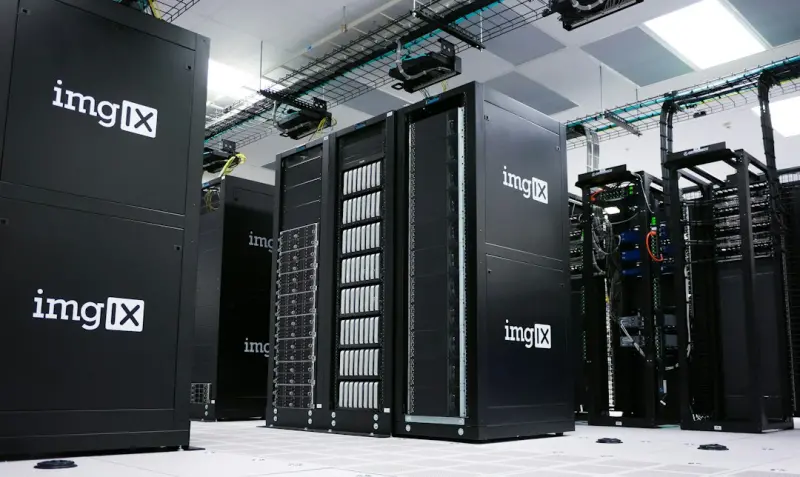
Dedicated Server Hosting: The Strategic Backbone for High‑Performance B2B SaaS
Dedicated server hosting isn’t a relic; it’s a strategic advantage for SaaS companies needing pr... Read More
Dedicated Server Hosting: When Performance, Security, and Cost Align
Dedicated servers offer unmatched performance predictability, security isolation, and cost transpare... Read More
Top Posts

Gutenberg as a Rapid‑Prototype Engine for SaaS Feature Development
Learn how using WordPress Gutenberg’s block editor transforms SaaS feature prototyping, enabling rapid UI iteration, stakeholder collaboration, and scalable i...Read More

Reimagining Content Management: The Composable CMS Playbook for B2B SaaS Teams
A composable CMS decouples content, workflow, and presentation, giving SaaS teams the flexibility to scale, iterate faster, and integrate best‑in‑class serv...Read More

Joomla Unleashed: Building a Scalable, Extensible SaaS Platform on a Classic CMS
Explore how Joomla can power a scalable SaaS product by leveraging its extension ecosystem, micro‑frontend architecture, and design‑ops workflows, all while...Read More

Unlocking Joomla’s Enterprise‑Ready Toolkit for Modern Businesses
Joomla’s modular design, built‑in multilingual capabilities, and granular access controls make it a powerful, scalable platform for enterprises seeking flex...Read More
0 Comments
Post Comment
You will need to Login or Register to comment on this post!