
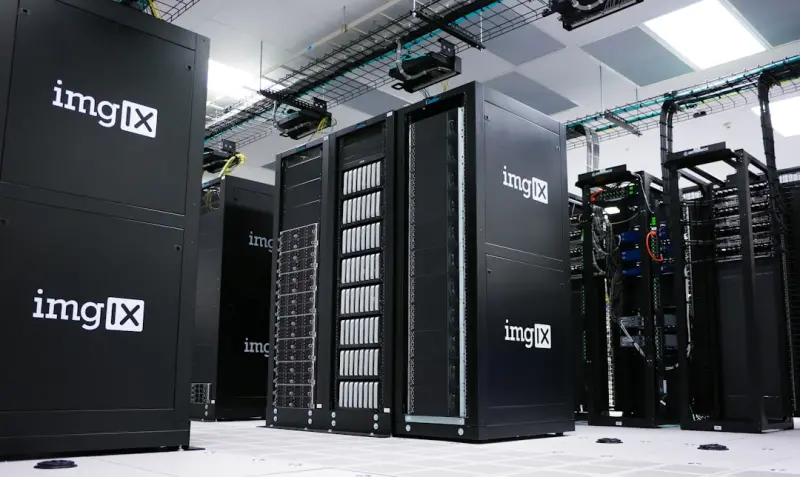
When I first started wrestling with the idea of moving a latency‑sensitive AI inference service off the public cloud, I found myself staring at a sea of virtual machines, containers, and serverless functions. Each promised elasticity, but each also introduced a new layer of abstraction that ate away at the raw performance I needed. The answer, surprisingly, wasn’t “more cloud” – it was a return to the fundamentals: a dedicated, bare‑metal server that you control from the BIOS up.
Why Bare‑Metal Still Matters in a Serverless World
There’s a seductive narrative in the industry that “the cloud will solve everything.” It works for bursty web traffic, for data lakes, and for distributed CI pipelines. But when you’re dealing with sub‑millisecond response times, deterministic I/O, or a workload that needs to push the silicon to its limits, the extra hypervisor hop becomes a liability.
Dedicated servers give you:
- Full CPU instruction set access – No sharing, no throttling, no “noisy neighbor” surprises.
- Direct PCIe lane utilization – Critical for GPU, FPGA, or NVMe‑based storage accelerators.
- Predictable network latency – A single NIC with a dedicated 10 GbE (or faster) link means you can measure round‑trip times in the low single digits.
- Custom BIOS/firmware settings – Power‑management profiles, memory interleaving, and cache configurations that you can tweak for your specific workload.
In short, you get a sandbox that’s as close to the silicon as you can get without physically building your own data center.
Real‑World Use Cases That Thrive on Dedicated Hardware
Below are three scenarios where the performance envelope of a dedicated server flips the switch from “good enough” to “game changing.”
1. High‑Frequency Trading (HFT) and Financial Analytics
Traders measure success in microseconds. A single extra millisecond of latency can cost millions. By co‑locating a bare‑metal server in the same exchange data center, you eliminate the extra network hops inherent to virtualized environments. You also gain the ability to pin processes to specific cores, set CPU affinity, and use kernel‑bypass networking stacks like DPDK for ultra‑low latency.
2. Real‑Time AI Inference at the Edge
Think autonomous drones, smart cameras, or voice assistants that must respond instantly, even when connectivity is spotty. A dedicated server equipped with a high‑end GPU or an ASIC can run inference models locally, sidestepping the round‑trip latency of a cloud API call. The result is a smoother user experience and a reduction in bandwidth costs.
3. Legacy Application Modernization
Many enterprises still run mission‑critical monoliths written in COBOL, Java EE, or classic .NET. Re‑architecting these applications for containers is often a multi‑year, high‑risk project. Instead, you can place them on a dedicated server, apply modern security hardening, and gradually wrap them with APIs—gaining the benefits of modernization without a full rewrite.
Designing a Dedicated‑Server‑First Architecture
Switching to a bare‑metal environment isn’t just a hardware decision; it’s a mindset shift. Here’s a roadmap to help you transition smoothly:
- Assess Workload Characteristics – Profile CPU, memory, storage, and network usage under peak load. Identify any hardware‑specific bottlenecks (e.g., GPU memory bandwidth).
- Choose the Right Form Factor – Rack‑mount versus blade, single‑socket versus dual‑socket, and the appropriate amount of RAM and SSD capacity. Remember that scaling out (more servers) is often cheaper than scaling up (bigger single machines) for predictable workloads.
- Implement Automation Early – Even though you’re on bare metal, you still want repeatable provisioning. Tools like Terraform with the
metalprovider or Ansible can configure BIOS settings, install OS images, and spin up monitoring agents. - Layer Security at the Edge – Deploy firewalls, IDS/IPS, and host‑based security modules directly on the server. A dedicated environment gives you the ability to lock down root access, disable unused peripherals, and enforce strict network segmentation.
- Plan for Observability – Use low‑level telemetry (e.g., perf, bpftrace) in addition to standard metrics. Bare‑metal gives you access to hardware counters that can be crucial for performance tuning.
Balancing Flexibility and Control with Multi‑Cloud Strategies
While the allure of a single, powerful dedicated server is strong, most enterprises still need the geographic reach and redundancy that a multi‑cloud approach offers. The trick is to treat your dedicated hardware as a “home base” that hosts the most latency‑sensitive components, while using public clouds for burstable workloads, global CDN, and disaster recovery. This hybrid model lets you keep the best of both worlds.
Read more about building resilient architectures in our guide on multi‑cloud strategies.
Cost Considerations: Not Just the Sticker Price
It’s easy to assume that dedicated servers are always more expensive than cloud instances. In reality, the total cost of ownership (TCO) depends on several factors:
- Utilization Rate – If you can keep your server >70% utilized, the per‑core cost often drops below that of equivalent cloud instances.
- Data Transfer Fees – Outbound bandwidth on public clouds can be pricey. With a dedicated server placed close to your users or data sources, you can dramatically reduce these fees.
- Licensing Models – Some software vendors offer “bare‑metal discounts” that aren’t available on virtualized platforms.
- Operational Overhead – Automation and remote management tools can mitigate the extra hands‑on work that bare‑metal traditionally required.
When you factor in these variables, the economics often tilt in favor of dedicated hardware for steady, high‑throughput workloads.
Future‑Proofing with AI‑Driven Optimization
One of the most exciting developments in the hosting space is the rise of AI‑assisted performance tuning. By feeding telemetry data into machine‑learning models, you can predict when a CPU will become a bottleneck, when SSD wear is approaching a threshold, or even automatically adjust network queue lengths for optimal throughput.
Our team recently explored this concept in depth—see our deep dive on AI‑powered optimization for practical examples of how predictive analytics can keep a bare‑metal fleet humming at peak efficiency.
Security Benefits That Go Beyond the Cloud
Dedicated servers give you an isolation layer that no amount of virtual networking can match. Since you control the entire stack, you can implement:
- Hardware‑rooted secure boot, preventing firmware tampering.
- Physical tamper detection sensors that alert you to unauthorized access.
- Custom encryption keys stored in a TPM (Trusted Platform Module) that never leave the chassis.
For regulated industries—finance, health, government—these capabilities can simplify compliance audits and reduce the attack surface.
Choosing the Right Provider: What to Look For
Not all dedicated‑hosting providers are created equal. Here are the criteria I use when vetting a partner:
- Network Quality – Low packet loss, multiple carrier peering, and optional direct‑connect options.
- Hardware Refresh Cycle – Providers that refresh their rack hardware at least every 18 months keep you on the cutting edge.
- Automation APIs – A robust REST or GraphQL API for provisioning, monitoring, and firmware updates.
- Support Expertise – Engineers who understand low‑level performance tuning, not just “cloud support.”
Getting Started: A Practical First Step
If you’re convinced but unsure where to begin, try this pilot:
- Identify a single microservice that is latency‑critical (e.g., an authentication token validator).
- Provision a modest dual‑socket dedicated server with a 10 GbE NIC in a data center close to your user base.
- Containerize the service for easy rollback, but keep it running directly on the host OS to avoid hypervisor overhead.
- Instrument the service with low‑level metrics (CPU cycles, cache misses, network RTT).
- Compare the performance and cost profile against its current cloud deployment.
This controlled experiment will give you concrete data to decide whether a broader migration makes sense.
Conclusion: Reclaiming the Power of the Machine
Dedicated server hosting isn’t a nostalgic throwback; it’s a strategic lever for workloads that demand raw performance, deterministic latency, and deep hardware control. By treating bare‑metal as a first‑class citizen in your architecture, you unlock capabilities that the cloud’s abstraction layers simply cannot provide. Whether you’re building a high‑frequency trading platform, running real‑time AI inference, or modernizing a legacy monolith, the right dedicated server can be the catalyst that turns a good product into a market‑defining one.

Brian LeBlanc is a front-end web developer, UX designer, and web application developer with experience building scalable, user-friendly digital solutions.Holding a degree from University, he specializes in leveraging a wide array of modern languages, frameworks, and tools—such as JavaScript/ES6, HTML5/CSS3, PHP, and responsive interface design—to create efficient applications that simplify user experiences.
Related Posts
Zero‑Trust Starts with the Server You Own
Dedicated servers provide the physical isolation, micro‑segmentation, and continuous telemetry ess... Read More

Dedicated Servers: The Strategic Backbone for High‑Performance Enterprise Workloads
Dedicated servers provide isolation, predictable billing, and granular hardware control, making them... Read More

When Performance Meets Sustainability: The New Era of Dedicated Server Hosting
Dedicated server hosting is evolving beyond raw horsepower, offering sustainable, secure, and costâ€... Read More
Top Posts

Island Architecture: A Mobile‑First Blueprint for Lightning‑Fast Web Apps
Island Architecture breaks the monolithic SPA model, delivering static HTML shells with on‑demand interactive components, dramatically improving mobile load t...Read More

Why JavaScript’s Temporal API Is a Game‑Changer for SaaS Time Logic
The Temporal API rewrites JavaScript’s date handling, offering immutable, timezone‑aware objects that streamline billing, global scheduling, and audit loggi...Read More

When JQuery Meets Modern SaaS: Bridging Legacy and Innovation
Discover why JQuery remains valuable for SaaS, learn hybrid patterns with Web Components and state stores, and get a step‑by‑step roadmap to modernize or re...Read More
Modular Block‑Based Themes: Future‑Proofing WordPress Design
Discover why modern block‑based themes are the foundation for a fast, collaborative, and future‑ready WordPress site, with practical tips and a proven workf...Read More
0 Comments
Post Comment
You will need to Login or Register to comment on this post!